Discover how Chati's self-service licenses give you full control - build, update, and launch virtual events on your terms. Register for our free webinar today!
Sustainability reporting tracks and communicates environmental and social impacts. In virtual event planning, it’s increasingly vital for transparency, accountability, and meeting stakeholder expectations. Virtual events offer unique opportunities to lead in greener practices, reducing travel emissions, resource use, and waste, while setting a benchmark for sustainable virtual event management worldwide.
Here, we will discuss the top ways to use sustainability reporting in virtual events, including tools and platforms, communication, and future trends. Through this, you will have the tools and resources to organize a successful virtual event while demonstrating exceptional sustainability reporting and enabling your attendees to achieve their personal and professional goals.

In the context of virtual events, sustainability reporting evaluates and communicates environmental performance using key metrics such as carbon footprint, energy consumption, waste reduction, and digital efficiency. It enhances credibility for organizers, provides attendees with sustainable experiences, and strengthens brand alignment for sponsors, collectively fostering accountability, innovation, and greener virtual event practices.

Virtual event sustainability reporting encompasses monitoring digital carbon footprints, highlighting the use of renewable energy and low-impact technologies, and advancing waste reduction through paperless solutions. It further emphasizes the sustainable practices of vendors and partners. Post-event surveys capture attendee perceptions, offering valuable insights that strengthen accountability, inform improvements, and demonstrate a commitment to environmentally responsible virtual event management.

Virtual event technology solutions facilitate the tracking of sustainability data through sophisticated analytics dashboards and reporting software. By embedding key sustainability KPIs (key performance indicators) into virtual event platforms, organizers can monitor performance in real time, strengthen decision-making, and ensure accountability, thereby promoting more efficient, transparent, and environmentally responsible approaches to virtual event management.

Effective sustainability reporting entails communicating insights to attendees and sponsors through infographics, dashboards, and social media channels. Transparent disclosure of environmental and social performance not only informs stakeholders but also reinforces credibility, builds trust, and enhances brand reputation, establishing the organization as a responsible and accountable leader in sustainable virtual event management.

Advancements in sustainability reporting tools, alongside adherence to ESG (Environmental, Social, Governance) standards, are reshaping virtual and hybrid event planning. These innovations facilitate more precise tracking, increased transparency, and data-driven decision-making, supporting responsible, accountable, and environmentally conscious approaches to virtual and hybrid event management.
Summary
Here, we discussed the top ways to use sustainability reporting in virtual events, including tools and platforms, communication, and future trends. Armed with this knowledge, you are now able to organize and execute a successful virtual event while simultaneously enabling your attendees to achieve their personal and professional goals and enhancing the role of sustainability reporting.

We encourage readers to implement sustainability reporting in their next virtual or hybrid event, and please contact Chati to learn more about how we can incorporate sustainability reporting in our virtual and hybrid events.
In 2025, event branding is more important than ever, serving as a key driver of engagement and recognition. Through thoughtful customization, organizers can craft unique experiences that resonate with attendees, spark emotional connections, and transform ordinary gatherings into unforgettable, meaningful events that strengthen loyalty and long-term brand value. Here, we will discuss the top ways to customize event branding in 2025, including interactive platforms, immersive experiences, social media integration, and more. With this, you will have the tools and resources for hosting a successful event while maximizing event branding.

Custom graphics, typography, and color schemes are essential in shaping distinctive event branding, ensuring every detail reflects the event’s identity. In 2025, AI-assisted logo design trends streamline creativity, offering dynamic, personalized visuals that enhance recognition, elevate branding strategies, and deliver unforgettable attendee experiences through innovation and design precision.

Virtual events and hybrid events branding in 2025 extend beyond visuals, creating immersive digital environments that reflect an event’s identity. Branded event apps enhance engagement by offering personalized schedules, networking tools, and tailored experiences, ensuring attendees feel connected, valued, and fully immersed in both virtual and in-person interactions.

Eco-conscious merchandise and signage are redefining event branding in 2025, emphasizing sustainability while maintaining strong visual impact. Reusable and recyclable event décor not only reduces waste but also reflects brand responsibility, allowing organizers to create memorable, eco-friendly experiences that resonate with environmentally aware attendees and enhance long-term brand reputation.

Augmented reality (AR) and virtual reality (VR) activations transform event branding in 2025 by immersing attendees in interactive experiences. Branded photo booths and digital walls further engage audiences, blending creativity and technology to capture memorable moments while reinforcing brand identity in innovative, visually striking, and highly shareable ways.

AI-powered attendee experiences are revolutionizing event branding in 2025 by delivering hyper-personalized interactions. Tailored content and branded agendas ensure participants receive relevant insights and connections, fostering deeper engagement. This smart customization strengthens brand impact, creating meaningful, memorable experiences that resonate long after the event concludes.

Branded hashtags amplify event promotion in 2025, encouraging attendees to share experiences across social platforms. Collaborations with influencers and the integration of user-generated content boost engagement, extend reach, and create authentic connections. Together, these strategies strengthen brand visibility, foster community, and transform events into widely recognized, shareable experiences.

Personalized swag elevates event experiences in 2025, offering attendees memorable, brand-aligned keepsakes. Tech-based giveaways, including wearables and smart badges, combine functionality with engagement, enhancing interactivity while reinforcing brand presence. These thoughtful, innovative gifts leave lasting impressions, fostering loyalty and creating meaningful, memorable connections between attendees and the event.

Custom menus, packaging, and themed catering elevate event branding in 2025, creating immersive dining experiences that reflect a brand’s identity. Unique drink branding, such as logo latte art and branded cocktails, adds a playful, memorable touch, engaging attendees’ senses while reinforcing the event’s theme and leaving a lasting impression.

Branded recap videos and highlight reels capture key moments, extending an event’s impact beyond its conclusion. Personalized thank-you campaigns reinforce attendee appreciation and strengthen brand loyalty. Together, these strategies create lasting emotional connections, celebrate engagement, and ensure that participants leave with memorable experiences closely tied to the event’s identity.
Summary
Looking beyond 2025, event branding will increasingly embrace immersive technologies, sustainability, and hyper-personalization. To stay ahead, organizations must invest in customizable branding strategies that adapt to evolving attendee expectations, create memorable experiences, and strengthen brand loyalty, ensuring events remain impactful, innovative, and relevant in an ever-changing landscape.

We encourage readers to embrace event branding in their next virtual or hybrid event while maximizing engagement and enabling your attendees to achieve their personal and professional goals. Please contact Chati to learn more about how we can improve our event branding experience for audiences worldwide.
Event management has evolved from basic coordination to strategic planning, now essential for success. This post explores its transformation, highlights the value of strategy, and offers readers practical insights to plan and execute impactful events. Here, we will explore proven strategies for successful event management, including key phases, must-have tools, navigating logistics, common challenges, and more. Through this, you will have the tools and resources to plan and execute successful event management strategies with the goal of helping your audience achieve their personal and professional goals.

From corporate events to virtual and hybrid experiences, conferences, trade shows, weddings, and galas, today’s events embrace diverse formats, each designed to connect people, foster engagement, and create lasting memories for businesses, organizations, and individuals alike.

Successful events require thoughtful conceptualization and goal setting, precise budgeting, and efficient resource allocation. From venue selection and vendor coordination to marketing, on-site logistics, and post-event evaluation, each stage plays a crucial role in delivering impactful, well-executed experiences.

Modern events thrive by incorporating technology like AR/VR, event apps, and live streaming, while personalizing attendee experiences. Leveraging data analytics, feedback tools, and prioritizing accessibility and inclusivity ensures every participant feels engaged, valued, and seamlessly connected to the event’s purpose.

Event success is enhanced through event management software platforms, CRM and registration tools, live polling, and engagement apps. Combined with project management software, these technologies streamline planning, boost attendee interaction, and ensure seamless coordination from concept to post-event evaluation.

Effective event promotion leverages social media campaigns, targeted email marketing workflows, and influencer or speaker partnerships. By creating buzz with engaging pre-event content, organizers can maximize visibility, build anticipation, and drive strong attendance for a memorable, impactful experience.

Successful events rely on clear vendor contracts and contingency plans, detailed timelines and run-of-show, and seamless staff and volunteer coordination. Prioritizing guest management and safety protocols ensures smooth execution, minimized risks, and a positive experience for all attendees.

Sustainable events embrace eco-friendly practices like digital invitations and zero-waste initiatives, while integrating DEI considerations into programming. By prioritizing local sourcing and community engagement, organizers create inclusive, responsible experiences that positively impact both attendees and the surrounding environment.

Event success requires anticipating challenges like budget constraints, last-minute cancellations, venue or technology issues, and low attendance. Proactive planning, contingency strategies, and targeted promotion help mitigate risks, ensuring smooth execution and strong participation despite unexpected obstacles.
Summary
Here, we discussed essential event strategies and tools for event management, including key phases, must-have tools, navigating logistics, common challenges, and more. Armed with this knowledge, you now have the tools and resources to host successful events that enables strong attendee engagement.

We encourage readers to stay agile and innovative in their planning involving event management. To deepen your expertise, please contact Chati regarding how you can incorporate these strategies into your next virtual event.
In the last few years, the event landscape has undergone huge shift. Where once almost all events required in-person attendance, we are now seeing a high number of purely online (virtual) or hybrid (with both in-person and online audiences) events taking place. We think this a really positive step! When delivered using the right online event platform, with accessible technology in place, online events can be more inclusive, more flexible and with less impact on the environment.
For event organisers and sponsors ensuring that people are excited to attend their event, are engaging with the content delivered and are inspired by their event experience remain the top priorities, whether the event taking place in-person, online or with a mixture of both (hybrid).
According to research from Markletic, half (49%) of marketers say that audience engagement is the biggest contributing factor to having a successful event. However, only 30% of event organisers send their attendees giveaways and only one in three (34%) send virtual gift bags to their attendees. That’s a huge, missed opportunity.
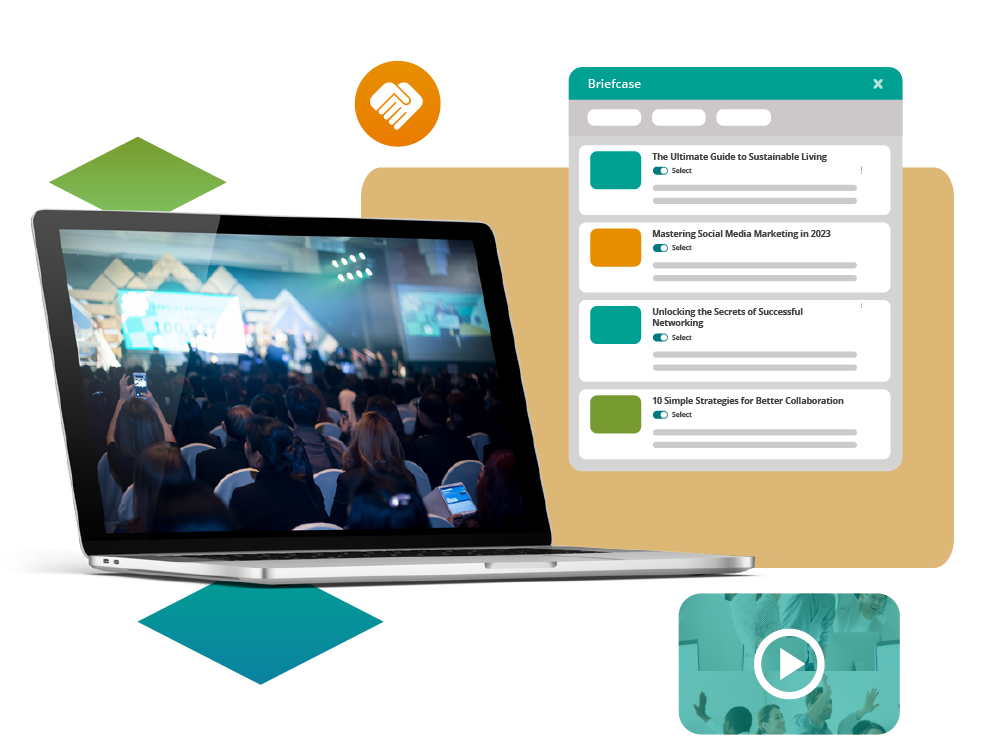
One fantastic fix to this problem is to use a digital Swag bag, because with a digital bag, you don’t need to be there in person to collect your Swag. Instead, you simply need to log-in to your Swag bag providers platform and then interact with the content and enjoy the Swag items you select, however suits you.
In this article we will look into the virtual Swag bag concept in a little more depth, to give you the confidence to harness the power of a virtual Swag bag for your next event.
If you have attended an event in the past, chances are you have received a Swag bag. SWAG stands for Something We All Get and traditionally a swag or goodie bag is packed with free gifts from event exhibitors and sponsors, to give delegates some take-away promotional items. Examples of physical traditional Swag items are branded coffee cups, pens, stress balls etc, all featuring company logos.
Digital (or virtual Swag as it is sometimes called) is simply freebies delivered online instead, bypassing the physical bag. Event stakeholders can offer which ever promotional items they choose, with their logo on the items and bag, and all in one handy place just the same. The only difference is that the ‘bag’ is an online platform.
With a digital Swag bag, the possibilities of what you fill it with a vast! To bring the concept to life we have provided a few examples of typical Swag items you might want to include:
Voucher or discount codes
Offering a discount code for brand partners and sponsors products gives your attendees access to an exclusive benefit via their Swag bag and drives traffic to partner sites too.
Downloads
Why not provide a range of relevant how-to guides, e-books, online training etc, all in one place for your delegates to access and learn from. This is a great way to share valuable knowledge and further promote your events theme.
Physical items
Virtual Swag bags don’t mean the end of physical event giveaways such as branded hoodies or coffee cups. In fact, we believe that if provided to delegates ahead of event day, they can help build a sense of community between your in-person and online audiences. To make sure that these are items people want and can make use of (correct size etc) however, why not provide items to order, and minimise waste.
Other examples of virtual Swag bag contents might be competition giveaways, virtual experiences, eco-friendly options such as tree-planting or event specific information materials. There are so many options with a digital Swag bag.
It's vital to make sure you use the right digital Swag bag platform to deliver the virtual Swag which will engage your hybrid audience. The platform needs to be:
The Swagable bag was set-up by an inclusive events agency, having identified that virtual Swag bags using accessible technology weren’t readily available. Using their knowledge of the event world, they built an easy-to-use platform that delivers a sustainable, accessible and trackable Swag every time.
Using the Swagable platform is a lot like using filling your online shopping basket at your favourite retailer. We believe that this is something more and more customers are confident to do in everyday life, and the research confirm this, “more money was spent online in the U.S. in April and May (2023) than the last 12 Cyber Mondays combined; in the month of May, U.S. e-commerce spending grew by 93 percent year-over-year. —Source: Mastercard SpendingPulse™.
Rest assured though, at Swagable we also offered tiered support services so, if you do need any further assistance at any point in time, the team are available to make sure your Swag bag is a success.
You can visit the Swagable website or book a demo here if you would like to find out more.
Now more than ever, we all know how important it is to consider the environmental impact of our actions, be that investment, promotion or individual spending choices. A virtual Swag bag, such as a Swagable bag, is the more planet-friendly option to boost your events audience engagement for a number of reasons. We have highlighted a few:
When it comes to choosing digital event offerings including a digital Swag bag, the research speaks for itself. “According to MeetGreen “A standard in-person event can use up to 36,000 pieces of paper, most of which are not recycled accordingly. By choosing to offer virtual swag – and choose to run your event in a digital format – you eliminate up to 170kg of CO2 emissions”.
We really hope that this article has helped you to feel as excited about digital Swag bags as we are! It’s time to revolutionise your next event and go digital! So go ahead and book a demo to find out how Swagable can work for you today.
Earth Day 2024: Harnessing The Power Of Virtual Events For Sustainable Impact
Source: Event Planner News
While attending in-person events can seem uneventful from an environmental perspective, the amount of carbon emissions produced by air travel, waste, and food production that occurs while you’re en-route, attending, and departing the event is exacerbated depending on the size of the event.
The significance of reducing the carbon footprint of events must be considered, as the reduction would have several positive impacts on the environment, including mitigating climate change, stimulating the global economy, improving public health, and sustaining worldwide biodiversity. The less we are required to travel, the fewer negative impacts on the environment while enhancing the positive effects.
For these reasons, transitioning to virtual and hybrid formats for events has become crucial in the fight against climate change and reducing carbon footprints worldwide. Through virtual and hybrid events, we reduce the need to travel and reduce waste and food production, leading to a cleaner climate and environment for everyone.
Carbon emissions and greenhouse gases are the primary drivers of climate change. Human-caused (anthropogenic) carbon emissions and greenhouse gases come from burning fossil fuels, which produce carbon dioxide (CO2) and contribute to air pollution, which drives climate change by warming the Earth’s atmosphere. All this together is known as a carbon footprint.
One definition of a carbon footprint is “the total greenhouse gas (GHG) emissions caused directly and indirectly by an individual, organization, event or product.” This includes automobiles, factories, airplanes, and food production, to name a few. The carbon emissions these activities produce contribute to the global carbon footprint.
If carbon emissions contribute to climate change, carbon neutrality has the opposite effect, including reduced environmental pollution while improving public health and economic growth. Carbon neutrality also contributes to increased biodiversity while improving food security by reducing the impact of climate change on the environment.
As noted above, traditional events result in high energy consumption and environmental consequences through travel, waste, and food production. Some reports have estimated that 70 to 90 percent of the total carbon emissions from attending an event comes from travel alone, with each attendee accounting for 400 pounds of carbon emissions per day. This number can reach 2,000 pounds per day if substantial travel is required.
These environmental consequences pose significant challenges for event organizers. While their priority is hosting a successful event, they must also account for the ecological impact their event will have. For example, the location of their event might benefit some attendees for travel while burdening others. If the event has tens of thousands of attendees, the organizers must ensure they have the right amount of food for everyone. Ultimately, this leads to a large carbon footprint for everyone.

To help mitigate the environmental impacts and organizational challenges of hosting traditional events, virtual conferences and hybrid events offer a cleaner and more efficient method of bringing people together worldwide without the need for travel, waste, and massive food production.
The advantages of virtual event platforms include reduced—if not completely mitigated—travel requirements and reduced waste and food production while maintaining the same level of inclusivity and engagement as traditional events.
Virtual and hybrid events have become the mainstream method for meeting the needs of an international conference. This is because they break down geographic barriers and successfully reduce carbon emissions from the reduced travel, waste, and food production that traditional events require. Additionally, virtual and hybrid events offer the same level of inclusivity and engagement as conventional events.
There are enormous benefits of virtual conferences for the environment. For example, a single-day virtual event with 200 attendees results in 66 times fewer carbon emissions than if that same event was held in person. A virtual conference with 5000 attendees also helps reduce carbon emissions, equivalent to 158 American households annually.
Virtual and hybrid events can help event organizers and attendees lower their energy consumption, leading to a cleaner and healthier future for everyone. This comes from reduced travel, waste, and food production while maintaining the same level of engagement and inclusivity that traditional events offer.
While traditional events contribute to carbon and greenhouse gas emissions, and ultimately, a large carbon footprint and increased climate change, virtual and hybrid events can ensure that carbon footprints are significantly reduced worldwide. By utilizing virtual and hybrid events, attendees and event organizers contribute to a carbon-neutral future, decreasing pollution and increasing public health.
Sources: Impactful Ninja, Our World In Data, University of Michigan, Iberdrola, BeaconLive, Chati, Chati (1), IEEE

