Discover how Chati's self-service licenses give you full control - build, update, and launch virtual events on your terms. Register for our free webinar today!
Webinars are vital for tech companies to scale marketing, educate users on complex features, and convert high-quality leads. They allow brands to reach global audiences instantly, demonstrate intricate software live, and establish undeniable thought leadership. Tech companies are responsible for some of the most innovative breakthroughs in history that impact everyday lives.
Here, we will discuss ten actionable best practices for hosting highly successful webinars that engage viewers and drive real business growth, including defining goals, knowing your audience, promotion, choosing platforms, prepping content, rehearsing, engaging, follow-ups, analyzing, and repurposing. Through this, you will have the tools and resources to host a successful webinar focused on helping tech companies build their brands while connecting attendees worldwide.

The first step is to define your webinar's core purpose, specifically a product demo, lead generation, thought leadership, or user training. This is followed by establishing measurable goals, including registration targets, attendance rates, and audience engagement metrics with the goal of accurately tracking your success and ensuring alignment across your team.

Segment your attendees by role, industry, or specific interests to maximize relevance. Use these insights to tailor your presentation, directly addressing their unique pain points and highlighting the most compelling use cases. This targeted approach transforms a generic presentation into a high-converting, personalized experience for every viewer.

Promote your webinar across email campaigns, social media, and partner networks to maximize registrations. Pair this outreach with engaging landing pages featuring frictionless sign-up forms and implement an automated reminder sequence to keep the event top-of-mind and drive higher day-of attendance rates.

Choose a reliable, scalable webinar platform that is seamless for attendees to join. It must support interactive features like real-time polls, live Q&A, and chat to keep your audience engaged, alongside robust on-demand recording capabilities to extend your content's shelf life long after the live event.

Build your presentation around concise messaging, dynamic slides, and engaging videos to maintain focus. Incorporate live product demonstrations to break up static content and visually bring abstract concepts to life. This multimedia approach enhances viewer understanding and keeps your audience locked in from start to finish.

Conduct a full dry-run with all presenters to iron out pacing and transitions. Run thorough technical checks to test audio clarity, video feeds, and smooth screen sharing. Verifying your interactive features beforehand prevents live glitches, ensuring a seamless, professional experience for your audience.

Maintain high audience attention by breaking up your content with real-time polls, chat prompts, and structured Q&A sessions. Actively encouraging participation transforms passive viewers into engaged participants, creating a truly interactive session that reinforces your message and keeps your crowd hooked throughout the presentation.

Follow up promptly with thank-you emails, on-demand recording links, and relevant resources. To maximize conversions, segment your audience based on their actual attendance and engagement during the live event. This allows marketing teams to deploy hyper-targeted nurture campaigns that effectively guide prospects down the sales funnel.

Track key metrics like registration versus attendance rates, audience engagement scores, and final conversion numbers. Analyzing these data points provides actionable insights into what truly resonated with your viewers, allowing you to continually optimize content, timing, and promotional strategies to improve the performance of all future webinars.

Repurpose your webinar into on-demand videos, detailed blog posts, short social media clips, or comprehensive eBooks. This strategic content recycling vastly extends your reach to individuals who missed the live broadcast, maximizing the total return on investment from a single, well-executed production.
Summary
Here, we discussed ten actionable best practices for hosting highly successful webinars that engage viewers and drive real business growth, including defining goals, knowing your audience, promotion, choosing platforms, prepping content, rehearsing, engaging, follow-ups, analyzing, and repurposing.

Careful planning and execution are vital to increasing engagement, generating quality leads, and building brand authority. Ready to scale? Leverage platforms like Chati to host professional, highly interactive, and high-impact tech webinars that drive real business growth. Please contact Chati if you would like to know how you can use our webinars to promote your tech company.
Hybrid events have become significant in connecting individuals from all personal and professional backgrounds worldwide. They provide the best of both worlds by enabling attendees to participate virtually or in person. This eliminates geographic barriers for both demographics while increasing diversity, inclusivity, and connectivity for everyone.
While hybrid events provide ample opportunities for worldwide connectivity, the challenge of balancing engagement in dual environments arises since attendees participate both in person and virtually. Therefore, attendees from both audiences must receive the same level of engagement and connectivity to ensure the most impactful hybrid event.
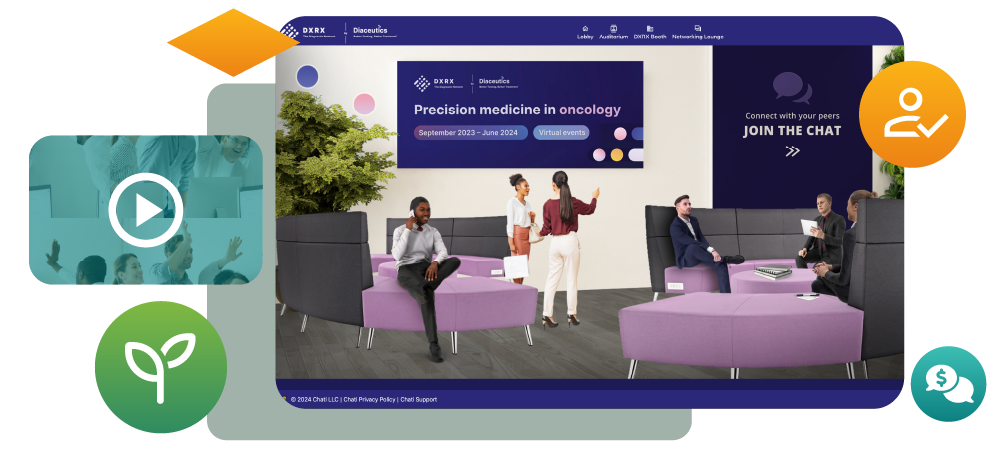
Hybrid events combine physical and digital engagement into a single streamlined event, enabling individuals from all over the world to share knowledge and ideas more effectively than simply through an in-person or virtual event alone.
Navigating the unique engagement landscape of hybrid formats can be fun and challenging, as attendees from either audience must determine the best course of action to achieve the most impactful and engaging experience. When successful, hybrid events can be enriching regarding their educational and professional goals.
When it comes to either hosting or attending a hybrid event, leveraging technology for seamless audience interaction will enable maximum engagement from both in-person and virtual audiences. This includes choosing the right event platform, interactive features, social media, and email to help broaden your range of engagement and connectivity.
Another strategy for a successful hybrid event is crafting content to engage both in-person and virtual audiences, as this enables maximum impact for engagement and interaction for both audiences while increasing diversity, inclusivity, and connectivity for everyone.
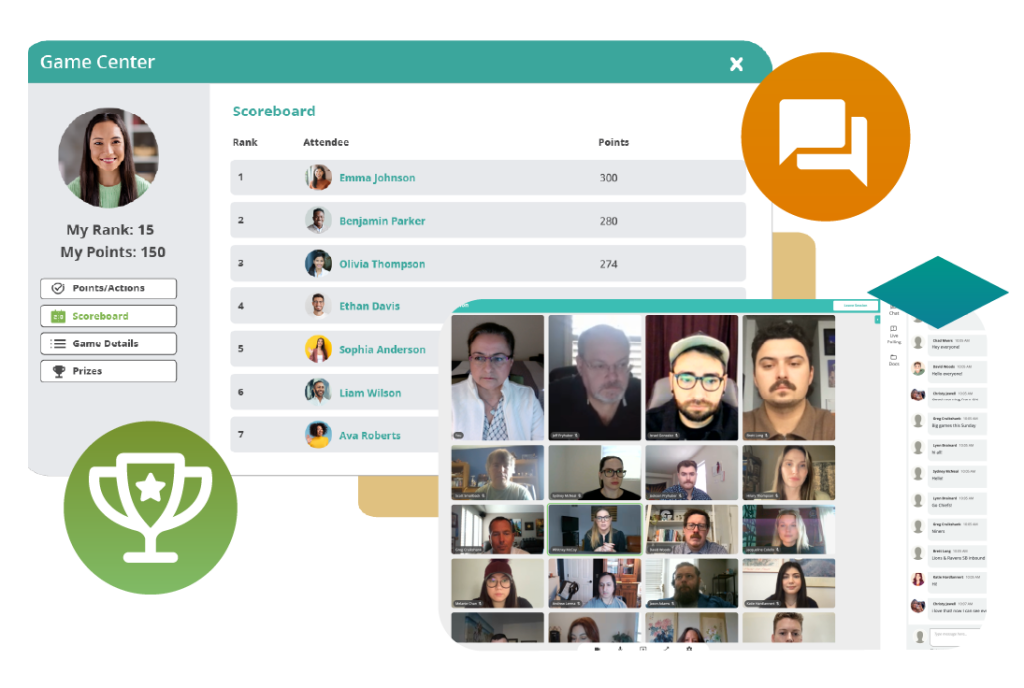
Since hybrid events cater to two audiences, adapting content to resonate with different engagement preferences is vital for maximum engagement and interaction. This is accomplished by obtaining feedback before the hybrid event, so you know your audience’s engagement preferences and plan accordingly. However, it can also be performed during the event.
Successful hybrid events involve strategies for maximizing participation across both worlds. These include the right features, such as gamification, Q&A sessions, and live Q&A, but they can also include breakout rooms, 3D virtual environments, and chat sessions.
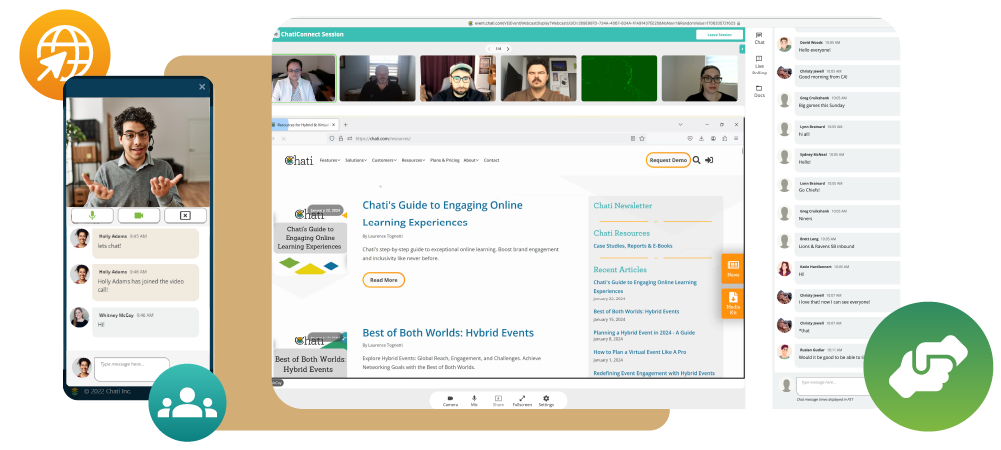
Elevating networking opportunities for hybrid attendees is vital for a successful hybrid event. It is accomplished through seamless engagement and interaction between in-person and virtual attendees while promoting engagement after the event has concluded.
The primary goal of hybrid events is bridging the gap between in-person and virtual interaction since they encompass audiences from both worlds. This increases diversity, inclusivity, and connectivity for individuals from all over the world.
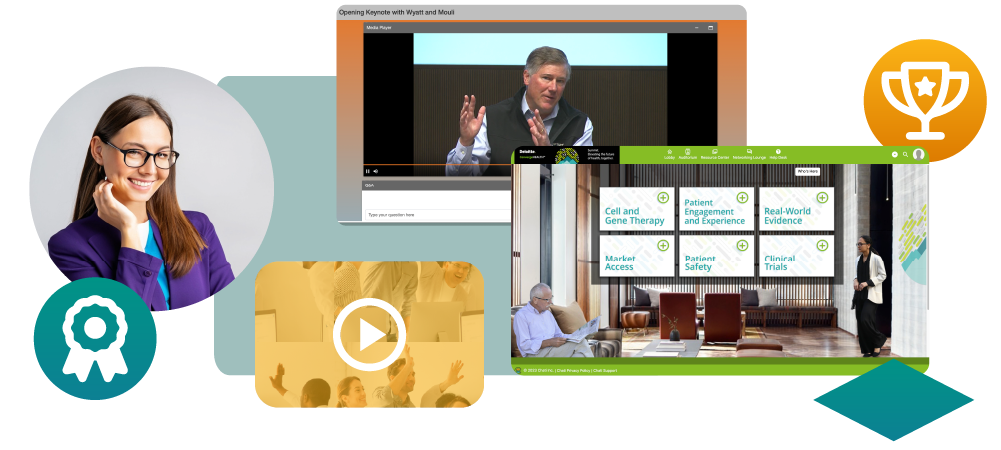
Hybrid events are only as successful as their features, accomplished through gamification and interactive elements to boost engagement. Gamification provides real-time scoring, rewards, and fun for both audiences. This increases diversity, inclusivity, and connectivity for individuals from all over the world.
Another method to ensure a successful hybrid event is to ensure participation and interaction in both event formats. Both in-person and virtual audiences need to receive the same level of engagement, interaction, and knowledge-sharing throughout the entire event.
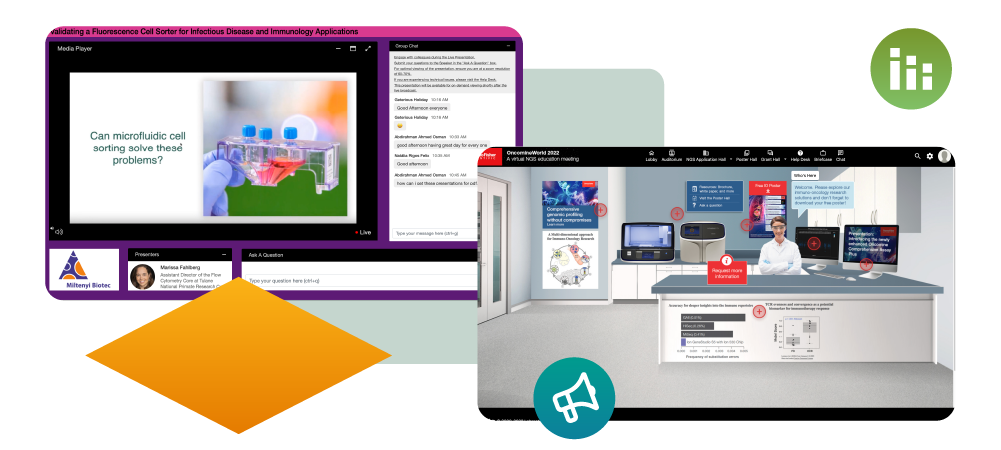
Since hybrid events incorporate in-person and virtual audiences, personalizing experiences for diverse attendee preferences is vital to ensure successful levels of engagement and interaction. This includes gaining feedback before the event with surveys or artificial intelligence and even greeting your attendees when they arrive, either in-person or virtually.
Customization for both physical and virtual audiences is essential for a successful hybrid event, as this enables greater diversity, inclusivity, and connectivity for individuals worldwide.
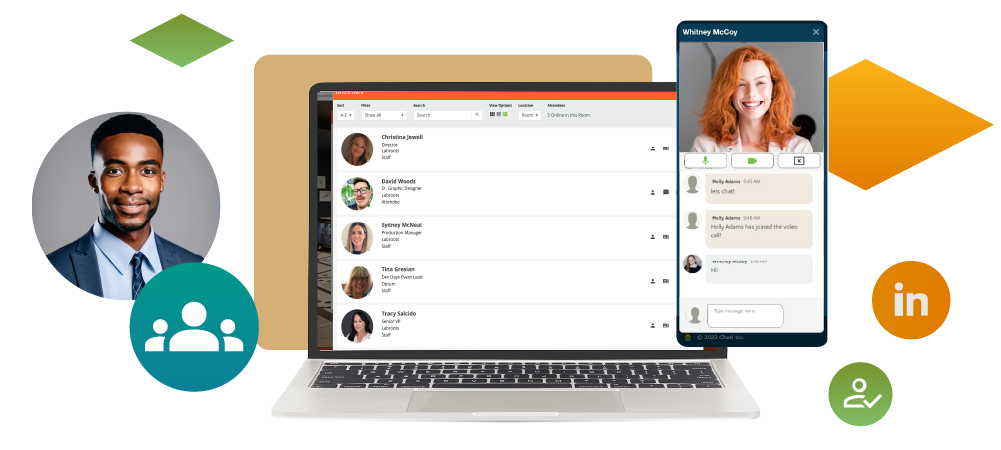
Both audiences must have seamless engagement during hybrid events, which is accomplished through overcoming technical challenges and operational considerations, including uninterrupted internet connections and seamless engagement features.
Through this, you are ensuring a cohesive experience across in-person and virtual elements, thus increasing diversity, inclusivity, and connectivity for individuals worldwide.
Hybrid events are only as successful as attendee engagement, and tracking engagement metrics across physical and digital spaces is a vital strategy for ensuring your attendees have the most impactful experiences. This can be accomplished through artificial intelligence or real-time support teams.
Additionally, analyzing attendee interaction and feedback for improvement is vital for hosting future successful hybrid events, which is accomplished through post-event surveys, both immediately after the event and a short time later.

Predicting the evolution of engagement strategies is vital to providing successful hybrid events in the future. This can be accomplished through thorough research on new hybrid event platforms and features and by staying up to date with attendee expectations for hybrid events.
Embracing continuous improvement and innovation is the hallmark of successful hybrid events, both in the short and long term. This enables growth while increasing diversity, inclusivity, and connectivity for individuals from all over the world.
Unlocking the potential of hybrid event engagement is essential for a more diverse and connected future. With the right tools and strategies, hybrid events can help break down geographic barriers and bring together in-person and virtual audiences for years.
Balancing engagement for unveiling exceptional hybrid experiences will ensure that in-person and virtual audiences receive the same seamless interaction and information while providing a better and more diverse future.
With virtual events successfully entering the mainstream globally, it's important to remember that some of the same rules apply to in-person events, including targeting the right audience and keeping them engaged. This includes building excitement about your virtual event as early as possible and personally inviting connections, but also keeping the virtual event to within 30 to 45 minutes, which makes it long enough to keep your audience engaged and short enough so they don't get bored. However, it's vital to remember that the more your virtual event energizes your audience, the higher your expectations grow for any future virtual events you might hold.
One of the primary goals of any virtual event is to keep your audience engaged, which can be done through a variety of means, including video and social media integration, personalized and interactive content, audio content such as podcasts, creating a sense of community, data visualization, virtual and augmented reality, and artificial intelligence (AI) algorithms for analyzing audience behavior so you can make the best-informed decisions pertaining to current or future content. If executed correctly, this will keep your audience engaged for the current virtual event and get them that much more excited for future virtual events you hold.
Suppose you want to host the best virtual event. In that case, it's vital to analyze your audience's demographics and preferences before, during, and after the event to know you deliver the right content to keep them engaged and excited. As noted above, AI algorithms can be used to accomplish this, but this can also be done through questionnaires and polls before and after the virtual event, as post-event feedback is vital to hosting the most engaging virtual events in the future.
When finding the right target audience, you must identify key motivations for participating in your virtual event. This includes developing an effective promotion plan, utilizing a variety of channels to reach your target audience, such as social media and email, designing captivating messages leading up to the virtual event, finding the right online platform that results in maximum engagement, embracing as many interactive elements as possible such as virtual games and Q&A sessions, and delivering educational and informative content that everyone can enjoy.
While there are many means to make your virtual event as engaging as possible, this also comes with technical challenges. These include having reliable and available content such as multi-user spaces, chat features, polls and Q&A sessions, and gamification, along with maintaining rapid and real-time solutions in case certain aspects of your virtual event fall short.
To have the most successful virtual event possible, crafting compelling visual and multimedia content is a top priority to keep as many of your participants as engaged as possible. This can include gamification, polls, and Q&A sessions, but it can also include live chat features such as podcasts and interactive video sessions. The more compelling content you have, the more you ensure your audience will be engaged throughout the virtual event and look forward to future virtual events.
Gamification features present an enormous opportunity to keep your current audience engaged and get them excited for future virtual events. These include making it as fun as possible, providing friendly challenges that increase inclusivity, and offering prizes for the "winner" or all participants.
Other important features your virtual event can have to increase engagement are interactive polls, quizzes, and live Q&A sessions. These allow your participants to not only stay engaged with the current content but inspire them to search for more content throughout the virtual event, along with becoming much more excited for your next virtual event.
All successful virtual events offer a variety of experiences for their participants, which includes implementing dynamic personalization for attendees, customizing content and breakout sessions, and leveraging data to provide targeted and relevant content for all participants. The more your virtual event is personalized, the more your participants will feel a deeper connection with your brand and other participants. This increases inclusivity and makes your participants more excited for future virtual events, along with parties with which they might share their experiences.
As virtual events have become mainstream across the globe, so has the use of virtual reality (VR) and augmented reality (AR), and incorporating these technologies offers opportunities to maximize engagement and excitement throughout your virtual event by making it as immersive as possible for all participants. With VR and AR, your participants get the sense they're in the thick of the action, allowing them to interact with everyone more directly and thoroughly than ever before.
One important characteristic of virtual events is the ability to network and build connections across the globe, and virtual events can offer these opportunities using virtual lounges. These allow participants to engage directly with one another through written or video chats while creating comfortable environments for attendees, organizers, and other participants to share ideas and experiences, increasing inclusivity for everyone.
Along with virtual lounges, immersive digital exhibitor booths, and product showcases are other ways technology can be used to create immersive experiences for everyone. The goal of any virtual event is to build your brand while building connections and your participants' brands. This means showcasing your product in meaningful and impactful ways, including 3D interactive showcases such as 3D replica models of your product, which not only keeps your current audience engaged but also allows them to get excited for future virtual events.
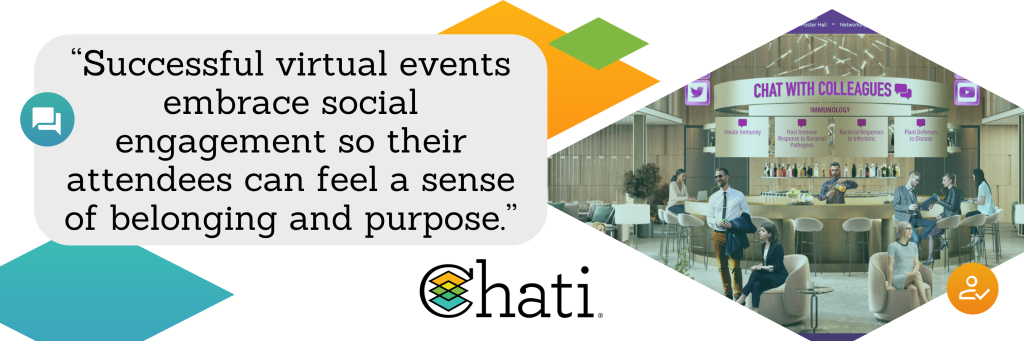
All successful virtual events embrace social engagement so their attendees can feel a sense of belonging and purpose, which only increases inclusivity and participation in future virtual events. One way to accomplish this is through social media integration for event promotion, as you want to get attendees excited for your upcoming virtual event long before it launches. This includes leveraging as many social media platforms as possible to maximize your target audience, creating hashtag campaigns before, during, and after your virtual event, and facilitating virtual networking through online communities. If executed successfully, these practices will not only allow your audience to be more engaged for the current virtual event but also let them get much more excited for future ones.
Individuals attend virtual events primarily for increased networking opportunities, and you can utilize a plethora of tools to make this possible, including innovative virtual speed networking sessions, hosting roundtable discussions and collaborative workshops, and facilitating one-on-one networking with AI matchmaking. With these tools, your attendees maintain engagement throughout your virtual event by interacting with other attendees who might share their common goals and interests, including career opportunities and personal goals.
As virtual events have taken center stage, developing methods to make your virtual event stand out amongst the rest is vital. One method is elevating speaker presentations with storytelling techniques, preventing your attendees from daydreaming while keeping them engaged throughout a talk. Another method is hosting engaging panel discussions and fireside chats that allow attendees to interact with panelists and moderators, which frequently involves minimal prep time and ample time for questions throughout the session. Finally, hosting live entertainment and performances can also benefit your virtual event, increasing engagement and making it much more fun.
Virtual events are only successful if your attendees are engaged and participating in it, and ensuring this success can be accomplished through monitoring attendee interaction and engagement metrics before, during, and after the event. How many sessions are your attendees participating in? Do they frequently leave and return a short time later, or at all? How much do they engage with the organizers or other attendees throughout the virtual event? These are vital questions to ask throughout the entire process, from promoting the virtual event and throughout it.
Much like in-person events, virtual events are successful if organizers appropriately gauge post-event feedback and satisfaction. Through this, they can determine what aspects of the virtual event were successful and the level of engagement from attendees to determine the best decisions to host an even more successful virtual event.
Feedback is essential for success, and this can be accomplished using analytics to refine strategies for future virtual events, including monitoring engagement metrics throughout the virtual event and gauging feedback from attendees.
As virtual events evolve, they will continue to encompass innovation, engagement, and technology leverage to allow for maximum engagement for organizers and attendees. This includes using VR and AR for greater immersive experiences, which not only increases engagement but inclusivity, as well. Other tools include gamification, polls, and Q&A sessions to maintain engagement while monitoring audience behavior throughout the virtual event, so you know you're providing the best experience possible for everyone.
In this post-Covid world, virtual events are becoming vital to networking, building connections, and maintaining lasting relationships. By making your virtual events as engaging as possible for your audience, you're allowing attendees to participate at their maximum potential and increasing inclusivity and openness for both your organizers and attendees alike. By embracing the redefined landscape of virtual audience engagement through technology leverage and interactive experiences, you can open doors for even greater opportunities for growing your brand and connections.
Sources: LinkedIn, LinkedIn (1), Eventx, The Ably Platform, Socio Labs, Endless Fairs, Acquire Digital, The Social Media Hat, Event Smart, b2match, SlideModel, Ami Vora

