Discover how Chati's self-service licenses give you full control - build, update, and launch virtual events on your terms. Register for our free webinar today!
As noted in previous blogs, virtual events offer an enormous opportunity to break down geographic barriers while fostering connections, building your brand, and increasing inclusivity for everyone. Marketing your virtual event effectively is vital to increase your brand and reach the global community. Here, we discuss the steps you can take to properly market your virtual event through ads, e-mails, social media, and much more to meet your virtual event marketing goals.
Several key elements contribute to a successful virtual event marketing campaign, including identifying and reaching a wider audience, using your website to communicate your virtual event's value, choosing the correct time to begin event promotions, maintaining your marketing strategy throughout the process (i.e., before, during, and after the virtual event), involving multiple sponsors and speakers, and offering incentives for attending your virtual event.
Below, we take you through Chati's top four virtual event marketing strategies:
One method to promote your virtual event is through Google Ads, the largest provider of online search advertising. There are currently more than 2 million Google Ad accounts, which collectively reach over 2 million websites. With Google being the most visited search domain in the world at more than 106 billion hits, Google Ads is the primary method to market your virtual event.
To ensure your virtual event gets the proper recognition, make sure to optimize Google Ads, including keywords that users can search to find your virtual event, leveraging assets (previously called ad extensions) that enable your marketing campaign to go beyond the basics and reach the right target audience, and taking advantage of specialized platforms, to name a few.
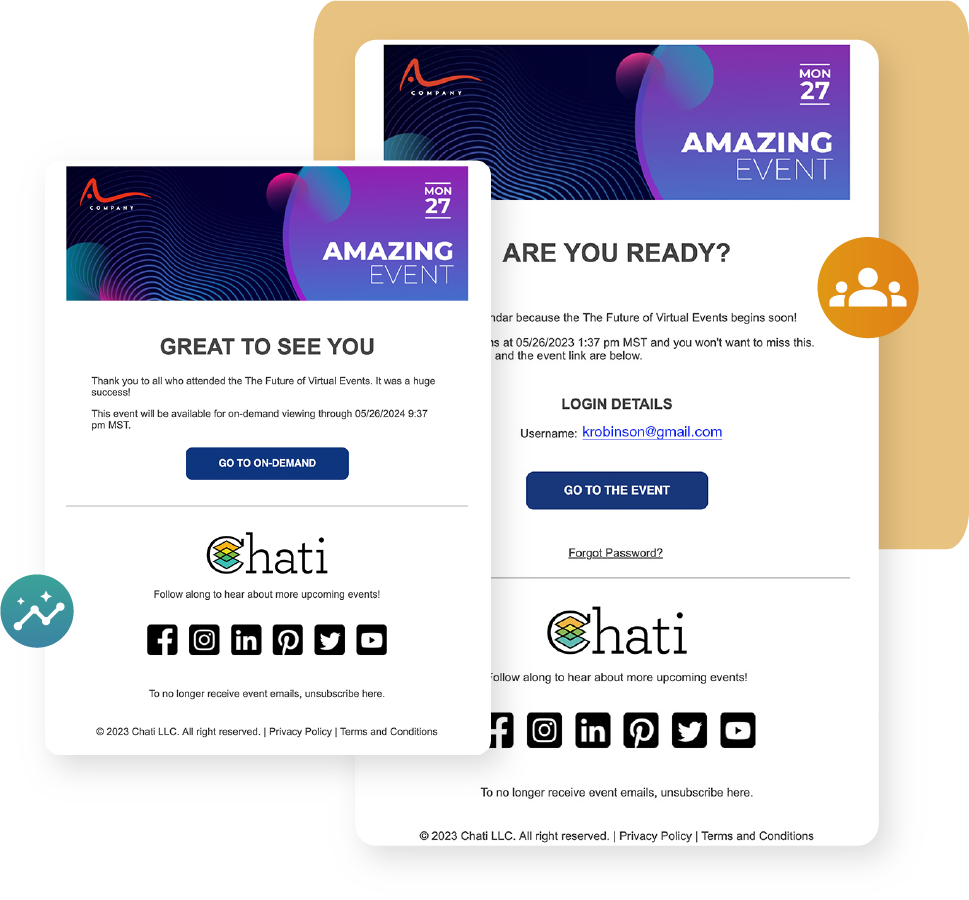
With e-mail being the primary form of online communication, utilizing e-mail marketing efficiently and effectively is increasingly important. E-mail marketing allows you to stay connected with your target audience, engage with them in real time, and increase brand awareness, to name a few.
Some of the best strategies for creating engaging event-related e-mail campaigns include personalized messages, mobile-friendly e-mails, automated e-mails, creative subject lines, and timeliness, to name a few. Be sure to speak to your audience authentically; almost 50% of e-mails are categorized as spam, and you want to avoid ending up in the junk folder.
Additional e-mail marketing strategies include highlighting speakers, easy signup processes, event invite reminders, adding e-mail testimonials from past virtual events you hosted, last-minute invites and reminders, and much more. You can reach the right target audience through these strategies with timely promotion leading to the virtual event.
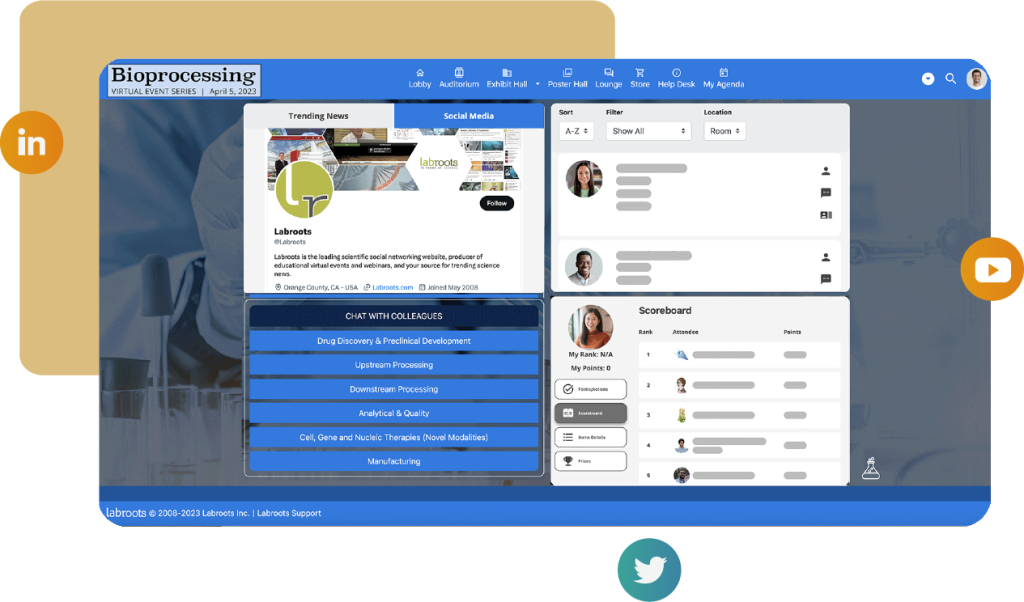
Social media has become a critical aspect of our daily lives, with several platforms to choose from where you can engage with your global audience. As of April 2023, an estimated 4.8 billion people use social media in some capacity, and because of this global reach, social media marketing has become one of the primary methods of promoting an event.
There are two advertising methods to consider when designing a social media marketing campaign: organic and paid advertising, both with their benefits and drawbacks. For example, while an organic social media campaign utilizes your social media pages to market your campaign, saving you money on paid advertising, these posts are limited to your followers. In contrast, paid social media advertising is when you pay social media companies (i.e., Facebook, Instagram, etc.) to share your content on their respective pages, which can reach beyond your personal or business pages. We recommend combining both strategies, as you can promote quality content to a broader audience while remaining true to your core audience who follow your accounts.

Search engine optimization (SEO) has become a cornerstone for marketing strategies because search engines like Google aren't perfect. Therefore, optimizing your search criteria is a great way to ensure your virtual event marketing can achieve its maximum potential. Through SEO, you can identify your target audience, focusing on keywords you think your attendees will use when searching for your virtual event. If you need extra help identifying these keywords, keyword research tools like SEM Rush can help narrow your options.
SEO can improve your event website's visibility through lead generation and increased organic traffic. By optimizing your on-page SEO, your brand can stand out from the crowded digital landscape and help you acquire consistent, qualified, and organic traffic. This will ensure you target the right audience for your virtual event while maximizing your promotion potential.
Virtual events aim to build your brand and foster lasting connections. With the right tools and strategies, such as Google Ads, e-mail marketing, social media marketing, and SEO, you can maximize your virtual event marketing potential and ensure your target audience returns for future virtual events.
Sources: Chati, Cvent, Digital Third Coast, HawkSEM, Site-Seeker, SuperOffice, GlueUp, Smart Insights, Hootsuite, vFairs, Salesmate
While virtual and in-person events have their respective advantages, the fusion of physical and virtual events in what are known as hybrid events offers the quintessential definition of seamless integration, as both your brand and attendees can foster lasting connections through both worlds simultaneously.
In this post-Covid world, the networking landscape is very dynamic, as students and employees are embracing a myriad of platforms and services to accomplish their networking needs. Therefore, enabling your brand to unleash the power of memorable hybrid events will only lead to positive outcomes, including fostering lasting connections. With hybrid events, you get the best of both worlds wrapped into one.
Like all events, designing hybrid events that adapt to attendee preferences is vital for a successful and impactful experience for both in-person and virtual attendees. Additionally, this enables a greater level of inclusivity for individuals all over the world. Preferences include:
It’s vital to offer flexibility while maintaining cohesive experiences for everyone. Along with the above preferences, other preferences might include enabling more significant levels of engagement and interaction through live chats, Q&A sessions, and polls.
Utilizing advanced event platforms for integration will enable your attendees to have the most impactful and meaningful experience possible and help you achieve the most successful hybrid event. These advanced platforms enable in-person and virtual attendees to engage and interact seamlessly with all parties.
The purpose of hybrid events is to get the best of both worlds, and incorporating interactive tools to bridge physical and virtual engagement will allow for greater engagement and interaction for your team, attendees, speakers, and additional guests.
To create the most impactful experiences for everyone, tailoring content to resonate with in-person and virtual attendees will allow maximum engagement and interaction between all parties, including the attendees, hosts, speakers, and additional guests.
Some strategies for maximizing engagement across all channels include making all features available to in-person and virtual attendees. This includes polls, live chats, Q&A sessions, talks, and additional features. This will ensure your attendees will achieve the maximum possible engagement while fostering lasting connections with all parties.
When hosting a hybrid event, it’s vital to achieve seamless transitions between in-person and virtual sessions. This will enable attendees from either audience to achieve maximum engagement and interaction with all parties while staying actively immersed in the event until the end.
A vital part of a successful hybrid event is balancing timing and logistics for both in-person and virtual audiences. This is especially important since most of your attendees will hail from different time zones, and some even across the globe. Ensuring that schedules can match those of your attendees will ensure maximum engagement and interaction, which will not only foster lasting connections but increase inclusivity, as well.
Like all events, tracking attendee interaction and engagement metrics throughout the hybrid event is essential to achieve maximum engagement and foster lasting connections. The challenge comes with monitoring in-person and virtual attendees, but tracking such engagement can be achieved through constant communication and even artificial intelligence.
While hybrid events encompass the best of both worlds, this means ensuring all attendees are achieving the maximum engagement possible. To accomplish this, analyzing feedback and insights for future engagements from both in-person and virtual attendees will ensure more successful hybrid events in the future.
Hybrid events offer the best of the world in-person and virtual events and can help elevate your events through seamless integration. Hybrid events are here to stay, and taking advantage of many features and platforms will ensure you, your attendees, and your speakers will have the most engaging and interactive experience possible.
With the increasing dynamics of the digital landscape, embracing flexibility and impact will ensure you not only achieve the most successful hybrid events but also foster lasting connections for your brand and your attendees. By utilizing both in-person and virtual events simultaneously, you enable the possibility of breaking down geographic barriers and improving inclusivity for everyone.
Sources: Freeman, TalkingTree Creative, Brella, Stova, Goldcast

