Discover how Chati's self-service licenses give you full control - build, update, and launch virtual events on your terms. Register for our free webinar today!
Virtual events have enabled online technology to advance in ways never before imagined, and this is especially true with the rise of artificial intelligence (AI) and automation, which provide virtual events an extra level of engagement and excitement while still providing the same level of impact for everyone. Automation transforms attendee engagement by ensuring maximum satisfaction, session participation, immediate improvements, and adaptability.
We will discuss why AI is essential for future virtual event success, including enhancing engagement, event optimization, and more. Through this, you will have the tools and resources to use AI in the most productive ways with the goal of maximizing attendee engagement.

AI streamlines event planning and execution by simplifying the event planning process, including venue selection, scheduling, attendee engagement, and post-event data analysis. AI enhances attendee engagement by providing session suggestions, real-time attendee behavior monitoring, and on-the-fly decision-making during the event.
AI-powered chatbots can be used for instant attendee support when issues arise, including questions about specific sessions, event navigation, or personalized communication from real individuals.
Automating session recommendations and content curation is a fascinating way to enhance attendee engagement, as this provides attendees with a personalized experience while guiding them to sessions relevant to their personal and professional goals.
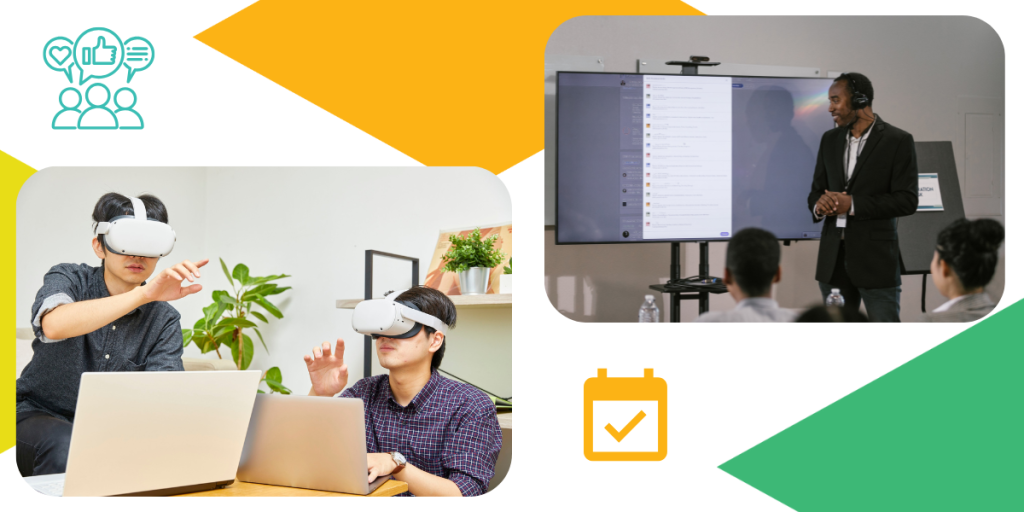
AI-powered networking and intelligent matchmaking enable attendees to connect based on career goals, personal or professional interests, industry, and reasons for attending the virtual event. This is accomplished through pre-event surveys that are input into AI algorithms, which then perform instant matchmaking suggestions to maximize attendee engagement.
Personalized event experiences using AI algorithms are an excellent way to enhance attendee engagement, including ticketing, registration, automated agenda, navigation, exhibitor connections, and post-event feedback.
Finally, real-time sentiment analysis for attendee feedback provides event organizers with necessary data regarding attendee engagement, satisfaction, and social media monitoring, while being able to conduct immediate actions and make on-the-fly adjustments.

AI improves attendee tracking and behavior analysis through the virtual event by providing real-time feedback on attendee engagement and satisfaction, including all sessions, breakout rooms, gamification, and post-event analysis.
Using AI-generated reports to refine future events is an excellent way to improve upon mistakes and glitches from previous virtual events, thus providing enhanced levels of attendee engagement and impactful experiences.
Finally, predictive analytics for better event decision-making is essential for ensuring a seamless attendee experience while immediately addressing all concerns and issues that arise throughout the virtual event.
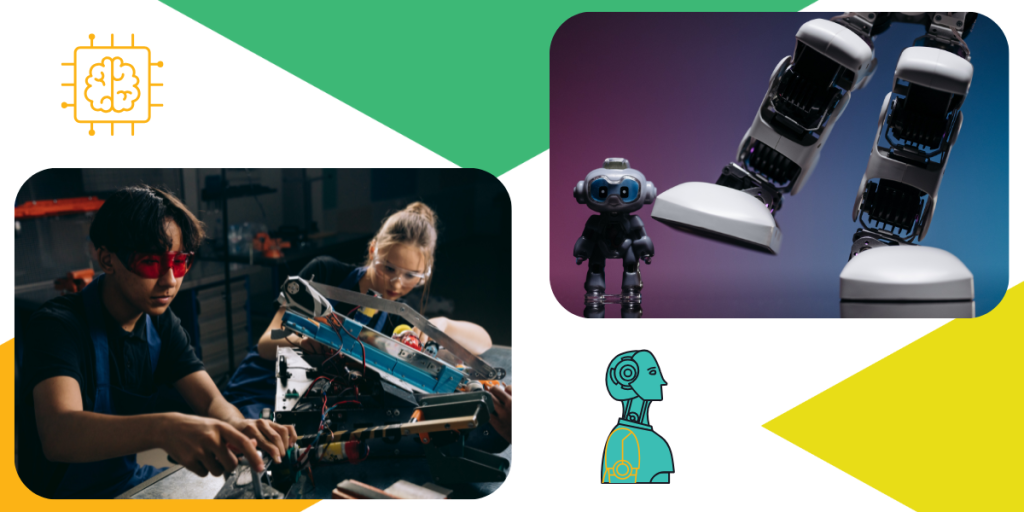
Emerging AI trends in event technology include virtual and augmented reality (VR/AR), enhanced personalization, sustainability, immersive content, facial recognition, chatbots, event marketing, engagement insights, and more.
The potential of AI-driven virtual reality experiences will enable attendees to reach new heights of engagement and connectivity with other attendees while working to achieve their personal and professional goals.
Finally, ethical considerations and AI transparency in events ensure maximum trustworthiness, including data handling strategies, AI algorithms, and clear communication is achieved so attendees can be secure in participating in the virtual event.
Summary
We discussed why AI is essential for future virtual event success, including enhancing engagement, event optimization, and more. With this knowledge, you now have the tools and resources to host impactful virtual events that maximize attendee engagement and connectivity with individuals worldwide.

We encourage event planners to adopt AI-driven strategies to maximize attendee engagement and satisfaction and stay updated on how Chati can improve our use of AI in our virtual events. Contact Chati to explore how AI can enhance attendee engagement in your next virtual event and help attendees achieve their personal and professional goals.
The Covid-19 pandemic changed how we live, specifically how we communicate, both in-person and online. Throughout 2020 and the height of the pandemic, employees had to work from home with the enhanced use of virtual platforms, which helped coordinate meetings and accomplish tasks. These virtual environments were also crucial for conferences and helped bring virtual events into the mainstream. While the pandemic has subsided, virtual events have continued to evolve into the norm for work events and meetings due to their capacity for universal reach by breaking down geographic barriers and easily accessible features, including surveys, live chats, and Q&A sessions.
With virtual events evolving over time, they continue to pose a myriad of challenges and opportunities, specifically for organizers. Such challenges include technology leverage, engagement, and time zones, to name a few. Despite this, virtual events continue to provide many opportunities, including reaching new audiences, sponsorship opportunities, and improved content, to name a few.
As virtual events continue to evolve, so will the ability of AI to contribute to them, with AI providing a myriad of ways to captivate attendees in virtual events, including attendee matchmaking, personalizing attendee experiences, removing language barriers, and gathering post-event feedback. Other features also include AI-powered event scheduling, AI custom event agendas, and using AI to create event names and logos, to name a few.
Virtual events can be used to enhance engagement through AI personalization algorithms to customize virtual event experiences. This includes streamlining event management, improving event analytics and content delivery, and analyzing attendee behavior and interests to customize their experience.
Using AI in your virtual event provides a means to facilitate both interaction and networking among your virtual event attendees. This can be done through AI-powered matchmaking, which uses algorithms to connect attendees based on their interests and preferences.
Successful virtual events have many features for attendees, including virtual booths, chatbots, and Q&A sessions. Still, now, with the power of AI, these same features can be AI-driven, and matchmaking technologies can be used to make these features even better.
Much like in-person events, feedback is vital for hosting a successful virtual event, including during and after the event. This can be accomplished through AI-driven data analytics, which is used to track attendee behavior throughout the event and make improvements during the current and future virtual events.
Through AI-driven analytics, virtual event organizers can extract valuable insights from attendee behavior and feedback to improve during and after the virtual event to achieve the best engagement levels possible.
One aspect that AI can do to improve virtual event experiences is optimizing content delivery, which can lead to content personalization, automation applications, and enhancing efficiency, to name a few.
Through this, the virtual event experience will only improve by ensuring that attendees receive the correct information at the right time, which will only lead to greater engagement, interaction, and networking between the attendees and organizers, both during and after the virtual event.
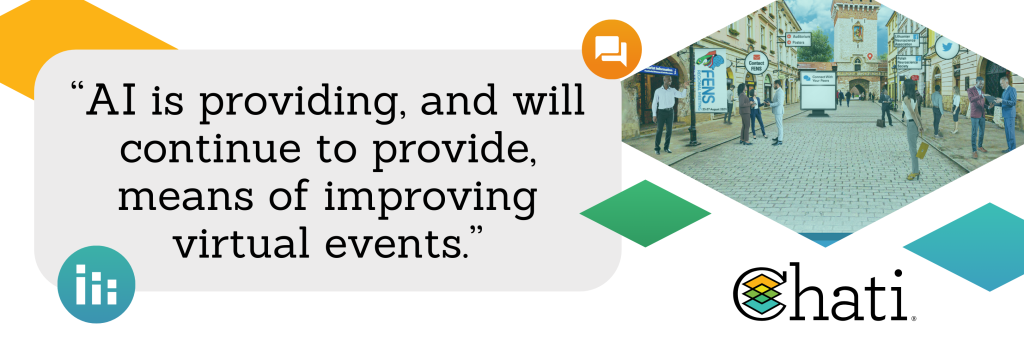
AI is providing, and will continue to provide, means of improving virtual events. However, given AI and its usage in a plethora of fields is still being understood and, in some cases, has legal ramifications, it still poses many potential challenges and ethical concerns regarding virtual events. These include concerns about privacy and security, including the potential for exposing personal data. Additionally, they can lead to technical and operational problems using dynamic systems that could crash. Finally, AI models and algorithms can be biased or discriminatory, leading to skewed results of virtual events.
The capabilities of AI improving virtual events cannot be understated, including tracking attendee behavior, constructing data analytics, and providing matchmaking technologies to enable attendee customization. While the use of AI comes with challenges, appropriate steps can be taken to ensure that risks are mitigated and every AI-driven virtual event can achieve its maximum potential for attendees and organizers.
While AI does pose several challenges, specifically regarding privacy and security, like with all new things, virtual event attendees and organizers should be encouraged to embrace AI as a positive tool that can be used to enhance the virtual event experience, which will only continue to evolve and improve in the coming years and decades.
Sources: Medium, Expert Events, GlueUp, Timely, GetGenie, LinkedIn, b2match

