Discover how Chati's self-service licenses give you full control - build, update, and launch virtual events on your terms. Register for our free webinar today!
Virtual events have become the mainstream in building connections and fostering professional relationships through their ability to enhance products and services from various fields and disciplines. They present valuable opportunities to meet new people and gain knowledge that lasts a lifetime. But how important is it to use virtual events to reach a global audience for your brand, and what steps can be taken to maximize your virtual event experience while building your brand for the right audience? Here, we examine several methods that can be undertaken to achieve this while enhancing the virtual event experience overall.
Let’s first examine how the power of virtual events can break down geographic barriers. In a nutshell, virtual events help expose the irrelevancy of geographic barriers, with a 2022 study predicting that virtual events hold the potential to not only eradicate both geographical and administrative barriers but also increase diversity, equity, and inclusion (DEI) in a post-Covid world, as well.
The goal of every company is to build its brand by sharing it with as many people as possible and using virtual events to reach audiences at the global level can do just that. This helps determine the right audience for your brand while also learning about various cultures and how to reach audiences you might have initially overlooked.
Navigating is one of the most challenging aspects of the virtual global landscape. Still, if accomplished using virtual events, you can not only reach new client numbers but learn new ideas, as well.
This is accomplished by constructing inclusive events through various methods, including diverse representation, crowdsourcing, establishing meeting norms, and written and verbal communication, to name a few. It is important to note that the same planning style for in-person events should be applied to virtual events to maximize the goal of an inclusive environment.
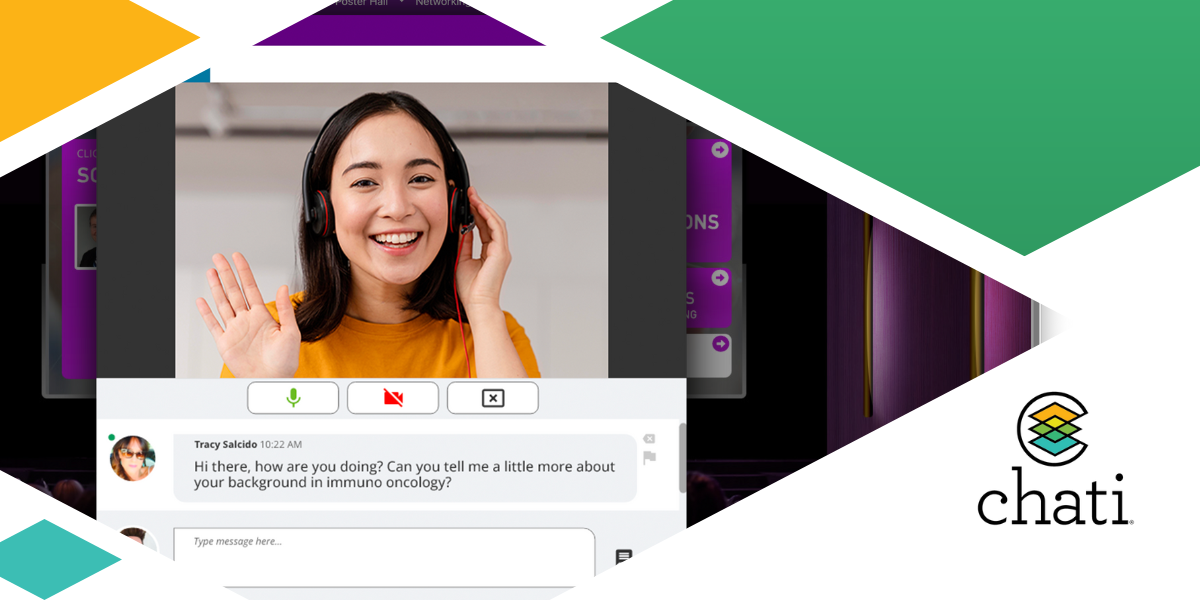
Utilize the unique features of ChatiConnect one-on-one or group video chat to network on a global scale.
For virtual events to be successful, especially at the global level, it’s essential to make them as seamless as possible for all your clients and attendees. This includes easy access to attend, engage, and leave feedback, if necessary. The easier your clients and attendees can attend, the more likely you are to build your brand.
Virtual events hold the potential to build relationships with individuals of all backgrounds and disciplines, especially at the global level. Building your brand while making positive connections is always a win-win.
When hosting virtual events at the global level, it’s of the utmost importance to remain aware of cultural sensitivity and relevance. This includes potential slang and/or idioms, gender stereotyping, and appropriately adapting words and images to enable inclusivity further.
In addition to incorporating cultural sensitivity, other ways to make your virtual event inclusive include captions for the deaf and hard of hearing and multilingual options since a portion of your audience might only speak one language.
Hosting a virtual event on a global scale means having to remember a portion of your audience will be from different time zones, as there are currently 38 different local time zones in use around the world. This means offering several times for the same talk or session within your virtual event to maximize engagement and inclusivity.
A variety of strategies can be applied to make your event as convenient and inclusive as possible for your attendees. For inclusivity, these strategies include instilling a culture of courage, encouraging a sense of purpose, and empowering a sense of well-being. Strategies for convenience run parallel with how to manage the various time zones, as mentioned above, in that offering multiple talks and sessions at different times will increase your attendance and build a sense of belonging.
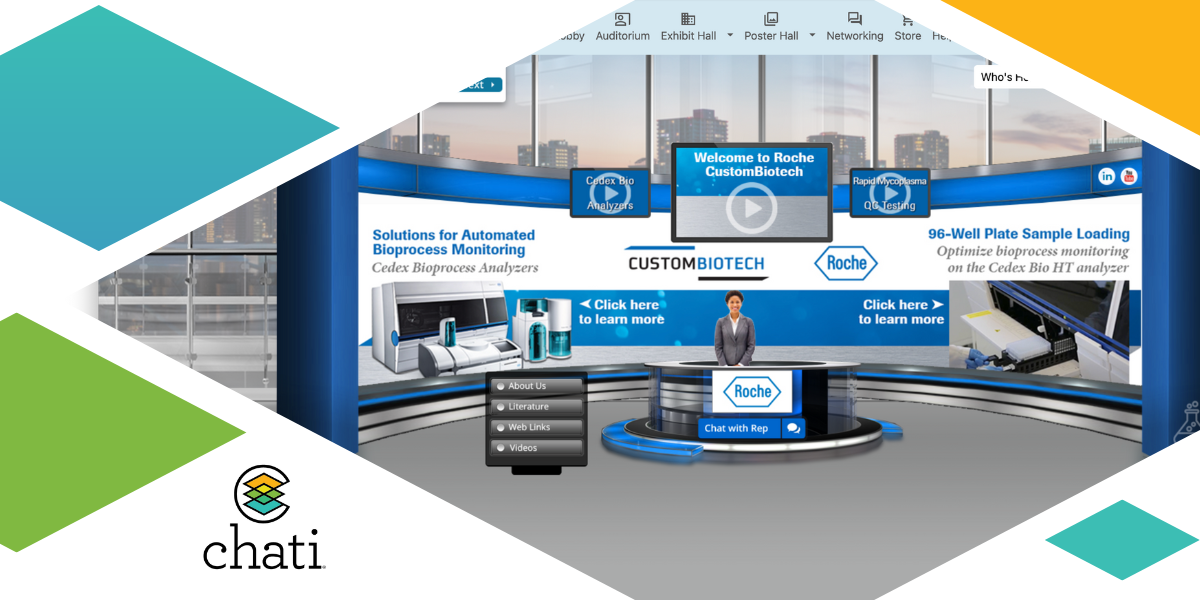
Chati facilitates broad customization options to amplify your brand.
As noted earlier, the goal of any virtual event is to maximize your brand as much as possible, and using various virtual event marketing tools to showcase your event will do just that. These include online tradeshows, virtual conferences, and webinars. The goals of these strategies include:
Another important goal is to market your virtual event before, during, and after the event.
As noted above, leveraging digital channels is a strategy to market your virtual event. These include a myriad of social media outlets, like Facebook, X (formerly known as Twitter), LinkedIn, and now Mastodon and Threads, with the latter two gaining traction as a substitute for X. LinkedIn is especially useful for building professional connections, as it is primarily geared towards business and professional purposes.
If your virtual event is going to be on a global scale, your attendees will come from diverse cultures and backgrounds. Therefore, diversifying portions of your event to better engage with a diverse audience will make your virtual event more impactful for everyone.
To increase inclusivity for your virtual event, creating personalized interactions for making broader connections is vital to building your brand. Some strategies for personalizing your virtual event include understanding the preferences of your attendees, producing custom content, on-demand content, and personalized engagement, just to name a few.
With the goal of building your brand in mind, the importance of showcasing your company’s products and services to a global audience can’t be overstated. However, moderation is vital, so too much showcasing can result in the opposite impact you seek.
Gaining clients is one goal of your virtual event, but building partnerships with other companies is another goal. This can be accomplished by expanding your marketing horizons to allow for company-to-company interactions instead of company-to-client interactions.
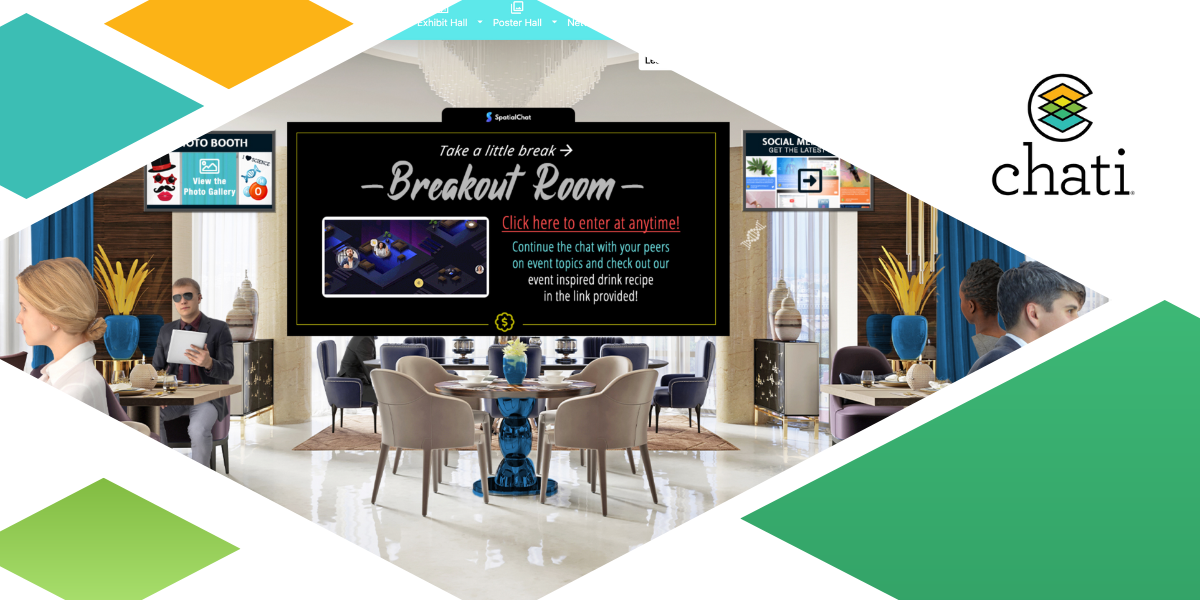
Chati’s innovative networking system allows your brand to reach new audiences worldwide.
Speed networking is slowly becoming the next great way to build connections and meet great people and including it in your virtual event could provide an excellent avenue to build lasting relationships on a global scale. Another way to accomplish this is through collaborative workshops to foster engagement, which could also be combined with speed networking for a more engaging experience.
Artificial intelligence has become intertwined in our everyday lives, so why not use it to your advantage for your global virtual event? For example, it can be used as a matchmaking tool to identify the right attendees for certain aspects of your virtual event.
Knowing that you’re engaging the correct audience and using various metrics tools to track appropriate participation and engagement numbers is vital to growing your brand. This allows you to re-evaluate strategies and tactics both before, during, and after the event to maximize your engagement, specifically on a global scale.
If you’re going to grow your brand globally, understanding the various audiences you’re reaching is vital. This is accomplished through analyzing geographical data to make more informed decisions about your virtual event content and time management.
Some examples of brands that have successfully grown on a global scale include Chati, Salesforce, Slack, HubSpot, and Notion. These companies have leveraged multiple tools to both grow their brand and build lasting connections, as well.
The Covid pandemic forced both the public and companies to adapt quickly to a world of lockdowns and restrictions, and the use of virtual events on a global scale is only getting stronger.
Virtual events aim to build connections and share ideas without geographic restrictions. In this post-Covid world, embracing the opportunity to use virtual events to continue this fantastic trend is more important than ever.
Virtual events hold the potential to not only build your brand and list of clientele but also build strong and lasting connections at both the local and global scales. Virtual events have been shown to erase borders and geographic barriers, creating a more engaging and inclusive world for everyone.
As noted, the goal of every company is to build its brand, and using virtual events to do that on the global stage will not only accomplish this goal but potentially grow it in new and exciting ways where everyone can engage and connect. Virtual events offer an exciting way to share ideas and build connections that have only grown in a post-COVID world that will only gain traction and foster connectivity without worrying about geographic barriers keeping you from accomplishing your goals.
Sources: Nature Biotechnology, Splash, Toppan Digital Language, Eventscase, Cvent, Virtual Days, Cvent (1), Eventpreneur, Wistia, Nature
In today's fast-paced digital world, it's more important than ever to find creative ways to capture the attention of your target audience. Whether you're promoting a new product, service, or event, effective marketing strategies can help you stand out from the crowd and increase engagement with your audience. In this article, we will explore six creative marketing strategies that can help you boost engagement.
1. Use Visual Content
Visual content is an excellent way to grab the attention of your target audience. This may include images, videos, infographics, and any other form of visual representation that can communicate your brand's message. Just ensure that your graphics and videos are simple and easy to understand. People are more likely to share content that is visually appealing, informative, or entertaining.
2. Host Live Events and Webinars
Live events and webinars are another way to build a meaningful relationship with your target audience and connect with them in real time. According to a study by Eventbrite, 3 out of 4 millennials say that they value experiences over desirable things, and 74% say that attending a live event has helped them expand their perspective more than reading about something online.
To create engaging live events and webinars, consider partnering with industry experts and influencers who can provide valuable information and insights relevant to your audience. This will also help you to create a sense of community and loyalty, which may encourage your audience to engage with your brand in the future.
3. Personalize your marketing messages
Engagement marketing is all about creating a conversation with your clients. If people feel like they are being spoken to directly as individuals with particular tastes, they are more likely to respond in a positive manner. For example, a study by Epsilon has shown that 32% of people appreciate personalized messages, with one respondent stating: "It means that it's something suited to me exactly so that I'm more likely to be interested in what they're selling".
Businesses such as Netflix and Spotify, with their personalized recommendations, are good examples of this. To personalize your marketing messages, consider what has previously interested your audience so you can tailor your messages to their specific preferences.
4. Leverage influencer marketing
Influencer marketing is an increasingly used method of increasing engagement and reaching new audiences - according to a study by Lingia, marketers are branching out into newer forms of social media centered around influencers. Interest in the social media app, TikTok, for example has risen 325% in one year.
To leverage influencer marketing, consider your target audience carefully. The right influencers could make you visible to your target demographic or niche, which in turn could increase engagement among people most likely to buy your products or services.
5. Embrace User-Generated Content
User-Generated content (UGC) is content created by your target audience and includes customer reviews and social media posts on your business. As it often feels more authentic than branded content, it can be a meaningful way to increase trust and engagement with people considering buying your product, as it provides social proof that a brand's products or services are worth buying.
Like influencer marketing, it can also increase your brand awareness, as it increases the reach of your message. When people share posts on social media, they expose the brand to their friends and followers. Monitoring and responding to UGC is also a good way to show your appreciation and build a relationship with your existing clients. Incentivizing customers to share photos, videos, or other content by doing giveaways for best reviews or recommendation videos can also encourage people to create more UGC.
6. Run Contests and Giveaways
Contests and giveaways are a particularly effective way to increase engagement and create excitement around your brand, as they encourage your target audience to interact with your brand in a way that doesn't cost them money.
Prizes may be free products, free trials, or discounts and coupons, depending on the service your business offers. Doing this can benefit your business in several ways. On top of encouraging people to create more UGC, asking people to share posts or links as a requirement for entry can help you reach new audiences. Businesses can also require customers to provide their contact details as part of the entry process, allowing them to build a targeted email list that can be used for personalized marketing campaigns later.
Sources: Eventbrite, Epsilon, Lingia
Planning an event can be a challenging task. Whether you're planning a corporate event or a wedding, considering all the details and logistics of your team, attendees, and vendors requires careful coordination and attention to detail. In this article, we provide a complete guide to event planning, including tips, tricks, and questions to consider to help you succeed in your event.
1. Define your goals
The first step in event planning is to define your goals and objectives. This will allow you to cater your event to what you want to accomplish. Are you focused on raising funds? Expanding your reach to new audiences? Promoting a new product to existing customers?
You may wish to use a tool such as "SMART" goals to help you achieve this. SMART goals are specific, measurable, achievable, relevant, and time bound. For example, instead of setting a goal to "raise money for charity," set a goal to "raise $10,000 for charity in x number of hours". This will help you to focus your efforts and resources.
2. Consider your target audience
Once you have defined your goals and objectives, it is important to understand the audience you want to reach. This can include considering factors like age, occupation, religious beliefs, and geographic location. What motivates them to attend your event? What are they looking for in an event experience?
If you have organized similar events before, consider looking at your past attendees and the feedback they have given you. You can also conduct market research on your target audience using polls or pre-event surveys focused on their backgrounds and interests. This will help you to cater your event to their wants and expectations.
3. Create a budget
Creating a budget is essential for the success of your event, as it helps to ensure that you stay on track with your expenses and can manage any unexpected costs. You may want to make a list of expenses such as venue rental fees, catering, entertainment, marketing, and software. Based on the scope of the event and the expenses identified, you can then set a budget limit. If you find that you are overspending in one area, consider reallocating funds from another area. According to EventMB, 44% of corporate event planners say that their biggest challenge is staying on budget. You may therefore want to factor in a contingency fund for any potential extra costs.
4. Set yourself apart
Coming up with a unique event concept is one of the most challenging parts of event planning. However, differentiating your event is a surefire way to stand out and make a memorable impression on your attendees.
Researching trends in the type of event you're planning can be a good way to compare your plans and add twists to current themes. Furthermore, creating on-brand visuals for invitations, decorations, catering, and other miscellaneous elements of the event will help your attendees engage productively with your brand.
5. Promote your event
Promoting your event is crucial to its success. Use a variety of marketing channels such as email, social media, or paid advertising to spread the word about your event. Considering your target audience is important here - a cafe that wishes to promote a new drink may be appealing to younger people, and so may find that advertising on social media is more effective.
While promoting your event, data analytics such as Google Analytics can help you track who is visiting your page. Meanwhile, online ticketing platforms can allow you to access data, including when and who has been buying tickets to your events. This can help you see which marketing strategies are working and who finds your brand most appealing, which can then help you adjust how you market future events.
6. Measure your success
Having a plan to evaluate the success of your event is crucial to consider what you did well, what you could've done better, and what you want to do next. This can include measuring factors such as attendee satisfaction and revenue generated.
Use the data you collect regarding ticket sales and website traffic to gain insight into these trends, and make sure to ask your audience through polls or post-event surveys what they enjoyed and what they felt was lacking. Asking the staff who managed the event in real-time will also be helpful in evaluating what they felt went smoothly and what needs further work.
By establishing a system for measuring your success after each event, you can create a feedback loop that allows you to continually improve, and better target your audience.
In recent years, virtual events have become increasingly popular, especially in the wake of the COVID-19 pandemic. As more and more companies pivot to virtual events and more and more venture capitalists fund companies that make tools to improve virtual events, the importance of nailing event logistics cannot be overstated.
Let’s look at some tips for nailing virtual event logistics, as well as provide a run of show template that you can use for your next virtual event.
First and foremost, it's important to have a plan in place for your virtual event. This means creating a detailed run of the show that outlines the flow of the event, from start to finish. Your run of show should include everything from pre-event preparation to post-event follow-up, and it should be updated regularly as you make changes to the event.
One key aspect of event logistics is making sure that all your technology is working properly. This means testing your video conferencing software, making sure that your internet connection is stable, and ensuring that all your presenters and attendees have the necessary equipment to participate in the event. If possible, it's also a good idea to have a backup plan in place in case of any technical issues that may arise; Murphy’s Law, after all.
Another important aspect of event logistics is making sure that you have a clear communication plan in place. This means letting your presenters and attendees know what to expect before, during, and after the event. You should also have a plan for responding to any questions or issues that may arise during the event.
It's also important to consider the overall attendee experience when planning your virtual event. This means making sure that your event is easy to access and navigate, and that attendees can interact with one another throughout the event. You may want to consider using breakout rooms, chat functions, or other interactive features to keep attendees engaged.
Finally, it's important to follow up with attendees after the event to gather feedback and assess the success of the event. This can help you identify areas where you can improve for future events, and it can also help you gauge the overall satisfaction of your attendees. You can do this via a survey or a post-event email.
To help you get started with your virtual event planning, we've created a run of show template that you can use for your next event:
Pre-Event Preparation
Event Start Time
Event End Time
In conclusion, nailing virtual event logistics requires careful planning and attention to detail. By creating a detailed run of show, testing your technology, communicating clearly with attendees and presenters, and considering the overall attendee experience, you can ensure that your virtual event is a success. Use our run of show template to get started, and don't forget to follow up with attendees after the event to gather feedback and assess the success of the event.
Hosting an event can be a significant undertaking, especially when it comes to the financial aspect. That's where event sponsorship comes in - it can provide the necessary funding to make your event a success. In this blog post, we’ll cover all you need to know about event sponsorship, including sponsorship levels, sponsor benefits, sponsorship packages, and more.
It's essential to understand the different sponsorship levels that you can offer to potential sponsors. These levels can range from a title sponsor, who is the primary sponsor of the event, to supporting sponsors who contribute a smaller amount. Each level of sponsorship typically comes with its own set of benefits and recognition opportunities.
Next, consider the benefits that you can offer to your sponsors. These benefits can range from logo placement on event materials to VIP experiences, such as access to exclusive areas or meet-and-greets with key event attendees. Other benefits can include speaking opportunities, branded content, and social media exposure.
To make it easier for potential sponsors to understand what they're getting in return for their investment, it's important to create sponsorship packages. These packages should clearly outline the benefits of each sponsorship level, as well as the associated costs. This will help potential sponsors make informed decisions about which sponsorship level is right for them.
It's also important to consider the type of event you're hosting when creating your sponsorship packages. For example, a music festival may offer different benefits than a corporate conference. Consider the audience for your event and the type of exposure your sponsors can gain from the event to tailor your sponsorship packages accordingly.
When it comes to securing sponsors for your event, it's important to have a clear plan in place. This may include identifying potential sponsors, creating a pitch deck, and reaching out to potential sponsors with a tailored sponsorship proposal. You can also leverage your personal and professional networks to identify potential sponsors who may be interested in supporting your event.
Finally, it's important to maintain open lines of communication with your sponsors throughout the event planning process. This includes regular check-ins to ensure that sponsors are receiving the benefits they were promised, as well as providing updates on event planning progress. It's also important to thank your sponsors publicly and privately after the event, as they played a crucial role in making your event a success.
In conclusion, event sponsorship can be a valuable source of funding for your event, but it requires careful planning and execution. By offering different sponsorship levels, creating tailored sponsorship packages, and providing clear benefits to sponsors, you can attract the right sponsors for your event. Remember to maintain open communication with your sponsors and thank them publicly and privately for their support. With the right approach, event sponsorship can be a great event that helps both you and the sponsor! Good luck!
Whether you're organizing a small event for a local business or an international one for a larger corporation, a good event management strategy is key for providing attendees with the best experience.
Companies are investing more and more in their events, with 52% of event budgets growing yearly. In this context, solid event management is key for securing investment returns. But what exactly is event management?
Though people often separate event planning and event management, event management often covers both event planning and execution. In other words, event management is the process of shaping, curating, and running an event. Managers are often involved from the start - from securing participants and customizing marketing strategies to real-time management and evaluation.
Below, we outline some planning and execution tips to help you create a successful and engaging experience for your guests and participants.
Specify your goals
The first and most important stage of running an event is figuring out what you hope to achieve. Why are you hosting this event? What would a successful event look like? What do you want your participants to get out of this event? Creating a vision and thinking about the final output will allow you to set clear deadlines and manage your time efficiently. It will also allow you to establish communication with participants early and consistent and clear communication with potential attendees.
Budgeting your event
Deciding on an event budget early on is pivotal as it will help allocate available resources and avoid overspending. It will also give you time to source what you need for your event. Making a checklist or plan of actual and potential costs, such as venue, catering, technology, and staff, can be helpful. According to Eventbrite, event planners spend an average of 43% on marketing and promotion, 32% on speakers and talent, and 18% on venues. Asking vendors and participants for estimates of costs can help you compare and create the most sustainable plan.
Customizing your event
Who is your target audience? A survey by Edelman Intelligence shows that attendees from different generations - millennials, Generation X, and Baby Boomers - have different needs and expectations regarding professional conferences. A good event management strategy is key for fulfilling a variety of expectations and making the experience engaging for everyone involved.
Polling or asking your target audience what they want to gain out of the experience is a good way to gauge interest and expectations. You can also learn from others' experiences. Looking at previous events in your space and observing what was done well and what could be better may help you curate your plan.
Marketing your event
How can you reach your target audience? According to a poll from Endless Events, 40% of event marketers believe that email marketing is the most effective way to advertise an event. Creating an events page and using social media are also ways to connect with your potential audience - Facebook and Instagram were the social media platforms most used by marketers in 2021 due to their large user base. The platforms you use will depend on who you aim to reach - younger generations tend to gravitate towards newer social media platforms such as TikTok. In contrast, older generations are more reachable by email. Social media influencers are also a potential avenue to reach large groups of people at once. LinkedIn is also a useful platform for professional or corporate events to connect with potential attendees or participants.
Real-time management
This is the main task of the event manager. For example, managing suppliers and tickets and ensuring health and safety regulations at the event itself is paramount for success. What you will have to do to keep the event running smoothly will depend on the type of event being hosted, but being able to coordinate on-site with your team, vendors, speakers, or participants will allow you to integrate suggestions and solve problems as the event proceeds. Depending on the size of your event, you could use event management software to help you with check-in, branding, real-time reporting, and data analysis. This can reduce the burden on you and your team, leaving you freer to attend to individual problems or participants.
Rehearsal
A good way to ensure the event is manageable in real-time is to run a rehearsal beforehand. This will allow you to scope out potential problems before they happen and integrate solutions into your event management plan. If you are using technology to stream your event, test-run the software to see if it runs smoothly. Running a rehearsal a week or two beforehand gives you enough time to make significant changes if necessary. It's also a good opportunity to test any emergency contingencies you may have and create customized risk mitigation plans.
Evaluation and feedback
No event is over without a post-event debrief. Ask your staff about their experience and any suggestions they may have going forward. Furthermore, following up with your audience or attendees is key to gauging the success of your event. According to EMI & Mosaic, 84% of attendees developed a more positive opinion of the subject or object of an event after attending it. Asking your attendees for specifics - what they enjoyed and what they thought could have been better, for example - will allow you to integrate their feedback into future events. Depending on the nature of the event, you may want to ask questions regarding speaker engagement, networking time, and general satisfaction.
Sources: Endless Events, EMI & Mosaic
After all of the planning required to host an event, you hope the old adage “if you build it, they will come” holds true—but will it? Without event promotion and marketing, you may not get the participation that you hoped for. To ensure that they will come once you’ve built it, read on for 5 event promotion tips:
Create a landing page
Those interested in your event will need to have more information. They likely already know about your organization and so it makes the most sense to create a page on your existing website with event details. Make sure that the page is both easy to find and contains important dates and times. If your event requires attendee participation (e.g., an academic conference), make sure that they know when and how to submit required information. If the information is not yet available, list it as “coming soon!” so that attendees know to check back. Be sure to keep it updated, and share any new or changing information here—these landing pages were especially helpful when events quickly changed course in March 2020 at the start of the coronavirus pandemic.
Use influencers and/or guest speakers
There are many reasons someone might want to attend your event, but one way to draw them in is to have a recognizable guest. A scientific society chose to have a Pulitzer prize winning journalist at their event this year, which both draws attendees who may want to meet this journalist but also teaches the value of scientific communication by this organization. If you’re hosting a regional event, consider inviting a local influencer or celebrity who can bring in their own followers while also contributing something meaningful to your event.
SEO
SEO has been a buzzword since the popularity of google searches and for good reason—they’re meant to figure out what people are googling. For those who know British royalty, people are more likely to google nicknames rather than full titles (e.g., “Kate Middleton” over “Catherine, Princess of Wales”). Use the same strategy for your event! What are people more likely to remember, a short, fun acronym or the long name of a professional organization? You should do your homework here, and make sure the acronym you chose isn’t something another event or society is using. Remember to take full advantage and use these acronyms to create an event hashtag or handle across social media platforms, too. The more traffic you can draw to your event, the better the attendance will be.

Ticket packages
Your event is going to be great, and some people likely will come—but how can you entice more people to come? Consider ticket packages, like adding on a VIP experience or drink package. Do you have an opening reception? Maybe for an extra $20 per ticket, attendees are able to get 2 drink tickets with their registration. Drinks may be $12 each in person so this is cheaper for the attendee, but also tells them that you are promoting networking at the event. Networking is something that can’t be done from home, and so an emphasis on this might entice more people to attend. You could also consider different tiered packages with a VIP package—maybe there’s an extra dinner or a private speaker (see tip #3!) that those with VIP tickets can attend.
Giveaways and crowdsourcing
Consider offering the first 500 registrants into a raffle to win a free hotel night or conference dinner. Or, to entice younger attendees auction off a dinner with a notable professional in the field. If those options don’t seem financially feasible, then think about creating gift packages for anyone who registers by a certain date—maybe a reusable coffee mug that can be filled at the event with free coffee. People generally have enough tote bags and lanyards by now so these items may be less enticing—think outside the box, and think about what would make you register early for the event.
Surveys are an essential part of gathering feedback and insights after an event. Survey information can be used to improve future events and ensure that the needs and expectations of attendees are being met. Surveys are typically very affordable (if not entirely free) yet provide event organizers with invaluable data to more effectively market and plan additional events.
Before sending your post-event survey, it’s important to understand what makes a survey effective:
A post-event survey will allow you to gauge your attendees' reactions to the event. This process helps you to identify areas of the event that could be improved upon, allowing you to make adjustments and improvements for future events.
Here are some possible survey questions to ask your attendees:
It’s also a good idea to include open-ended questions that allow attendees to provide more detailed feedback and suggestions. These types of questions can help you gather valuable insights and ideas for improving future events.
If any event attendees had major concerns or issues with your event, it might be worth reaching out to them directly for more information and to smooth things over. This could allow you to avoid highly visible bad reviews of your event.
Overall, surveys are an effective tool for gathering valuable feedback and insights from event attendees and can help you create more successful and enjoyable events in the future.
A post-event email provides an opportunity to contact event attendees, provide them with helpful information, and continue their engagement. Here are some elements of a successful post-event email:
An engaging subject line
The email subject line is the first thing the recipient sees when they receive the email. A good subject line should grab the reader’s attention and encourage them to open the email to learn more. A subject line that is vague or unrelated to the content of the email may discourage the recipient from opening the email or even land the email in the recipient’s spam folder.
An engaging subject line should be to the point and clearly communicate the purpose of the email. It should also be relevant to the recipient and speak to their interests or needs. Still, there’s no need to reinvent the wheel. Here are some examples of simple yet effective subject lines for your post-event email:
Recap the event
Provide attendees with a recap of the event to refresh their memory. At a large event with multiple talks or breakout rooms, not every attendee will have had the chance to see everything. Your event recap should be brief and exciting. Include key highlights and any important announcements made during the event. If there were any technological snafus during your event, this could be a good opportunity to insert some humor into your email. Recipients will appreciate your honesty.
Follow-up on information or materials promised during the event
A post-event email is a perfect place to provide additional information. This might include presentations or handouts, depending on what the event covered. This email is also a great place to share materials from the event, such as photos or recorded talks.
Providing additional materials to event attendees can make them feel like they’re receiving a special perk, making them more likely to attend future events. Encourage them to utilize the information or materials you send for their professional needs.
Contact information
Provide event attendees with contact information in case they need further assistance or have any questions. It sounds simple, but it can lead to closer relationships with event attendees or even new sponsorships for your event.
Call to action
If you’re using a post-event email to ask something from your audience, make sure this is clear to your audience to maximize participation. Some call-to-action ideas include:
A thank you message
Thank your attendees, sponsors, and any other stakeholders who were involved in the event. Overall, the tone of the thank you message should be warm, sincere, and convey your gratitude for their support and participation.
With the rise of remote working, virtual events have become increasingly common across the globe. As a relatively new form of engagement, hosting these events can often seem like a challenge. But if done right, they can be extremely rewarding.
By bypassing the problem of getting everyone in the same location, online meetings are an opportunity to assemble diverse teams of people from all over the world. However, they also come with their own set of disadvantages.
Online meetings are less intimate, and non-verbal cues can be more difficult to pick up on. This means that collaborations can be less productive due to a more constrained flow of discussion than in face-to-face meetings.
There are, however, ways to optimize online meeting spaces to create an engaging and fluid experience for participants. In this article, we outline our top 10 tips for virtual hospitality to help you plan an event that is - if not more - engaging and productive than an in-person event.
Understand your target audience
The first and most crucial step to hosting a successful online event is to understand who your audience are, including their interests, what they're looking for, and how to engage them. You could create an audience profile- or several- to best keep your target audience in mind when proceeding through the planning process.
Promote your event on social media
An advantage to online meetings is that they aren't constrained by time or space; they can be done anywhere, at any time. This means that the potential audience pool is far larger and more diverse than for an in-person event.
In this situation, social media is your best friend. Promoting events on platforms such as Facebook, Instagram, or LinkedIn will allow you to engage with a huge variety of potentially interested persons, whilst tools such as hashtags will allow you to simultaneously target a more specific audience.
Set a time that works for everyone
Depending on the size and scope of the event, you may be hosting people from different time zones. Make sure you are aware of these time zones when picking a time for your event, so that everyone can attend without problems.
You could do this by considering the likely profiles of your audience i.e., do they work 9-5, flexible hours or are they unemployed? For smaller or more intimate events with an expected guest list, you could even conduct a poll to find your audience’s best availability.
Use the right software
User friendly software with screen sharing such as Zoom or Teams are great to engage with professionals in webinars, whilst an event designed to host a painting class or a wine tasting session might require other features, materials or logistic processes.
Set clear objectives
What is the event for, and what inspired you to organize it? By clearly identifying your objectives, you create the space to shape your event around them. Is your goal to inform, connect, or entertain?
Different objectives lend themselves to different event structures, so establishing a clear purpose ahead of time is necessary. Leaflets, newsletters, and introductory emails are a few of the methods you can use to communicate your objectives.
Use engaging slides
Software such as PowerPoint or Google Slides are a great way to present and keep track of information you want to share with your audience. However, knowing how you use them is key.
Try to avoid long blocks of texts, and instead insert photos, videos, quotes, and audio files. You can even use interactive charts to actively engage your audience in real time.
Encourage audience participation
Let's be honest - online meetings can be tiring. Research has shown that "Zoom fatigue"- the exhaustion that follows online video meetings- is becoming an increasingly widespread problem.
Suggested strategies to tackle this increasing phenomenon include the use of online engagement tools that promote active verbal participation through polls, chat functions and more.
For example, the immersive virtual event platform, Chati, has features including attendee matchmaking and breakout rooms for networking, and ‘in-event gamification’ including scavenger hunts and trivia games to boost audience engagement and participation.
Personalize the experience
Online events, especially large-scale ones, can sometimes feel intimidating. If your audience is unfamiliar with the subject of the event, or the other people attending it, think about ways to make them feel more connected and comfortable.
Have you been to any similar events that have inspired you? What did you like about them, and why? You can make active use of cameras and mics, provide strong introductions, and use smaller break-out groups to help individuals engage on a more personal level.
Troubleshoot IT ahead of time
Test your internet connection and run a practice meeting with your team to see if you encounter any problems. Checking the audio and video quality on multiple ends is a must, as is paying attention to potential lag and patchy signals. If there is something wrong, it gives you time to fix it without inconveniencing your audience on the day of the event.
Pay attention to feedback
Ask your audience for feedback and implement it. Ask them questions, such as what they thought of the software. You can even ask your potential audience what they would like to see ahead of time. If there is anything they are particularly curious about or interested in, you can structure your event to engage with them more deeply on that particular topic.
Sources: Harvard Business Review, Neuroregulation

