Discover how Chati's self-service licenses give you full control - build, update, and launch virtual events on your terms. Register for our free webinar today!
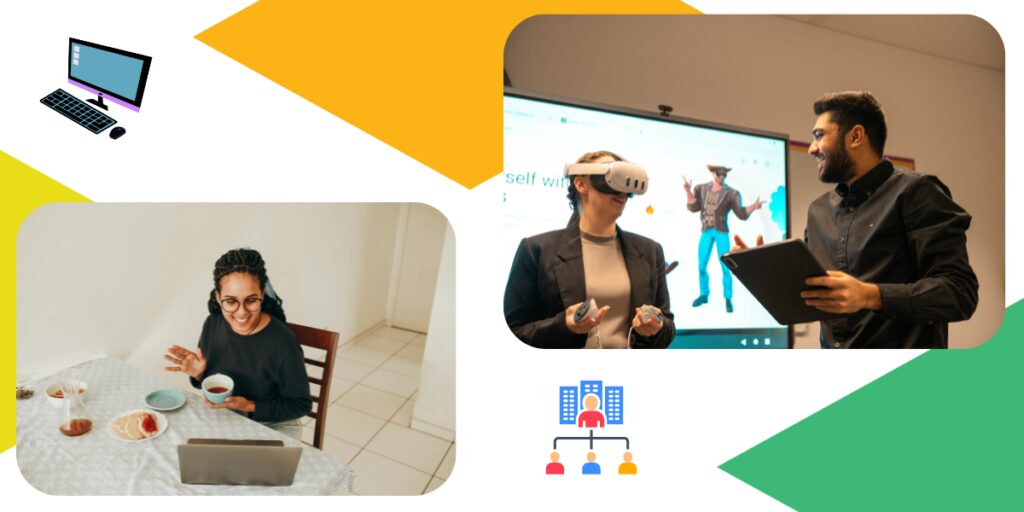
Hybrid events are becoming incredibly popular in corporate circles by combining physical and digital environments. This model enables participation globally while maximizing cost efficiency through reduced travel. By fostering seamless team engagement across distances, these gatherings unify diverse workforces. This article explores key strategies to effectively inspire employees through hybrid experiences.

Clearly defined objectives, whether for team building, training, recognition, or innovation, are the foundation of any successful event. To ensure impact, organizations must align specific content and engagement strategies directly with overarching corporate goals. Finally, establishing measurable outcomes is essential to evaluate the event's true effect on team performance.

To maximize impact, design sessions like workshops and interactive panels that cater simultaneously to in-person and remote audiences. Incorporating storytelling and real-world case studies creates an emotional connection to company highlights. Finally, boost retention by using live polls, Q&A, and gamification to keep every participant actively engaged.

Successful hybrid events bridge the gap between audiences by facilitating direct interaction through breakout rooms, live chats, and collaborative exercises. Implementing structured team challenges or innovation labs fosters a sense of shared purpose. Ultimately, these strategies break down silos, promoting vital cross-department collaboration and sustained employee engagement.

Technical reliability is the backbone of hybrid success; invest in robust platforms that integrate high-quality streaming, engagement tools, and detailed analytics. Prioritizing seamless AV and connectivity ensures a professional experience for both in-person and virtual attendees. Finally, thoroughly test all technology beforehand to prevent disruptions.

Hybrid events serve as powerful platforms to celebrate achievements, milestones, and individual employee contributions. Incorporating award ceremonies, live shout-outs, or interactive recognition segments ensures that excellence is visible across the company. To build a truly inclusive culture, organizations must ensure virtual attendees can participate in these celebrations equally.

To ensure long-term success, organizations must track metrics like attendance, participation, and interaction for both in-person and virtual audiences. Collecting post-event feedback is equally vital to assess employee inspiration and overall satisfaction. Finally, use these data-driven insights to refine future hybrid strategies and maximize corporate ROI.
Summary
Hybrid events deliver a powerful combination of engagement, collaboration, and cost-effective team impact through inclusive recognition. When well-planned, these experiences seamlessly connect employees across all locations while significantly boosting morale and motivation.

Platforms like Chati take pride in hosting impactful hybrid events for worldwide audiences. Please contact Chati if you would like to learn how to host professional corporate hybrid events that truly inspire and engage your entire global team.
Webinar success and retention hinge on high engagement. While passive viewing leads to distraction, active participation transforms attendees into stakeholders. The goal of webinars is to enable companies to showcase their products and services or even build team camaraderie.
Here, we will discuss how to bridge that gap, providing practical, interactive strategies designed to boost energy and ensure your audience stays locked in from the opening slide to the final question. This includes breakout rooms, gamification, interactive tutorials, and more. Through this, you will have the tools and resources to organize and host a successful webinar for worldwide audiences while helping them achieve their personal and professional goals.

Real-time polls instantly gauge audience opinions and knowledge, transforming observers into active contributors. Complementing this, surveys capture actionable feedback during or after the session. Together, these tools drive participant involvement while providing hosts with immediate, high-value insights to refine their message and keep engagement levels high throughout the webinar.

Live Q&A sessions are essential for clarifying complex concepts and addressing specific attendee concerns in real time. Utilizing moderated queues or upvoting tools ensures the most relevant questions surface first, boosting efficiency. Ultimately, these interactions build significant trust, making the audience feel heard and enhancing the overall session experience.

Breakout rooms transform large, passive audiences into small, dynamic circles that foster genuine networking and discussion. By engaging in brainstorming, case study analysis, or peer-to-peer sharing, participants move from observation to collaboration. This shift drives deeper engagement, builds stronger professional connections, and ensures the session's key takeaways truly stick.

Integrating quizzes, challenges, and leaderboards transforms webinars into an engaging, competitive experience. Using trivia, scenario-based exercises, or points for participation creates a fun, high-energy environment. This gamification significantly sharpens focus, boosts knowledge retention, and motivates attendees to stay involved and competitive from start to finish.

Live product demos and walkthroughs create immersive learning experiences by inviting attendees to follow along in real time. Leveraging annotation tools and integrated Q&A provides immediate clarity and interaction. This hands-on approach is exceptionally effective for training and onboarding, transforming complex product education into an engaging, mastery-driven session.

Live chat, social media hashtags, and community forums turn a presentation into a two-way conversation. Assigning dedicated moderators to highlight standout questions or comments ensures no valuable input is lost. This continuous stream of chat activity fosters a genuine sense of community, keeping the webinar’s energy dynamic and inclusive.

To maintain momentum, provide follow-up surveys, polls, or interactive quizzes that keep the conversation going. Sharing on-demand recordings with embedded feedback forms or discussion boards allows for continued participation. This ongoing interaction is vital for reinforcing key learning points and deepening the professional relationships initiated during the live session.
Summary
Here, we discussed the importance of interactive webinars, including breakout rooms, gamification, interactive tutorials, and more. Armed with this knowledge, you can now host a successful webinar that focuses on interactive features while prioritizing audience engagement.
Interactive strategies, including polls, Q&A, breakout rooms, gamification, live demos, and chat, are essential for transforming passive viewers into active participants. Chati is proud to offer this level of interactivity, ensuring audiences remain attentive, deeply engaged, and far more likely to convert. Ready to elevate your next session? Please contact Chati to implement these features seamlessly.
The 2026 event landscape has shifted from basic video calls to immersive "digital destinations." Success now hinges on spatial immersion and AI-driven networking to maintain attendee retention and ROI. The primary challenge for organizers is identifying platforms that deliver high-impact 3D environments without sacrificing user accessibility, ensuring a seamless yet memorable virtual experience for all. Here, we will discuss how to choose the right virtual event platform and why Chati is suited to meet your virtual event platform needs.

In 2026, virtual events like Chati prioritize high-fidelity 3D Spatial Environments, where realistic lobbies and exhibit halls provide the tactile feel of physical venues. This immersion is paired with AI Matchmaking, which uses behavioral data to facilitate precision networking. To drive engagement, platforms utilize Gamified User Journeys, which reward attendees for exploring booths, while ChatiConnect ensures stable, high-definition webcasting to bridge the digital and physical divide.

In 2026, Chati distinguishes itself by offering fully branded, 3D Immersive Spaces that move beyond generic templates to mirror the look and feel of high-end physical venues. To drive engagement, the platform utilizes User Journeys, guiding attendees through curated paths—like visiting specific booths or watching sessions—to unlock rewards and maximize sponsor ROI. Designed for Seamless Accessibility, Chati eliminates the common "login and microphone hurdles" found in legacy tools, while providing the flexibility of Self-Service control or Full-Service expert production.

In 2026, Chati leads the virtual event space by blending high-end 3D Immersion with unmatched ease of use, earning it top ratings on G2. While vFairs remains a staple for traditional enterprise trade shows using template-based designs, and Zoom Events handles high-volume corporate webinars, Chati excels with White-label Customization and advanced AI Matchmaking that transforms networking into a data-driven, high-ROI experience.

Whether hosting a high-stakes scientific summit or a global trade show, Chati provides specialized layouts that translate physical needs into digital results. For professional summits, organized Poster Halls and 3D lobbies offer a structured environment for sharing complex data. Internal teams leverage real-time "Who's Here" visibility and Gamification to boost morale, while global exhibitors utilize 3D halls and Downloadable Briefcases to capture leads and maximize ROI across time zones.

Organizers in 2026 prioritize platforms like Chati for their ability to mirror physical venues through Customizable 3D Environments, including bespoke offices and lobbies. The platform delivers Real-Time Analytics on key metrics like dwell time and content engagement, ensuring data-driven ROI. For Hybrid Attendees, Chati provides a seamless mobile experience with browser-based access and dedicated apps, eliminating technical friction between on-site and remote participants.
Summary
In 2026, the premier virtual platform is defined by its ability to convert passive viewers into active participants. Chati secures its position as a frontrunner by prioritizing the User Journey, utilizing reward-based paths and 3D immersion to ensure that attendees don't just log in, they stay engaged.

Chati is proud to be a leading virtual event platform for countless topics and gatherings, and please contact Chati if you’re interested to learn how our platform can achieve your personal and professional goals.
Traditional conferences are shifting to hybrid formats, merging physical and digital experiences to maximize reach. This evolution boosts accessibility and cost efficiency while engaging a global, diverse audience. By bridging the gap between in-person networking and remote flexibility, hybrid models are redefined as the definitive future of professional gatherings.
In this article, we discuss how hybrid events will shape the future of conferences, including enhancing engagement, return on investment, technology, and more. Through this, you will have the knowledge to host a successful hybrid event while enabling your attendees to achieve their personal and professional goals.

Hybrid models empower virtual attendees to join globally, breaking down geographic barriers. Simultaneously, they provide in-person participants with a seamless, high-touch physical experience. By offering on-demand recordings, these events ensure long-term engagement and maximize participation well after the live sessions conclude.

To boost engagement, hybrid formats leverage interactive tools like live polls, Q&A, and breakout rooms. By integrating gamification and dedicated digital spaces, they bridge the gap between audiences, actively encouraging networking between in-person and virtual attendees to create a unified, high-energy event experience.

Hybrid formats excel by offering flexible scheduling and on-demand access, catering to various attendee preferences. This model effectively supports hybrid learning, interactive workshops, and panel discussions without compromising content quality. By providing multiple session times, organizers ensure a seamless experience for both local and global participants.

Hybrid formats significantly reduce travel, venue, and logistical overhead while dramatically increasing attendance. This model allows organizers to scale virtual participation to thousands without incurring extra physical space costs. Furthermore, digital integration provides measurable outcomes through precise tracking of leads, engagement, and content performance.

Robust hybrid events rely on reliable streaming, professional AV equipment, and integrated interactive tools to support both audiences. By syncing registration, analytics, and CRM systems, organizers can track engagement seamlessly. Above all, rigorous testing of all technology is essential to ensure smooth execution and a professional attendee experience.

Future hybrid events will increasingly leverage AI-driven networking and matchmaking tools to connect the right attendees. By integrating enhanced virtual reality and immersive environments, remote participants can experience a deeper sense of presence. Furthermore, advanced data analytics allow organizers to optimize content in real-time and personalize the entire attendee journey.
Summary
In this article, we discussed how hybrid events will shape the future of conferences, including enhancing engagement, return on investment, technology, and more. Through this, you will have the knowledge to host a successful hybrid event while enabling your attendees to achieve their personal and professional goals.

Hybrid conferences represent a powerful leap forward, combining accessibility, engagement, and flexibility with unmatched cost efficiency and innovation. By meeting modern attendee expectations for both convenience and connection, this model has become the professional standard. To host your own cutting-edge event, consider platforms like Chati to deliver a seamless, world-class hybrid experience. Please contact Chati if you would like to know how you can host a successful hybrid event today!
High-quality webinars require strategic promotion to succeed. Effective marketing significantly boosts registrations, audience engagement, and overall ROI. Here, we will discuss strategies to promote your webinar, including ensuring your content reaches its target audience and achieves maximum impact through proven, multi-channel tactics designed to drive visibility and measurable results. Through this, you will have the tools and resources to host an impactful webinar that enables your audience to achieve their personal and professional goals.

Identify your ideal attendees by pinpointing their specific professional interests and pain points. Use these insights to tailor messaging across email campaigns, social media, and landing pages. Finally, segment your audience to deliver personalized invitations, significantly increasing conversion rates by addressing the unique needs of different viewer groups.

Craft attention-grabbing titles and descriptions that emphasize clear benefits and key takeaways. Highlight expert speakers, trending topics, or exclusive insights to entice potential attendees. Finally, incorporate strong, clear calls-to-action (CTAs) that simplify the process and encourage immediate registration, ensuring your high-quality content achieves the visibility and impact it deserves.

Maximize your reach through multi-channel promotion. Use email marketing for invitations and reminders and leverage social media like LinkedIn and Instagram to target broader audiences. Feature banners and forms on your website or blog and tap into partner networks or industry groups to expand your webinar's visibility and drive registrations.

Boost registration by sharing teaser clips, sneak peeks, or speaker highlights that build anticipation. Conduct pre-event polls or surveys to spark interest and gather valuable audience insights. Finally, encourage social sharing of your webinar announcement to expand your reach and ensure your high-quality content achieves maximum visibility and impact.

Ensure easy registration with minimal steps to maximize conversions. Include essential details: clear topics, date/time, speakers, and tangible benefits. Finally, highlight social proof through testimonials, past webinar success, or expert endorsements to build trust, ensuring your high-quality content receives the visibility and impact it deserves through these strategic tactics.

Schedule timely reminders, one week, one day, and one hour before your webinar, to boost attendance. Utilize SMS or push notifications for immediate impact. Include direct calendar invites and easy-access joining links to minimize friction, ensuring your high-quality content reaches its audience effectively through these essential, strategic follow-up tactics.

Share recorded sessions with registrants and wider audiences to extend impact. Repurpose webinar content into blogs, infographics, or social media snippets to drive long-term engagement. Finally, collect feedback to refine future promotion campaigns, ensuring your high-quality content achieves the visibility and ROI it deserves through these strategic tactics.
Summary
Here, we discussed strategies for promoting your webinar, including targeted messaging, multi-channel promotion, pre-engagement, optimized registration, and reminders. Effective promotion is key to turning webinars into measurable business outcomes.
Use platforms like Chati to streamline your registration, promotion, and audience engagement, ensuring your high-quality content achieves the visibility and impact it deserves through these strategic tactics. Please contact Chati if you would like to know more about how you can promote your webinar in the future.
Hybrid events, blending in-person and virtual experiences, are surging in popularity as organizations seek broader reach, flexibility, and resilience. Yet they present challenges, including maintaining engagement, ensuring reliable technology, and delivering a seamless audience experience. Here, we will discuss actionable tips to help organizers maximize impact and create meaningful hybrid events while helping your audience achieve their personal and professional goals.

Start by defining your event’s core purpose, whether networking, education, lead generation, or brand awareness. Align the format and content with audience expectations across both in-person and virtual channels. Establish clear, measurable KPIs to track engagement, conversions, and overall impact after the event concludes.

Choose robust event platforms that support live streaming, interactive features, and detailed analytics to track performance. Thoroughly test audiovisual equipment, internet connectivity, and platform tools well before the event. Prioritize a seamless, synchronized experience so both in-person and virtual attendees feel equally engaged and valued throughout.

Craft high-impact sessions by designing presentations, panels, and workshops that resonate with every attendee. Use live polls, Q&A, and breakout rooms to drive engagement, while adding gamification for a competitive edge. By balancing rich information with interactive elements, you’ll keep energy high and ensure your message truly sticks.

Bridge the gap by encouraging networking through integrated chat, discussion boards, and matchmaking tools. Assign dedicated moderators to facilitate seamless interaction between in-person and virtual attendees. By hosting collaborative workshops and joint sessions, you’ll foster a unified community, ensuring every participant feels connected and valued regardless of their physical location.

Prioritize inclusivity by providing captions, translations, and screen-reader support for all virtual attendees. Respect global reach by scheduling sessions across multiple time zones. Finally, ensure your event features diverse speakers and content, creating an accessible, welcoming environment that resonates with a broad, international audience and fosters true belonging.

Boost registrations by leveraging targeted email campaigns, social media, and partner networks. Clearly highlight the unique, tailored benefits of attending either virtually or in-person to entice diverse audiences. Finally, send timely reminders to keep the event top-of-mind, ensuring maximum participation and reducing no-show rates for a successful turnout.

Maximize your event’s impact by tracking engagement metrics, attendance, and post-event feedback. Analyze this data to uncover key trends, strengths, and specific areas for improvement. By leveraging these insights, you can refine future hybrid strategies, enhance the attendee experience, and consistently increase your overall return on investment.
Summary
Here, we discussed actionable tips to help organizers maximize impact and create meaningful hybrid events. Mastering hybrid events requires clear goals, seamless technology, and interactive content. Prioritize accessibility, strategic promotion, and data-driven analytics to succeed.
Careful planning ensures a lasting impression on every attendee. Ready to elevate your strategy? Use platforms like Chati to host immersive hybrid events that engage audiences and drive measurable results. Please contact Chati if you would like to learn how to maximize your impact from hybrid events.
Online events have surged as organizations seek scalable, digital ways to connect with audiences. Choosing the right format directly affects engagement, return on investment, and attendee experience. Here, we will discuss the key differences between webinars and virtual events, including format and structure, audiences, technology, and more. Through this, you will have the tools and resources to host a successful virtual event or webinar while prioritizing attendee engagement and helping them achieve their personal and professional goals.

Webinars are typically focused, single-session online presentations or workshops designed for education or lead generation. They attract smaller, targeted audiences and center on specific topics. Common features include slide presentations, live Q&A, audience polls, and recordings that can be accessed on demand afterward.

Virtual events are broader, multi-session digital experiences that extend beyond a single presentation. They often include networking, panel discussions, expos, and multiple content tracks. Designed for larger audiences, virtual events feature interactive elements like virtual booths and lounges, common in online conferences, trade shows, and multi-day summits.

Webinars are typically single-topic, highly structured sessions lasting 30 to 90 minutes. Virtual events, by contrast, cover multiple topics across several sessions and formats, often spanning one or more days. These differences affect scheduling, session flexibility, and how attendees navigate content and plan their experience.

Webinars offer moderate engagement through tools like live Q&A, polls, and chat. Virtual events enable deeper interaction with networking lounges, discussion boards, gamification, and social media integration. Because of their scale and duration, virtual events require more layered engagement strategies to keep attendees active across sessions and experiences.

Webinars are well suited for niche audiences, training sessions, product demonstrations, and lead generation. Virtual events attract larger, more diverse audiences and support brand building, knowledge sharing, and community growth. Audience size directly influences planning complexity, platform choice, staffing needs, and the technical infrastructure required for a smooth experience.

Webinars typically rely on simpler platforms offering slide sharing, chat, registration, and basic analytics. Virtual events require more robust solutions that support multiple sessions, virtual networking, expo halls, and advanced reporting. Selecting the right platform is essential to delivering the intended experience and meeting engagement, scalability, and measurement goals.
Summary
Here, we discussed the key differences between webinars and virtual events, including format and structure, audiences, technology, and more. You now have the tools and resources to host a successful virtual event or webinar while prioritizing attendee engagement and helping them achieve their personal and professional goals.
Webinars and virtual events differ in scale, engagement, interactivity, and goals. Before choosing a format, organizers should evaluate objectives, audience size, and available resources. To deliver flexibility and impact, explore platforms like Chati that support both focused webinars and full-scale virtual event experiences. Please contact Chati to learn how you can produce impactful webinars or virtual events for global audiences.
Companies face growing pressure to meet ESG (Environmental, Social, and Governance) and sustainability goals. Virtual events have historically been a high-impact source of emissions and waste, driving organizations to adopt virtual events as a scalable, cost-effective solution that reduces environmental footprint while maintaining engagement.
Here, we will discuss how virtual events support sustainability goals, including reducing carbon footprints, benefits beyond the environment, virtual versus in-person events, and much more. Through this, you will have the tools and resources to host a successful and impactful virtual event while prioritizing sustainability for everyone.

In-person events generate significant environmental impact through travel emissions from air, car, and lodging, high venue energy use and waste, excessive printed materials and giveaways, and food waste—forcing organizations to weigh rising costs against environmental sustainability tradeoffs.

Virtual events eliminate attendee and speaker travel, significantly reducing emissions. They require far less energy and physical resources, minimize waste and material usage, and enable organizations to scale global reach and engagement without proportionally increasing environmental impact or operational costs.

Virtual events help organizations align with ESG and CSR (Corporate Social Responsibility) goals by reducing emissions, supporting net-zero and carbon-reduction initiatives, and providing measurable sustainability outcomes that can be tracked, reported, and communicated to stakeholders, partners, and investors with transparency and accountability.

Virtual events deliver cost savings and operational efficiency while increasing accessibility and global inclusion. They enable improved data tracking and ROI (Return on Investment) measurement and support long-term audience engagement through on-demand digital content, extending value well beyond the live event.

Organizations can maximize virtual event sustainability by selecting energy-efficient platforms and vendors, encouraging responsible attendee behaviors, repurposing content to extend event lifespan, and tracking and reporting sustainability metrics to demonstrate measurable impact, continuous improvement, and accountability across ESG and CSR initiatives.

Comparing virtual and in-person events highlights differences in carbon emissions, cost, and resource efficiency, and audience reach and inclusivity. While virtual events minimize environmental impact at scale, hybrid models make sense when limited in-person interaction adds strategic value without significantly increasing emissions or operational complexity.

Hybrid and digital-first event strategies are gaining momentum as regulatory requirements and stakeholder expectations around sustainability increase. Virtual events are no longer temporary substitutes, but long-term investments that support ESG and CSR goals, reduce environmental impact, and deliver scalable, measurable value over time.
Summary
Here, we discussed how virtual events support sustainability goals, including reducing carbon footprints, benefits beyond the environment, virtual versus in-person events, and much more. Through this, you will have the tools and resources to host a successful and impactful virtual event while prioritizing sustainability for everyone.
Virtual events deliver measurable environmental and business benefits by reducing emissions, lowering costs, and expanding reach. As a practical sustainability win, they help organizations meet ESG and CSR goals. Chati is proud to put sustainability at the forefront of virtual events. Please contact Chati to learn how you can integrate virtual events into long-term sustainability and event planning strategies.
Virtual networking often stops at surface-level introductions, leaving a gap between meeting people and building real relationships. Traditional formats focus on attendance and volume, rather than relevance, structured interaction, shared context, and meaningful follow-up that sustains connections.
Here, we will discuss how virtual networking builds connections, including the psychological aspects, common mistakes, ways to improve, long-term connections, and more. Through this, you will have the tools and resources to host a successful virtual event while prioritizing virtual networking and helping your attendees build lasting connections.

Effective virtual networking moves beyond chat boxes and attendee lists by creating intentional interactions. Unlike in-person networking, it relies on structure, facilitation, and shared context to replace spontaneous encounters and turn digital connections into meaningful, lasting professional relationships.

Trust and familiarity grow through repeated interactions over time, not one-off encounters. In virtual networking, small, meaningful moments, including focused conversations, shared insights, and follow-ups that matter far more than high volumes of brief connections.

Many virtual networking experiences fail because they rely on one-off interactions with no follow-up, encourage passive attendance in awkward open rooms, and treat networking as transactional. Real connections require intentional design, active participation, and relationship-building that continues beyond the event itself.

Structured networking outperforms open mingle formats by replacing randomness with intention. Guided conversations and shared context help participants connect faster, while smaller groups and smarter matching increase relevance, reduce awkwardness, and create space for meaningful dialogue and lasting professional relationships that extend well beyond events.

Effective virtual networking uses icebreakers that feel natural, not forced, supported by facilitated sessions and structured speed networking. Interest-based or role-based matching ensures participants meet the right people, accelerating rapport, reducing friction, and turning brief interactions into relevant, high-quality professional connections.

Modern virtual networking leverages breakout rooms, live chat, and 1:1 meeting tools to spark interaction. AI-driven or interest-based matchmaking improves relevance, while asynchronous networking before and after events extends conversations, reinforces relationships, and turns single moments into ongoing professional connections.

Effective follow-up avoids spam by staying personal and timely. Post-event connection thrives through shared takeaways, continued conversations, and clear next steps, helping virtual introductions naturally evolve into trust, collaboration, and long-term professional relationships beyond a single event.

True success in virtual networking isn’t measured by engagement alone, but by connection quality. Metrics that matter include meetings booked, meaningful follow-ups, and returning attendees, as well as signals that interactions created value, trust, and momentum beyond the event itself.

The future of networking blends hybrid models with community-driven, always-on experiences. By combining virtual and in-person touchpoints, organizations can foster continuous engagement, recurring interactions, and deeper relationships that extend beyond single events into sustained professional communities.
Summary
Here, we discussed how virtual networking builds connections, including the psychological aspects, common mistakes, ways to improve, long-term connections, and more. Through this, you now have the tools and resources to host a successful virtual event while prioritizing virtual networking and helping your attendees build lasting connections.

The future of networking blends hybrid models with community-driven, always-on experiences. By combining virtual and in-person touchpoints, organizations can foster continuous engagement, recurring interactions, and deeper relationships that extend beyond single events into sustained professional communities. Chati is proud to provide impactful virtual networking tools that enable individuals worldwide to engage and build lasting relationships. Please contact Chati if you would like to know how your next virtual event can promote virtual networking for individuals worldwide.
Virtual events are under increasing pressure to prove their value as organizations move beyond counting registrations and attendance to focus on measurable outcomes, meaningful engagement, and long-term impact. This highlights the critical difference between simply running events and delivering results that drive real business and educational value. Here, we will discuss how you can maximize return on investment (ROI) in virtual events, including core formulas, tracking ROI, benchmarks, common mistakes, and more.

Measuring virtual event success requires separating financial ROI from marketing and strategic ROI, which capture outcomes such as brand awareness, sales pipeline growth, customer retention, and improved educational outcomes, including metrics that extend beyond immediate revenue to reflect long-term value, influence, and organizational impact.
The fundamental ROI calculation, return minus cost divided by cost, applies across virtual event types. Returns may be defined as revenue, lead generation, or learning outcomes, while costs should include technology platforms, personnel, speaker fees, marketing expenses, and production.

Virtual event ROI should be measured through four metric categories: acquisition (registrations, source attribution, cost per registration), engagement (attendance rate, session duration, interactive participation), conversion (demo requests, scheduled meetings, trial initiations, purchases), and retention (replay views, repeat attendance, long-term community involvement).

Effective evaluation of virtual events requires moving beyond superficial metrics and focusing on key performance metrics (KPIs). This includes comparing registrations to qualified attendees, attendance rates to engaged minutes, raw leads to pipeline influence, and total views to meaningful attendee actions. This approach determines whether an event drives genuine impact or merely provides visibility.

A comprehensive approach to measuring virtual event ROI involves setting explicit objectives and tracking progress prior to the event, capturing real-time engagement during sessions, and executing structured, timely follow-up. Connecting attendee behaviors to conversions and retention within a defined attribution period is essential for demonstrating long-term impact.

Choosing an appropriate revenue attribution model—first-touch, last-touch, or multi-touch—is fundamental to understanding virtual event ROI. Distinguishing between influenced and sourced revenue is necessary. Leadership teams should collaborate on definitions early to ensure a consistent and credible interpretation of results.

Establishing benchmarks for virtual events involves understanding typical ranges for attendance, engagement, and conversion rates, while recognizing that these metrics vary by event format. For example, webinars typically yield higher attendance and conversions; multi-day summits emphasize sustained interaction, and virtual expos prioritize lead reach and volume.

Virtual events often underperform when teams lack proper tracking links or customer relationship management (CRM) mapping. They also struggle when they rely on weak post-event nurture, treat all registrants equally regardless of intent, or fail to repurpose content. As a result, organizations miss opportunities to extend reach, deepen engagement, and capture long-term value from event investments.

Improving virtual event ROI starts with boosting landing page conversion, optimizing reminders and calendar holds, and aligning speakers and topics with audience needs. Adding clear calls to action and intentional next-step moments, then repurposing content into clips, blogs, email drips, and sales enablement, extends impact well beyond the live event.

An effective virtual event ROI dashboard should report key metrics at regular intervals, such as costs, generated leads, pipeline value, influenced revenue, and engagement signals. Utilizing a standardized reporting template facilitates ongoing performance monitoring and supports clear communication of event value to stakeholders.
Summary
Here, we discussed how to maximize ROI in virtual events, including core formulas, ROI tracking, benchmarks, common mistakes, and more. Virtual event ROI comes down to clarity, tracking, and follow-through. Review your last event performance now and set clear ROI goals and tracking before launching the next one.

With Chati, you can maximize your ROI while focusing on audience engagement and helping your attendees achieve their personal and professional goals. Please contact Chati if you would like to learn more about how to enhance your ROI at your next virtual event.
Higher education is shifting toward flexible, accessible learning and engagement. Hybrid events have become the gold standard by combining in-person connections with the convenience of virtual participation, expanding reach, and participation. Here, we will discuss how hybrid events can enhance educational success, including their benefits, types, planning checklists, marketing, measuring success, and more. Through this, you will have the tools and resources to host a successful hybrid event that prioritizes education for all parties.
What Are Hybrid Events in Higher Education?

Hybrid events combine in-person and virtual participation, unlike fully virtual or fully on-site formats. Common examples include webinars, student orientations, open houses, and conferences. They benefit students with flexibility, staff with broader engagement tools, and institutions with greater reach, accessibility, and measurable outcomes.
Top Benefits of Hybrid Events for Colleges and Universities

Hybrid events boost attendance by removing location barriers and improving accessibility. They also increase student engagement through interactive tools and flexible participation. For admissions, hybrid formats strengthen recruitment outcomes. They help reconnect alums and donors, while extending the reach and visibility of research initiatives and academic programs.
Best Hybrid Event Types for Higher Education Success

Hybrid events work across many campus needs, including admissions events that combine virtual tours with in-person visits. They also support student orientations and campus life showcases, career fairs with employer networking, academic conferences and faculty-led symposiums, and alums events that strengthen fundraising and long-term community engagement.
Hybrid Event Planning Checklist for Universities

Start by defining clear goals, such as enrollment growth, student engagement, fundraising, or brand awareness. Identify your audience segments, including students, parents, alums, and faculty. Choose the right platform and AV setup, create a hybrid-friendly agenda, and assign dedicated roles for in-person and virtual event staff.
Technology Needed for a Smooth Hybrid Campus Event

Successful hybrid events rely on robust event platforms and streaming tools, supported by high-quality microphones, cameras, lighting, and a reliable internet connection. Streamline attendance with integrations for registration, ticketing, and CRM. Boost engagement using interactive features like polls, live Q&A, live chat, and breakout rooms for networking.
How to Increase Engagement for Both In-Person and Virtual Attendees

Design interactive sessions that engage both in-person and virtual audiences equally. Include real-time Q&A and moderated discussions to keep participation high. Offer networking options for remote attendees through breakout rooms or chat lounges. Add gamification with challenges, giveaways, or scavenger hunts to boost excitement.
Marketing Hybrid Events for Higher Attendance

Promote hybrid events through targeted email campaigns for students, alums, and staff. Use social media strategies like countdown posts, short videos, and speaker highlights. Optimize landing pages with SEO and clear registration CTAs. Expand reach by partnering with departments, student groups, and event sponsors.
Measuring Hybrid Event Success: KPIs That Matter

Track success by measuring attendance and registration conversion rates. Monitor engagement metrics like chat activity, poll responses, and session duration. Evaluate lead quality for admissions or fundraising goals. Use post-event surveys for satisfaction scores, and review replay and recording performance to gauge long-term content impact.
Common Hybrid Event Mistakes (and How to Avoid Them)

Avoid treating virtual attendees like second-class guests by designing equal experiences for both in-person and virtual attendees. Poor audio and unreliable internet can ruin engagement, so test equipment early. Don’t overload the agenda and keep sessions focused. Assign dedicated online moderators and repurpose recordings into ongoing marketing content afterward.
Future Trends: The Next Evolution of Hybrid Higher Ed Events

Hybrid events are evolving with AI-driven personalization and smart matchmaking to improve attendee experiences. More campuses are integrating events into their hybrid learning ecosystems to support year-round engagement. Immersive tools like AR/VR tours and interactive campus maps are rising, alongside on-demand content libraries that keep events evergreen.
Summary
Here, we discussed how hybrid events can enhance educational success, including their benefits, types, planning checklists, marketing, measuring success, and more. Through this, you will have the tools and resources to host a successful hybrid event that prioritizes education for all parties.
Hybrid events succeed because they expand access, boost engagement, and deliver measurable results for campuses. Next, define your goals, choose the right platform, and build a hybrid-ready agenda. Chati prides itself on our ability to host, sponsor, or scale your next university hybrid event. Please contact Chati to start planning your next hybrid event that prioritizes education today.
Virtual and hybrid events have surged, audience behavior has shifted toward digital engagement and on-demand content, and brand awareness now matters more than ever as organizations compete for attention in crowded, online-first spaces. Here, we will discuss how virtual events can help boost brand awareness, including key opportunities, best practices, common mistakes to avoid, and much more. Through this, you will have the tools and resources to host a successful virtual event while prioritizing brand awareness for clients and attendees.

Virtual events are online experiences hosted through digital platforms, including webinars, virtual conferences, product launches, and workshops, and they differ from in-person and hybrid events by offering greater accessibility, scalability, flexibility, and data-driven engagement opportunities.

Virtual events extend global reach beyond geographic limits, amplify brand visibility through repeated digital touchpoints, and help organizations establish thought leadership and credibility. They also strengthen audience engagement and message recall by using interactive tools, personalized content, analytics, and consistent storytelling across multiple online platforms and event experiences.

Webinars and educational sessions deliver focused learning, while virtual trade shows and expos connect brands with broad audiences. Live-streamed product demos and launches showcase innovations in real time. Panel discussions and expert roundtables build credibility, and on-demand virtual events extend reach and engagement beyond live attendance.

Virtual events offer customizable environments and booths, branded landing pages, and tailored registration flows that reinforce identity. Sponsored sessions and speaking slots elevate visibility, while logos, banners, and CTAs drive action. Interactive branded content, including polls, Q&A, and live chats, boosts engagement and strengthens brand recognition.

Successful virtual event branding starts with clear goals and measurable KPIs. Consistent visuals and messaging reinforce identity, while respected speakers and influencers build credibility. Promoting events across multiple digital channels expands reach, and encouraging interaction and social sharing increases engagement, amplifies visibility, and strengthens lasting brand awareness.

Measuring brand awareness from virtual events involves tracking impressions, reach, engagement, and dwell-time across platforms. Monitoring brand mentions and social shares reveals visibility gains, while post-event surveys assess brand lift and perception. Using these analytics helps refine messaging, formats, and targeting to improve future event performance.

Virtual events offer cost efficiency and scalability compared with traditional advertising, while enabling precise audience targeting and rich data insights. On-demand content extends campaign longevity, and measurable engagement metrics often deliver more substantial, more transparent ROI than conventional ads across digital and in-person marketing channels.

Common virtual event branding mistakes include overbranding without delivering real value, weak promotion or post-event follow-up, and ignoring interactive engagement features. Failing to repurpose event content into blogs, videos, or social posts also limits reach, reduces long-term impact, and weakens overall return on investment.

Future virtual event branding trends include AI-driven personalization that tailors content and experiences. These hybrid and immersive formats blend physical and digital engagement, community-focused events that foster lasting connections, and long-term brand building through integrated digital ecosystems that extend beyond single events.
Summary
Here, we discussed how virtual events can help boost brand awareness, including key opportunities, best practices, common mistakes to avoid, and much more. Now you can host a successful virtual event while prioritizing brand awareness for clients and attendees. Virtual events boost reach, engagement, and brand awareness.
Brands can start by setting clear goals, choosing the right platforms, and delivering value. Launch your next virtual event today. Consider Chati to host successful virtual events that promote brand awareness, and please contact Chati if you would like to know more about how we can promote brand awareness in our virtual events.