Discover how Chati's self-service licenses give you full control - build, update, and launch virtual events on your terms. Register for our free webinar today!
Accessibility in virtual events ensures inclusivity, enhances participant engagement, and supports compliance with legal standards. Prioritizing accessible design empowers diverse audiences, fosters equitable experiences, and strengthens event impact while meeting organizational responsibilities and broadening overall reach. Here, we will discuss the top ways to design virtual events with accessibility in mind, including event platforms, visual design, engagement tools, and more. With this, you will have the tools and resources to organize and execute a successful virtual event while putting accessibility at the forefront for your attendees.

When selecting virtual event software, prioritize accessibility features like closed captioning, screen reader compatibility, and keyboard navigation. Testing platforms before the event ensures smooth functionality, enhances inclusivity, and guarantees all participants can fully engage and benefit from the experience.

Live and AI-generated captions, paired with downloadable transcripts, significantly improve accessibility for virtual events. These tools support deaf and hard-of-hearing attendees, ensure inclusive communication, and provide lasting resources that enhance engagement, understanding, and participation during and after sessions.
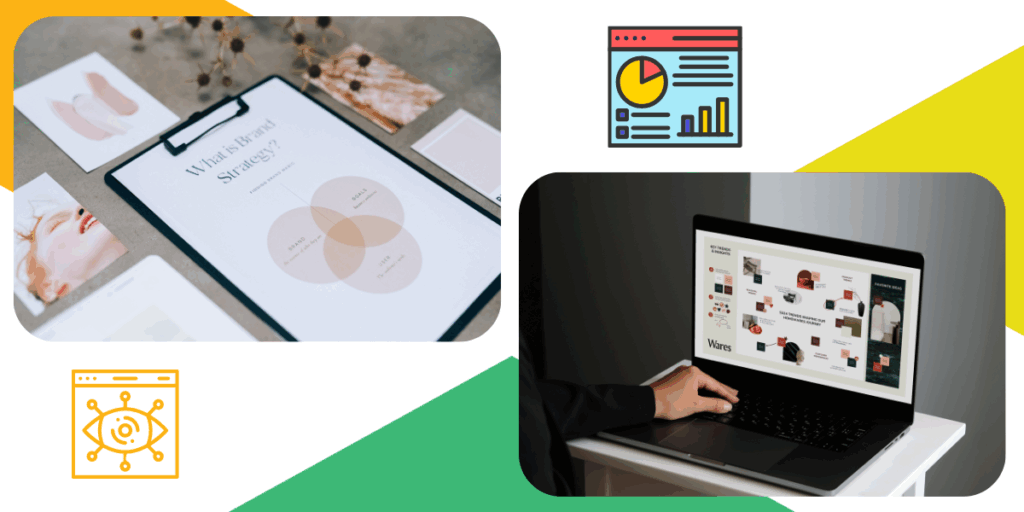
Use high-contrast colors and readable fonts, avoid cluttered or text-heavy slides, and include descriptive alt text for images and graphics. These strategies improve accessibility, readability, and engagement, ensuring presentations are clear, inclusive, and visually effective for all audiences.

Presentations should include sign language interpretation, clear audio with minimal background noise, and audio descriptions for visual elements. These practices enhance accessibility, ensuring participants with hearing or vision impairments can fully engage, understand, and benefit from the presented content inclusively.

Accessible polls, chats, and Q&A platforms, combined with WCAG-compliant forms and tools, foster inclusivity. By encouraging diverse participation, events become more engaging, equitable, and meaningful, ensuring that all attendees can contribute, interact, and benefit from the shared experience.

Providing on-demand recordings supports global audiences across time zones, while adjustable playback speeds and screen customization enhance flexibility. Incorporating accessibility features in breakout rooms ensures all participants can fully engage, creating an inclusive, adaptable, and user-friendly virtual event experience.

Training presenters in inclusive communication, promoting slower pacing with clear articulation, and avoiding jargon while using diverse examples ensures accessibility. These practices foster understanding, respect, and engagement, enabling all participants to connect meaningfully with content in an inclusive environment.

Conducting accessibility checks before launch, gathering post-event survey feedback on accessibility, and committing to continuous improvement ensures events remain inclusive. These practices identify barriers, highlight participant needs, and guide meaningful enhancements for more accessible and engaging future experiences.
Summary
Here, we discussed the top ways to design virtual events with accessibility in mind, including event platforms, visual design, engagement tools, and more. Armed with this knowledge, you can now host impactful and educational virtual events while enhancing accessibility and helping your attendees achieve their personal and professional goals.

We emphasize that event organizers prioritize inclusive design in all virtual events, and we encourage readers to contact Chati to see how we can improve our accessibility features. Through this, you not only improve your attendee turnout, but you enable them to achieve their personal and professional goals.
Sustainability reporting tracks and communicates environmental and social impacts. In virtual event planning, it’s increasingly vital for transparency, accountability, and meeting stakeholder expectations. Virtual events offer unique opportunities to lead in greener practices, reducing travel emissions, resource use, and waste, while setting a benchmark for sustainable virtual event management worldwide.
Here, we will discuss the top ways to use sustainability reporting in virtual events, including tools and platforms, communication, and future trends. Through this, you will have the tools and resources to organize a successful virtual event while demonstrating exceptional sustainability reporting and enabling your attendees to achieve their personal and professional goals.

In the context of virtual events, sustainability reporting evaluates and communicates environmental performance using key metrics such as carbon footprint, energy consumption, waste reduction, and digital efficiency. It enhances credibility for organizers, provides attendees with sustainable experiences, and strengthens brand alignment for sponsors, collectively fostering accountability, innovation, and greener virtual event practices.

Virtual event sustainability reporting encompasses monitoring digital carbon footprints, highlighting the use of renewable energy and low-impact technologies, and advancing waste reduction through paperless solutions. It further emphasizes the sustainable practices of vendors and partners. Post-event surveys capture attendee perceptions, offering valuable insights that strengthen accountability, inform improvements, and demonstrate a commitment to environmentally responsible virtual event management.

Virtual event technology solutions facilitate the tracking of sustainability data through sophisticated analytics dashboards and reporting software. By embedding key sustainability KPIs (key performance indicators) into virtual event platforms, organizers can monitor performance in real time, strengthen decision-making, and ensure accountability, thereby promoting more efficient, transparent, and environmentally responsible approaches to virtual event management.

Effective sustainability reporting entails communicating insights to attendees and sponsors through infographics, dashboards, and social media channels. Transparent disclosure of environmental and social performance not only informs stakeholders but also reinforces credibility, builds trust, and enhances brand reputation, establishing the organization as a responsible and accountable leader in sustainable virtual event management.

Advancements in sustainability reporting tools, alongside adherence to ESG (Environmental, Social, Governance) standards, are reshaping virtual and hybrid event planning. These innovations facilitate more precise tracking, increased transparency, and data-driven decision-making, supporting responsible, accountable, and environmentally conscious approaches to virtual and hybrid event management.
Summary
Here, we discussed the top ways to use sustainability reporting in virtual events, including tools and platforms, communication, and future trends. Armed with this knowledge, you are now able to organize and execute a successful virtual event while simultaneously enabling your attendees to achieve their personal and professional goals and enhancing the role of sustainability reporting.

We encourage readers to implement sustainability reporting in their next virtual or hybrid event, and please contact Chati to learn more about how we can incorporate sustainability reporting in our virtual and hybrid events.
Hybrid event innovation is transforming the way people connect, blending virtual accessibility with the immersive power of in-person experiences. By uniting digital convenience and face-to-face interaction, hybrid events maximize engagement, broaden reach, and create dynamic, interactive opportunities that keep audiences more connected, involved, and inspired than ever before. Here, we will discuss how you can embrace hybrid event innovation, including the benefits, top ways, best practices, and more.

Hybrid events merge in-person and virtual experiences, supported by strategies that ensure inclusivity and engagement. Unlike traditional virtual events, hybrid models expand networking, interaction, and reach, blending live participation with digital accessibility to create more dynamic, flexible, and impactful event experiences.

Hybrid events boost attendee engagement, expand reach and accessibility, and deliver stronger return on investment (ROI) for sponsors through enhanced branding opportunities. They also provide valuable data-driven insights, empowering organizers to refine strategies, personalize experiences, and maximize impact across both in-person and virtual audiences.

Interactive Live Streaming & Real-Time Engagement
Hybrid events leverage live polls, Q&A sessions, and gamification to bridge in-person and virtual audiences, fostering interaction, inclusivity, and meaningful engagement across every event format.
Virtual Networking Lounges & AI Matchmaking
Hybrid events create authentic connections by combining digital and in-person interactions. Smart matchmaking links attendees and sponsors, driving meaningful relationships, personalized networking, and enhanced value for all participants.
Immersive Event Technology (AR/VR)
Hybrid events elevate engagement with augmented reality product demos for onsite participants and immersive virtual reality experiences for remote audiences, delivering interactive, memorable, and inclusive experiences that showcase innovation and deepen audience connection.
Hybrid Event Platforms & Custom Apps
Event apps simplify scheduling, networking, and engagement while platforms streamline the hybrid experience. Together, they connect audiences, enhance interaction, and ensure seamless participation across both virtual and in-person formats.
On-Demand Content & Extended Event Lifespan
Repurposing event content, including recorded sessions, extends engagement beyond the live event and increases ROI by providing lasting value, broader reach, and opportunities for continued audience interaction.

Creating a successful hybrid event involves selecting the right platform, carefully balancing online and onsite experiences, and providing robust technical preparation and support. These elements ensure seamless execution, maximize engagement, and deliver a smooth, memorable experience for all participants.
Summary
Embracing hybrid event innovation offers new opportunities to enhance engagement and reach. Event planners are encouraged to begin integrating hybrid strategies, fostering flexibility, inclusivity, and long-term success in a rapidly evolving event landscape.

We encourage readers to embrace hybrid events with the goal of helping their attendees achieve their personal and professional goals, and please contact Chati to discover how you can host a successful hybrid event in the future.
In 2025, event branding is more important than ever, serving as a key driver of engagement and recognition. Through thoughtful customization, organizers can craft unique experiences that resonate with attendees, spark emotional connections, and transform ordinary gatherings into unforgettable, meaningful events that strengthen loyalty and long-term brand value. Here, we will discuss the top ways to customize event branding in 2025, including interactive platforms, immersive experiences, social media integration, and more. With this, you will have the tools and resources for hosting a successful event while maximizing event branding.

Custom graphics, typography, and color schemes are essential in shaping distinctive event branding, ensuring every detail reflects the event’s identity. In 2025, AI-assisted logo design trends streamline creativity, offering dynamic, personalized visuals that enhance recognition, elevate branding strategies, and deliver unforgettable attendee experiences through innovation and design precision.

Virtual events and hybrid events branding in 2025 extend beyond visuals, creating immersive digital environments that reflect an event’s identity. Branded event apps enhance engagement by offering personalized schedules, networking tools, and tailored experiences, ensuring attendees feel connected, valued, and fully immersed in both virtual and in-person interactions.

Eco-conscious merchandise and signage are redefining event branding in 2025, emphasizing sustainability while maintaining strong visual impact. Reusable and recyclable event décor not only reduces waste but also reflects brand responsibility, allowing organizers to create memorable, eco-friendly experiences that resonate with environmentally aware attendees and enhance long-term brand reputation.

Augmented reality (AR) and virtual reality (VR) activations transform event branding in 2025 by immersing attendees in interactive experiences. Branded photo booths and digital walls further engage audiences, blending creativity and technology to capture memorable moments while reinforcing brand identity in innovative, visually striking, and highly shareable ways.

AI-powered attendee experiences are revolutionizing event branding in 2025 by delivering hyper-personalized interactions. Tailored content and branded agendas ensure participants receive relevant insights and connections, fostering deeper engagement. This smart customization strengthens brand impact, creating meaningful, memorable experiences that resonate long after the event concludes.

Branded hashtags amplify event promotion in 2025, encouraging attendees to share experiences across social platforms. Collaborations with influencers and the integration of user-generated content boost engagement, extend reach, and create authentic connections. Together, these strategies strengthen brand visibility, foster community, and transform events into widely recognized, shareable experiences.

Personalized swag elevates event experiences in 2025, offering attendees memorable, brand-aligned keepsakes. Tech-based giveaways, including wearables and smart badges, combine functionality with engagement, enhancing interactivity while reinforcing brand presence. These thoughtful, innovative gifts leave lasting impressions, fostering loyalty and creating meaningful, memorable connections between attendees and the event.

Custom menus, packaging, and themed catering elevate event branding in 2025, creating immersive dining experiences that reflect a brand’s identity. Unique drink branding, such as logo latte art and branded cocktails, adds a playful, memorable touch, engaging attendees’ senses while reinforcing the event’s theme and leaving a lasting impression.

Branded recap videos and highlight reels capture key moments, extending an event’s impact beyond its conclusion. Personalized thank-you campaigns reinforce attendee appreciation and strengthen brand loyalty. Together, these strategies create lasting emotional connections, celebrate engagement, and ensure that participants leave with memorable experiences closely tied to the event’s identity.
Summary
Looking beyond 2025, event branding will increasingly embrace immersive technologies, sustainability, and hyper-personalization. To stay ahead, organizations must invest in customizable branding strategies that adapt to evolving attendee expectations, create memorable experiences, and strengthen brand loyalty, ensuring events remain impactful, innovative, and relevant in an ever-changing landscape.

We encourage readers to embrace event branding in their next virtual or hybrid event while maximizing engagement and enabling your attendees to achieve their personal and professional goals. Please contact Chati to learn more about how we can improve our event branding experience for audiences worldwide.
Associations and societies are organized groups supporting shared professional or community interests. They play a vital role in fostering growth, collaboration, and knowledge exchange. With this blog, readers will discover key benefits, including networking opportunities, skill development, resource access, and enhanced credibility within their chosen fields or communities. Through this, you will have a former grasp on the importance of associations and societies and their pivotal role in helping individuals achieve their personal and professional goals.

Trade associations, professional societies, nonprofit associations, and membership organizations each serve unique purposes in advancing shared goals. While associations broadly unite groups around industries or causes, societies emphasize professional or scholarly pursuits. Understanding their distinctions helps clarify roles, benefits, and contributions to both professional and community development.

Membership in associations and societies offers valuable networking opportunities, exclusive access to resources, events, and publications, and pathways for professional development through training and certifications. They also provide advocacy and representation, ensuring members’ voices are heard while strengthening careers, communities, and industries through collective support and collaboration.

Associations and societies span diverse fields, including industry-specific groups in healthcare, law, education, and engineering, as well as academic and student societies. Nonprofit and charitable associations further community goals, while international and local societies provide opportunities for collaboration, professional growth, and impact at varying scales.

Associations and societies support career advancement through mentorship programs, providing valuable guidance and connections. They offer continuing education opportunities to enhance skills and stay current in evolving fields. Additionally, recognition and awards celebrate member achievements, boosting credibility, motivation, and professional growth within industries and communities.

Associations and societies foster collaboration and knowledge-sharing among members, strengthening collective expertise. They advocate for industry standards and ethical practices, ensuring professionalism and accountability. Additionally, many lead community service and outreach programs, promoting social responsibility while advancing both professional development and positive community impact.

Choosing the right association or society involves aligning membership with personal or professional goals, carefully evaluating benefits versus costs, and researching the organization’s reputation and credibility. This thoughtful approach ensures members gain meaningful value, growth opportunities, and strong connections within their chosen field or community.

Associations and societies are embracing digital transformation through virtual communities, expanding access and engagement. Hybrid events foster global networking opportunities, connecting members across borders. Additionally, there is a growing emphasis on inclusivity and diversity, ensuring broader representation and creating supportive, equitable spaces for professional and community development.
Summary
Here, we discussed how associations and societies play a vital role in career growth, networking, and community impact. Exploring membership in one that aligns with personal or professional goals offers lasting benefits.

We emphasize readers joining an association today to boost your career success and strengthen community engagement. Please contact Chati regarding how we can improve our virtual events and hybrid events to better represent associations and societies worldwide.
The retail landscape is rapidly transforming, driven by advancing technology, shifting consumer expectations, and global market changes. This article explores these evolving dynamics, examining their impact on businesses and outlining strategies to navigate challenges, seize opportunities, and remain competitive in a fast-paced marketplace. Here, we will discuss the future of retail, including technology impact, consumer strategies, supply chain, and more. Through this, you will have a firm grasp on achieving success within the retail industry for years to come.

Retail is embracing experiential and immersive shopping, blending entertainment with commerce. E-commerce and mobile commerce continue to expand, while subscription models and personalized experiences gain traction. Consumers increasingly prioritize sustainability and ethical sourcing, driving brands to adopt responsible practices that align with evolving values and market demands.

Artificial intelligence and machine learning are revolutionizing retail, enabling smarter decision-making and personalization. AR/VR enhances product visualization, creating engaging shopping experiences. Smart shelves and checkout-free stores streamline operations, while robotics in warehousing and delivery boost efficiency, transforming the entire retail ecosystem into a faster, more innovative marketplace.

Retailers are designing seamless online and offline customer journeys, combining convenience with efficiency. Services like curbside pickup, BOPIS, and same-day delivery meet modern consumer expectations. By integrating CRM and inventory systems, brands create unified, personalized experiences that strengthen loyalty and ensure a smooth, consistent interaction across every touchpoint.

Retailers are leveraging data-driven insights to understand what influences purchases across generations, from Gen Z to Millennials. Shoppers increasingly expect convenience, transparency, and speed in every interaction. By aligning strategies with these preferences, brands can deliver targeted, efficient, and trustworthy experiences that resonate with diverse audiences and drive loyalty.

Retailers are harnessing social commerce and influencer marketing to reach engaged audiences. Loyalty programs and personalized offers strengthen customer retention, while user-generated content and reviews build trust and authenticity. By combining these strategies, brands can drive engagement, enhance brand credibility, and create meaningful, customer-focused experiences that boost long-term growth.
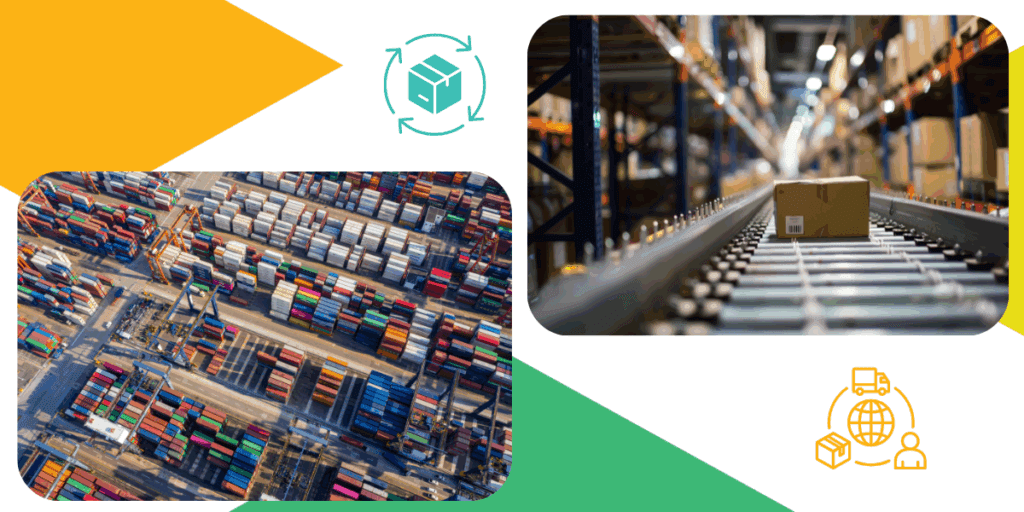
Retailers are adopting real-time inventory tracking and automation to streamline operations and reduce errors. AI-powered demand forecasting enhances planning accuracy, while diversifying suppliers mitigates supply chain risks. These strategies enable businesses to respond quickly to market changes, maintain product availability, and build resilient, efficient, and customer-focused supply chains.

Retailers are embracing eco-friendly packaging and carbon-neutral operations to reduce environmental impact. Transparent sourcing and fair labor practices demonstrate ethical responsibility, while certifications validate these efforts. By prioritizing sustainability and accountability, brands build customer trust, strengthen reputation, and align with growing consumer demand for responsible and conscientious business practices.

Retailers face challenges from rising costs and inflation, impacting profitability and operations. Shrinkage and cybersecurity threats further strain resources, while staff retention and skills development remain critical for maintaining efficiency and service quality. Addressing these issues strategically ensures resilience, safeguards assets, and fosters a capable, motivated workforce for long-term success.
Summary
This article highlights key retail insights, emphasizing trends, technologies, and strategies shaping the retail industry. Businesses are encouraged to adapt and innovate to stay competitive in a rapidly evolving market.

We encourage readers to incorporate retail strategies into their next virtual event while embracing challenges and industry trends. Explore actionable solutions by signing up for updates or requesting a consultation to guide your next steps. Please contact Chati to discuss how we can improve our retail experience, so we are better prepared for future trends and technologies.
Event management has evolved from basic coordination to strategic planning, now essential for success. This post explores its transformation, highlights the value of strategy, and offers readers practical insights to plan and execute impactful events. Here, we will explore proven strategies for successful event management, including key phases, must-have tools, navigating logistics, common challenges, and more. Through this, you will have the tools and resources to plan and execute successful event management strategies with the goal of helping your audience achieve their personal and professional goals.
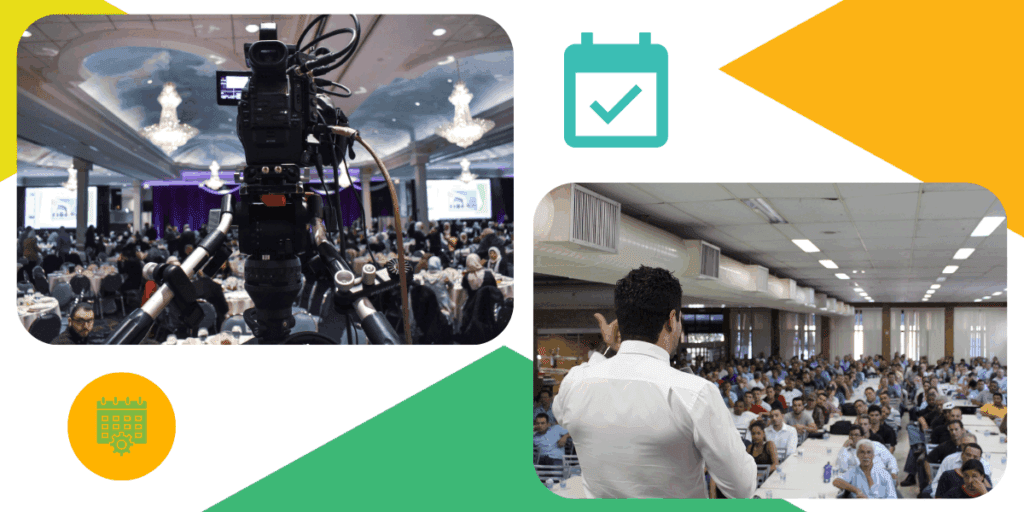
From corporate events to virtual and hybrid experiences, conferences, trade shows, weddings, and galas, today’s events embrace diverse formats, each designed to connect people, foster engagement, and create lasting memories for businesses, organizations, and individuals alike.

Successful events require thoughtful conceptualization and goal setting, precise budgeting, and efficient resource allocation. From venue selection and vendor coordination to marketing, on-site logistics, and post-event evaluation, each stage plays a crucial role in delivering impactful, well-executed experiences.

Modern events thrive by incorporating technology like AR/VR, event apps, and live streaming, while personalizing attendee experiences. Leveraging data analytics, feedback tools, and prioritizing accessibility and inclusivity ensures every participant feels engaged, valued, and seamlessly connected to the event’s purpose.

Event success is enhanced through event management software platforms, CRM and registration tools, live polling, and engagement apps. Combined with project management software, these technologies streamline planning, boost attendee interaction, and ensure seamless coordination from concept to post-event evaluation.

Effective event promotion leverages social media campaigns, targeted email marketing workflows, and influencer or speaker partnerships. By creating buzz with engaging pre-event content, organizers can maximize visibility, build anticipation, and drive strong attendance for a memorable, impactful experience.

Successful events rely on clear vendor contracts and contingency plans, detailed timelines and run-of-show, and seamless staff and volunteer coordination. Prioritizing guest management and safety protocols ensures smooth execution, minimized risks, and a positive experience for all attendees.

Sustainable events embrace eco-friendly practices like digital invitations and zero-waste initiatives, while integrating DEI considerations into programming. By prioritizing local sourcing and community engagement, organizers create inclusive, responsible experiences that positively impact both attendees and the surrounding environment.

Event success requires anticipating challenges like budget constraints, last-minute cancellations, venue or technology issues, and low attendance. Proactive planning, contingency strategies, and targeted promotion help mitigate risks, ensuring smooth execution and strong participation despite unexpected obstacles.
Summary
Here, we discussed essential event strategies and tools for event management, including key phases, must-have tools, navigating logistics, common challenges, and more. Armed with this knowledge, you now have the tools and resources to host successful events that enables strong attendee engagement.

We encourage readers to stay agile and innovative in their planning involving event management. To deepen your expertise, please contact Chati regarding how you can incorporate these strategies into your next virtual event.
The manufacturing industry is rapidly evolving, driven by automation, data, and innovation. Staying ahead of trends and technology is crucial, with Industry 4.0 and digital transformation reshaping operations, efficiency, and global competitiveness. Here, we will discuss the future of manufacturing, including key technologies, supply chain resilience, sustainability, future strategies, and more. Through this, you will have the tools and resources to embrace and adapt the future of manufacturing.

Smart manufacturing systems are transforming production with increased use of IoT and real-time data, enabling greater efficiency. Additive manufacturing continues to grow, supporting mass customization and flexible production lines tailored to evolving consumer demands and market trends.

Artificial intelligence and machine learning are powering robotics and industrial automation, streamlining processes and boosting productivity. Cloud and edge computing enable faster data access, while digital twins and simulation technologies enhance design, testing, and real-time operational insights.

Manufacturing innovations deliver speed, efficiency, and cost savings across assembly, packaging, and logistics. Real-world applications highlight how automation enhances productivity. Human-machine collaboration, especially through cobots, ensures safety and flexibility while maximizing output in modern, tech-driven production environments.

Recent global disruptions have underscored the need for resilient supply chains. Predictive analytics and AI now play key roles in anticipating risks and optimizing operations. Meanwhile, nearshoring and reshoring trends are reshaping manufacturing strategies for greater stability.

Manufacturers are embracing green materials and eco-friendly production methods to reduce environmental impact. Energy-efficient systems support carbon reduction, while aligning with regulatory compliance and ESG goals, driving sustainability as a core priority in today’s industrial landscape.

Manufacturers face challenges including labor shortages, a growing skills gap, and rising cybersecurity risks. Capital investment decisions are increasingly weighed against ROI concerns, while regulatory pressures add complexity, requiring strategic planning to maintain competitiveness and ensure long-term resilience.

To stay competitive, manufacturers are upskilling in their workforce, investing in modular, scalable technologies, and building strong supplier partnerships. By leveraging data for proactive decision-making, they enhance agility, efficiency, and resilience in an ever-evolving industrial landscape.
Summary
Here, we discussed the future of manufacturing, including key technologies, supply chain resilience, sustainability, future strategies, and more. Now, you are well-prepared to embrace the future of manufacturing, including key trends like AI, IoT, and sustainable practices that are reshaping manufacturing.

We encourage readers to embrace the future of manufacturing, including changes in trends and technologies, and how this can be incorporated into your next virtual event. To stay ahead, businesses must innovate and adapt. Explore deeper insights and contact Chati today for a personalized consultation on future-ready manufacturing strategies.
The shift from static video conferencing to immersive 3D environments, powered by virtual reality and augmented reality (VR/AR), is reshaping attendee expectations and event outcomes. Increasingly accessible, these technologies now enhance engagement at events of all sizes. Here, we will discuss how to incorporate immersive VR/AR into your virtual events, including why they work, best strategies, measuring engagement, and more. With this, you will have the tools and resources to organize impactful virtual events for worldwide audiences.

Immersive experiences boost attendee engagement and content retention through hands-on learning, creating emotional connections and memorable “wow” moments. These benefits extend across industries like education, healthcare, manufacturing, and marketing, transforming how people learn and connect.
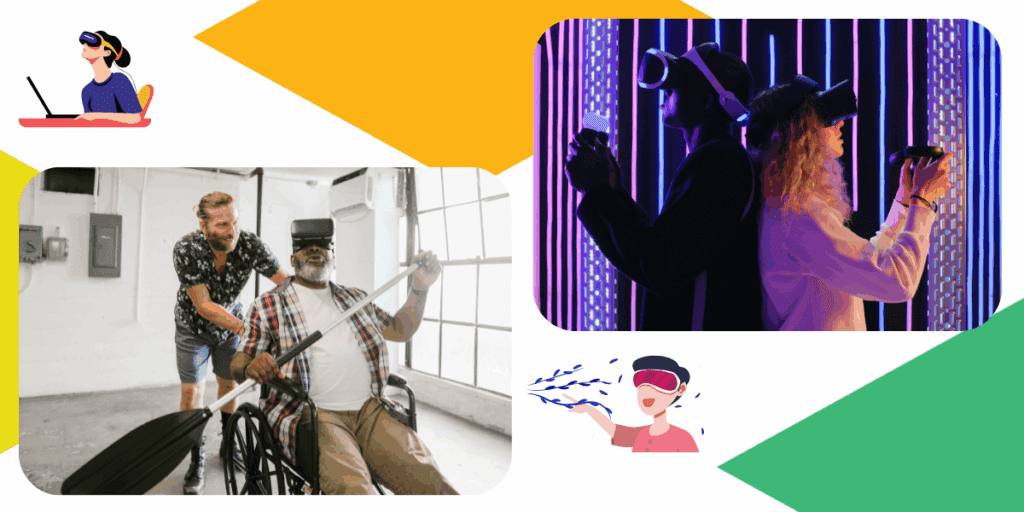
1. Virtual Trade Shows and Expo Halls
Fully navigable 3D booths features interactive product displays and holographic demonstrations, offering immersive exploration. Advanced attendee tracking and engagement analytics provide valuable insights, enabling exhibitors to understand visitor behavior and optimize interactions for greater event success.
2. Virtual Venue Tours
VR enables attendees and clients to virtually walk through real-world locations, enhancing hospitality, real estate, and event planning showcases by providing immersive, detailed tours that improve decision-making and elevate the overall experience.
3. Immersive Training and Workshops
AR overlays and VR environments offer hands-on learning experiences, enhancing training and skill development. These technologies are especially popular in healthcare, manufacturing, and technical fields, where immersive practice improves accuracy, safety, and knowledge retention.
4. AR-Powered Presentations and Keynotes
Augmented infographics, interactive slides, and visual storytelling create dynamic presentations that engage audiences more deeply than traditional slide decks or pre-recorded videos, transforming passive viewing into active participation for better understanding and lasting impact.
5. Networking in Virtual Reality
Avatar-based interactions in digital social lounges use realistic movement, spatial audio, and a strong sense of presence to simulate face-to-face conversations, creating immersive, natural social experiences that enhance virtual networking and connection.
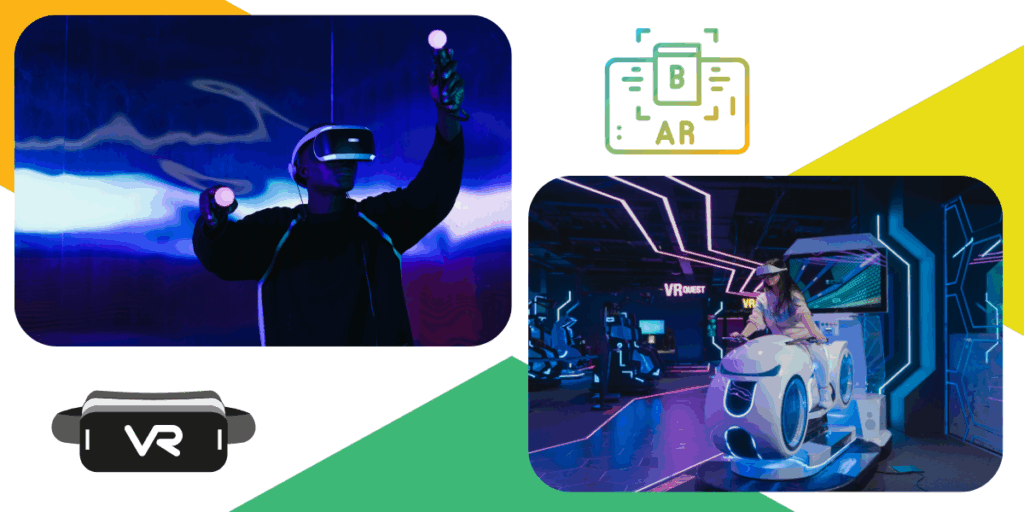
Leading immersive platforms like Virbela, MootUp, Spatial, and Engage offer diverse virtual experiences. Key considerations include headset compatibility, browser-based access, and real-time interaction support to ensure seamless, engaging participation for all users.

Understanding your audience’s tech readiness—whether VR headsets or mobile AR—is essential. Keep experiences intuitive and optional, providing tutorials and support for first-time users to ensure smooth adoption and maximize engagement across diverse participants.
Key metrics like session time, booth dwell time, interaction rates, and feedback surveys provide valuable event insights. Heatmaps and movement tracking further reveal attendee behavior patterns, helping organizers optimize layouts and enhance overall engagement effectiveness.

Prioritize accessibility and device compatibility across headsets, mobile, and desktops while managing costs and avoiding tech fatigue. Focus on creating immersive content that delivers meaningful impact rather than relying solely on novelty to engage audiences effectively.
Summary
Here, we discussed how to incorporate immersive VR/AR into your virtual events, including why they work, best strategies, measuring engagement, and more. Now armed with this knowledge, you have the tools and resources to organize impactful virtual events, enabling worldwide audiences to achieve their personal and professional goals.

We encourage organizers to pilot immersive elements to boost engagement and differentiation, resulting in increased diversity, inclusivity, and connectivity for audiences worldwide. Please contact Chati for more information about incorporating VR and AR into your next virtual event, as VR and AR are no longer niche, they’re essential tools in the modern virtual event toolbox.
In recent years, there has been a significant shift toward data-driven event strategies, as organizers increasingly rely on measurable insights to plan, execute, and evaluate their events. Tracking performance in real time and conducting thorough post-event analysis have become essential practices for identifying what works, optimizing engagement, and making informed decisions.
Here, we will discuss how virtual and hybrid events can be successful through event analytics & dashboards, including what they are, real-time optimization, return on investment (ROI), and more. With this, you will have the tools and resources to organize a successful virtual or hybrid event, while also obtaining pertinent data and information.

Event dashboards are centralized digital platforms that collect, visualize, and track key metrics throughout the event lifecycle, offering real-time insights into everything from registration and attendee engagement to post-event ROI. By consolidating data into a single, easy-to-navigate interface, these dashboards empower organizers to monitor performance instantly, make on-the-fly adjustments, and align event outcomes with strategic goals. This comprehensive visibility enables teams to see the full picture, connecting each phase of the event journey to measurable impact and value.

1. Registration and Attendance Trends
Analyzing the difference between total registrants and actual attendance is crucial for understanding audience behavior and refining event strategies. By identifying drop-off points and tracking session attendance patterns, organizers can pinpoint when and where attendees lose interest or disengage. These insights help improve future programming, optimize scheduling, and tailor content to keep participants engaged throughout the event.
2. Engagement Metrics
Measuring interactive elements such as poll participation, Q&A activity, and chat volume offers valuable insight into attendee engagement and the overall effectiveness of event content. Coupled with data on average session duration and the most and least attended sessions, organizers can gauge which topics and formats resonate most with their audience. These metrics help refine future programming and enhance the attendee experience by focusing on what drives the highest levels of interaction and sustained interest.
3. Content Performance
Tracking views, downloads, and replays of sessions or materials provides valuable post-event insight into what content continues to engage attendees beyond the live experience. This data helps identify top-performing speakers, popular topics, and the most effective presentation formats, allowing organizers to replicate successful elements in future events. Understanding these patterns ensures content remains relevant, impactful, and aligned with audience interests.
4. Networking & Interaction Insights
Metrics like the number of 1:1 meetings, messages sent, and group chat engagement offer a clear view of how effectively an event fosters meaningful connections among participants. For platforms that include AI-powered matchmaking, tracking the success of these connections—such as accepted meeting requests or follow-up interactions—provides additional insight into the quality of networking opportunities. Together, these engagement indicators help organizers assess the strength of community-building efforts and enhance the networking experience in future events.
5. Sponsor & Exhibitor ROI Metrics
Booth visits, resource downloads, and CTA clicks are key indicators of attendee interest and sponsor visibility during an event. When combined with metrics like lead generation, dwell time, and interactive engagements, organizers and exhibitors can gain a deeper understanding of which booths or offerings captured the most attention. These insights are essential for evaluating exhibitor ROI, optimizing booth strategies, and enhancing future sponsorship opportunities.

Leading analytics-enabled event platforms such as Chati, Webex Events, ON24, Hopin, and Cvent offer robust tools to help organizers track and optimize event performance. These platforms provide a range of features designed to turn raw data into actionable insights, including customizable dashboards, real-time updates, and exportable reports. When choosing a platform, it's important to look for those that offer flexibility in data visualization, seamless integration with other tools, and the ability to generate clear, shareable summaries that demonstrate value to stakeholders.

Real-time analytics empower event organizers to make dynamic adjustments during the event, such as promoting under-attended sessions based on live attendance data. This agility also allows teams to enhance networking features or address other underperforming areas on the spot, improving the overall attendee experience. By quickly identifying content gaps and bottlenecks in attendee flow, organizers can fine-tune event execution in real time, ensuring higher engagement and smoother navigation throughout the event.

Event data plays a crucial role in creating comprehensive wrap-up reports that showcase performance to sponsors and inform internal teams. These reports highlight key metrics and engagement trends, offering valuable insights that can be applied to future event planning, such as refining agenda design, enhancing marketing strategies, and prioritizing high-performing content. Over time, collecting and comparing this data helps build historical benchmarks, enabling organizers to track progress, set realistic goals, and continuously improve the impact and effectiveness of their events.

Dashboards are powerful tools for proving event value to stakeholders by translating complex data into clear, actionable insights. By connecting attendee engagement to tangible outcomes—such as conversions, lead generation, sales, or audience growth—dashboards demonstrate the real impact of an event. When paired with effective data storytelling, these insights help retain sponsors and justify budgets by illustrating success in a compelling narrative, making it easier for decision-makers to see the return on investment and support future initiatives.
Summary
Here, we discussed how virtual events and hybrid events can be successful through event analytics & dashboards, including what they are, real-time optimization, return on investment (ROI), and more. Going forward, you will be able to organize successful virtual and hybrid events while also successfully tracking event data.

We encourage event planners to adopt tools that go beyond vanity metrics, and please contact Chati if you are interested in learning more about how we incorporate analytics into our virtual and hybrid events.
Virtual events enable audiences worldwide to engage and connect while striving to achieve their personal and professional goals. Artificial intelligence (AI) is playing an increasingly vital role in the virtual events industry, transforming how organizers plan, manage, and deliver experiences. One of AI’s most powerful contributions is enabling personalized interactions, which are essential for boosting attendee engagement and improving retention by catering to individual preferences and behaviors.
Here, we will discuss how AI-based personalization can be used to enhance virtual events, including why it matters, personalization strategies, measuring success, challenges, and more. Through this, you will have the tools and resources to use AI for enhancing your virtual event experience for everyone.

Traditional personalization in virtual events has often been limited by manual processes, generic content, and a lack of real-time insights, making it difficult to tailor experiences for large and diverse audiences effectively. AI overcomes these challenges by rapidly analyzing data to deliver content that is more relevant, timely, and accurate for each attendee. This not only enhances individual satisfaction by meeting specific interests and needs but also significantly boosts overall event ROI by increasing engagement, participation, and long-term value.

1. Smart Agenda Recommendations
AI curates personalized event schedules by analyzing user interests, past behavior, and real-time interactions to recommend sessions that align with each attendee’s preferences. This intelligent scheduling leads to higher session attendance. It encourages participants to stay engaged for more extended periods, as they are more likely to find content that is relevant and compelling to them.
2. Dynamic Content Curation
AI enables event platforms to deliver tailored content—such as videos, resources, and sessions—to different attendees based on their profiles and interactions. This dynamic delivery ensures each participant receives the most relevant and valuable information, enhancing their overall experience.
3. AI-Driven Networking Suggestions
AI enhances virtual networking by intelligently matching attendees based on job roles, shared interests, or behavior patterns observed during the event. This targeted approach powers features like speed networking, personalized 1:1 matchmaking, and timely follow-up reminders, making interactions more relevant and impactful. As a result, attendees are more likely to form valuable connections, contributing to a more prosperous and more productive event experience.
4. Behavior-Based Notifications
AI-driven automated nudges and reminders, triggered by attendee actions such as abandoned sessions or periods of inactivity, play a key role in maintaining engagement throughout virtual events. By delivering timely prompts tailored to user behavior, these real-time interventions help re-engage participants, guiding them back to relevant sessions or content and ensuring a smoother, more continuous experience.
5. Personalized Exhibit Hall Experiences
AI enhances virtual exhibitor booths by tailoring content, product displays, and interactions to each visitor’s profile, including their interests, industry, and past behavior. This personalized approach captures attendee attention more effectively, resulting in more extended booth visits and higher-quality leads. For sponsors and exhibitors, this means increased visibility, more meaningful engagements, and a more substantial return on investment.

Leading virtual event platforms like Swapcard, Chati, Webex Events, and ON24 are integrating advanced AI capabilities to enhance user experiences and event performance. These platforms offer powerful features such as real-time analytics to track engagement, audience segmentation for targeted content delivery, and recommendation engines that personalize sessions and networking opportunities. Together, these tools help organizers create smarter, more dynamic events that drive deeper engagement and better outcomes.

Tracking key metrics such as engagement rates, content views, networking interactions, and satisfaction scores provides valuable insights into attendee behavior and preferences. By analyzing this post-event data, organizers can refine personalization strategies for future events, delivering more targeted content, improving matchmaking, and enhancing overall user experience. This continuous feedback loop helps drive greater engagement and higher ROI over time.

As AI personalization becomes more prevalent in virtual events, it’s essential to address privacy and ethical considerations surrounding data collection and usage. Ensuring transparent data practices and offering opt-in experiences helps build trust with attendees while respecting their autonomy. Striking the right balance between automated personalization and the human touch is also key, leveraging AI to enhance, not replace, authentic, meaningful interactions.
Summary
Here, we discussed how AI-based personalization can be used to enhance virtual events, including why it matters, personalization strategies, measuring success, challenges, and more. Through this, you now have the knowledge to use AI personalization for enhancing your virtual event experience for audiences worldwide while helping them achieve their personal and professional goals.

We encourage event organizers to experiment with at least one AI-based personalization strategy in their next virtual event to enhance engagement and overall experiences. Please contact Chati to explore how AI-powered tools can deliver smarter, more engaging virtual event experiences for everyone.
The event technology landscape continues to evolve, rapidly transforming how events are planned, managed, and experienced. Technologies like AI-powered chatbots, real-time translation services, and a suite of emerging digital tools are poised to dominate the industry. Embracing these advancements is crucial for organizers seeking to enhance attendee engagement, optimize operational efficiency, and deliver memorable, future-ready events. Here, we will discuss the top event tech in 2025, including AI chatbots, real-time translation, the role of data and analytics, and more. With this, you will have the tools and resources to prepare for events for the rest of the year.

AI chatbots are intelligent virtual assistants designed to interact with users in real time, providing automated support and enhancing event experiences through personalized communication. In the context of events, they play a pivotal role in answering attendees’ questions, managing ticketing and registration, and delivering instant information, resulting in reducing the burden on event staff. Whether for virtual or hybrid events, chatbots streamline operations by assisting with scheduling, guiding attendees through platforms, and troubleshooting issues as they arise.

Real-time language translation has become essential for global events that aim to engage diverse, multilingual audiences. By leveraging advanced AI and speech recognition technologies, real-time translation tools integrate seamlessly with event platforms to provide instant subtitles, audio translations, and live captioning. This not only breaks down language barriers but also makes events significantly more accessible and inclusive, allowing attendees to participate fully in their native language.

Emerging technologies, such as augmented and virtual reality (AR/VR), are poised to revolutionize event experiences by enabling interactive virtual booths, immersive networking environments, and engaging 3D content. Coupled with AI-powered personalization, events can now offer customized agendas and content tailored to each attendee’s interests and behavior. Additionally, data-driven event management is becoming a game-changer, allowing organizers to monitor engagement, measure return on investment (ROI), and make real-time adjustments to enhance performance and attendee satisfaction.

As event technology continues to evolve, data collection and analysis are becoming central to delivering smarter, more impactful events. Platforms increasingly harness data from AI tools, chatbots, and attendee interactions to gain insights that inform strategic decision-making and refine future event planning. These insights also enable highly personalized experiences, as data is used to tailor content and interactions to individual preferences, ultimately enhancing satisfaction and maximizing the event’s value for every participant.

Integrating AI, real-time translation, VR, and analytics into a unified event platform is key to creating a seamless and efficient experience for both organizers and attendees. By streamlining these tools into a cohesive ecosystem, event planners can simplify their operations while delivering enriched and personalized experiences. Investing in this integrated tech infrastructure now is a strategic move that future-proofs event strategies, allowing organizers to stay competitive and meet evolving audience expectations in the years ahead.
Summary
Here, we will discuss the top event tech in 2025, including AI chatbots, real-time translation, the role of data and analytics, and more. Armed with this knowledge, you are now better prepared to attend virtual or hybrid events that feature the latest event tech that will help you achieve your personal and professional goals.

We emphasize the importance of adopting these technologies to improve attendee engagement, streamline event management, and boost ROI. Please contact Chati to learn how we can enhance the future of event tech and its potential to transform the events industry.