Discover how Chati's self-service licenses give you full control - build, update, and launch virtual events on your terms. Register for our free webinar today!
Webinars are the online versions of seminars while offering the same great value for all parties, including the hosting organization and attendees. Webinars have become powerful methods for audience engagement and education, as it is currently estimated that webinars can increase audience engagement by as much as 90 percent compared to standard videos. This is primarily because webinar attendees can participate in many ways, including live chat, polls, and Q&A sessions.
For a successful webinar, it’s essential to have the right pieces in place to achieve maximum engagement and participation, which will only help you set the stage for mastering webinar artistry for both the short- and long-term. This is done in many ways, including choosing the right team to help organize and run the webinar, selecting the most effective webinar format, arranging the right visuals, finding the right space and equipment, and promoting your webinar well in advance.
Like all events, identifying target audiences and gauging their expectations is key to hosting a successful webinar. This can be done through questionnaires before the webinar but can also be accomplished with artificial intelligence (AI) matchmaking software. Additionally, monitoring attendee behavior trends and engagement metrics during and after the webinar will improve your chances of success.
A key component for any webinar is to define clear objectives to achieve the most value-driven webinar experience for both the organizers and the attendees. This provides all parties with a clear framework for what they can expect from the webinar, leading to greater inclusivity and community.

Webinars are driven by engagement and participation, and structuring engaging storylines and presentations will only lead to success for all parties. When engaged, attendees aspire to learn more from other aspects of the webinar, which leads to fostering inclusivity and community, along with building lasting connections.
Like all events, incorporating visuals, multimedia, and data to enhance the value of your webinar can lead to a more successful and captivating experience for all parties. This will lead to a more engaging experience and instill a sense of excitement for your attendees. However, too many visuals and multimedia could have the opposite effect, so finding a happy medium is also crucial.
The goal of any webinar is to achieve maximum engagement and participation, and this can be accomplished through interactive polls, quizzes, real-time Q&A sessions, and live chat. These tools will provide an engaging and captivating experience for your attendees and get them excited for future webinars.
One method to increase engagement and participation is leveraging gamification, which offers your attendees a chance to win prizes and rewards through the polls above and quizzes. By completing specific tasks, attendees can win badges or certificates while also fostering friendly competition amongst your attendees. Setting clear goals beforehand will give your attendees the necessary expectations to achieve the most successful gamification experience.
Social media has become entangled in our everyday lives, and leveraging this media along with email campaigns is an excellent way to conduct outreach for your webinar. You can accomplish this by creating social media pages and specified email addresses, giving a more professional appeal and providing valuable information leading up to your webinar.
When seeking attendees for your webinar, the registration should be as streamlined and professional as possible, and this can be accomplished by designing compelling registration landing pages that will provide an engaging experience for your potential attendees, resulting in increased excitement for the actual webinar.
All successful webinars start with the right platforms to host them. This is determined by several factors including the goal of the webinar, the number of potential attendees, the level of interaction and engagement you anticipate, and what you will do with the media, such as videos, at the end of the webinar. Some traditional platform recommendations include Adobe Connect, YouTube, Google Meet, and Zoom, but others include eWebinar, Demio, BlueJeans, and, of course, Chati.
Regardless of the platform, ensuring technical reliability for a smooth experience is vital for a successful webinar for organizers and attendees. This includes monitoring all webinar features, such as the polls, live chats, and Q&A sessions, and ensuring they function properly so your attendees receive the most engaging and interactive experience.

To ensure the most successful webinar possible, tracking participant engagement metrics and attendance rates will allow you to make real-time adjustments and host even more engaging webinars in the future. This can be accomplished through AI-driven metrics or real people monitoring the metrics.
Analyzing post-webinar surveys and feedback from your attendees will ensure that your webinar was successful, along with having the tools to build even more successful webinars in the future. This can be accomplished within a few days after the webinar so the information is still fresh in your attendees’ minds by allowing them to fill out short surveys and/or forms where they can provide meaningful feedback.
With these tools in hand, your ability to master webinars and captivate audiences by delivering valuable content will be much more successful for both the short- and long-term. Utilizing visuals, leveraging the right technology and platforms, social media, and insightful feedback will allow you to host countless webinars for individuals worldwide to engage and interact, which will only foster relationships and build lasting connections. Webinars are more than just an opportunity to showcase your brand; they are a chance to elevate virtual education to greater heights for everyone involved.
Sources: LinkedIn, Sequel, Wise App, Kinsta, eWebinar, Demio, BlueJeans
The Covid-19 pandemic changed how we live, specifically how we communicate, both in-person and online. Throughout 2020 and the height of the pandemic, employees had to work from home with the enhanced use of virtual platforms, which helped coordinate meetings and accomplish tasks. These virtual environments were also crucial for conferences and helped bring virtual events into the mainstream. While the pandemic has subsided, virtual events have continued to evolve into the norm for work events and meetings due to their capacity for universal reach by breaking down geographic barriers and easily accessible features, including surveys, live chats, and Q&A sessions.
With virtual events evolving over time, they continue to pose a myriad of challenges and opportunities, specifically for organizers. Such challenges include technology leverage, engagement, and time zones, to name a few. Despite this, virtual events continue to provide many opportunities, including reaching new audiences, sponsorship opportunities, and improved content, to name a few.

As virtual events continue to evolve, so will the ability of AI to contribute to them, with AI providing a myriad of ways to captivate attendees in virtual events, including attendee matchmaking, personalizing attendee experiences, removing language barriers, and gathering post-event feedback. Other features also include AI-powered event scheduling, AI custom event agendas, and using AI to create event names and logos, to name a few.
Virtual events can be used to enhance engagement through AI personalization algorithms to customize virtual event experiences. This includes streamlining event management, improving event analytics and content delivery, and analyzing attendee behavior and interests to customize their experience.
Using AI in your virtual event provides a means to facilitate both interaction and networking among your virtual event attendees. This can be done through AI-powered matchmaking, which uses algorithms to connect attendees based on their interests and preferences.
Successful virtual events have many features for attendees, including virtual booths, chatbots, and Q&A sessions. Still, now, with the power of AI, these same features can be AI-driven, and matchmaking technologies can be used to make these features even better.
Much like in-person events, feedback is vital for hosting a successful virtual event, including during and after the event. This can be accomplished through AI-driven data analytics, which is used to track attendee behavior throughout the event and make improvements during the current and future virtual events.
Through AI-driven analytics, virtual event organizers can extract valuable insights from attendee behavior and feedback to improve during and after the virtual event to achieve the best engagement levels possible.
One aspect that AI can do to improve virtual event experiences is optimizing content delivery, which can lead to content personalization, automation applications, and enhancing efficiency, to name a few.
Through this, the virtual event experience will only improve by ensuring that attendees receive the correct information at the right time, which will only lead to greater engagement, interaction, and networking between the attendees and organizers, both during and after the virtual event.

AI is providing, and will continue to provide, means of improving virtual events. However, given AI and its usage in a plethora of fields is still being understood and, in some cases, has legal ramifications, it still poses many potential challenges and ethical concerns regarding virtual events. These include concerns about privacy and security, including the potential for exposing personal data. Additionally, they can lead to technical and operational problems using dynamic systems that could crash. Finally, AI models and algorithms can be biased or discriminatory, leading to skewed results of virtual events.
The capabilities of AI improving virtual events cannot be understated, including tracking attendee behavior, constructing data analytics, and providing matchmaking technologies to enable attendee customization. While the use of AI comes with challenges, appropriate steps can be taken to ensure that risks are mitigated and every AI-driven virtual event can achieve its maximum potential for attendees and organizers.
While AI does pose several challenges, specifically regarding privacy and security, like with all new things, virtual event attendees and organizers should be encouraged to embrace AI as a positive tool that can be used to enhance the virtual event experience, which will only continue to evolve and improve in the coming years and decades.
Sources: Medium, Expert Events, GlueUp, Timely, GetGenie, LinkedIn, b2match
Living in the digital age has its ups and downs, but networking still means building connections and maintaining relationships, which requires the same commitment and grit as before. Enter virtual networking, which can be just as, if not more, rewarding than in-person networking. This can be done through a myriad of means, such as joining professional groups and virtual networking events, to name a few. In this post-Covid age, virtual networking can transform the way everyone networks, both locally and globally.
Like the in-person networking landscape, navigating the digital landscape requires you to take steps to stand out among the crowd and get noticed. This includes using all tools at your disposal to make sure your name and/or brand is seen as often as possible, including digital platforms, social media, third-party review and referral sites, email, publishing, apps, websites, and the plethora of devices that use these tools.

While virtual networking has become the new way to build connections, the question remains: What is virtual networking in the digital age? While virtual networking is technically defined as the ability to talk to colleagues through various technological means, virtual networking offers many benefits to in-person networking, including saving money for travel, flexibility, scalability, and increased productivity, as in-person networking can often be tedious and time-consuming.
While virtual networking might have a different appeal than in-person networking, it's essential to recognize that it can potentially have the same, if not greater, value. One primary reason is that virtual networking breaks down geographic barriers, allowing for increased inclusivity and diversity, which not only builds your brand but also helps build lasting connections.
One massive benefit to virtual networking is breaking geographic boundaries for expanded global reach, which can be extremely difficult with in-person networking. With virtual networking, you can talk to anyone and almost whenever you want without worrying about traveling and passports to build lasting connections. This allows you to expand the reach of your name and brand globally, which only helps foster inclusivity and diversity for your company and brand.
The most critical aspect of networking is fostering meaningful connections; virtual networking allows this without the drawback of physical constraints. With virtual networking, you can engage with your audience and clients in ways that were unthinkable just a few years ago, which only helps to build stronger and lasting connections, often for the rest of your life.
At Chati, we pride ourselves on fostering connections and building lasting relationships, and leveraging our virtual networking platform offers many tools to do just that. This includes templates and 3D spaces, exhibit halls, sponsorship opportunities, webinars, chat networking, video chat, gamification, marketing, content management, integrations, and analytics & reporting, all with the goal of you achieving in building connections and lasting relationships.
With Chati, you can leverage the power of virtual networking by hosting dynamic and engaging virtual and hybrid events, customizing content templates and 3D virtual spaces, using analytics tools to make the best-informed decisions, and allowing seamless integration with all your favorite tools and apps at your disposal. With Chati, virtual networking takes a new step for engagement and connection building that will only improve in the coming years.
Like in-person networking, first impressions are vital for building connections in virtual networking. The first step to making an impactful first impression is to have a profile that stands out. Whether it's social media or a personalized website, designing your profile to be as engaging as possible will only result in more positive engagement and better connections in the long term. This includes having a professional image of yourself and an in-depth biography, along with links to your work and CV/resume.
To make the most of virtual networking, leveraging technology to produce the most meaningful interactions is vital to building connections and lasting relationships. This includes using social media, personalized websites, and apps to help build your brand on a global scale, which not only helps break down geographic barriers but also fosters inclusivity and diversity.
If you're looking for the best techniques for building virtual connections, two methods include virtual events and webinars, which offer many tools to engage with a global audience and build your brand. Most often, virtual events and webinars provide the same exciting tools as in-person events, including exhibits, conference halls, and booths.
Frequently used methods include interactive polls, Q&A sessions, and online discussions, all offering exciting ways to engage with your audience and build lasting connections. Through these methods, you can increase engagement with your audience by better understanding their preferences and behaviors, along with improved insights.

As the digital age continues to bring everyone closer together globally, it's more important than ever to nurture connections for long-term benefits, and virtual networking has become the cornerstone of doing just that. Through virtual networking, you can break through the noise of the digital world by leveraging the right technology to focus on your target audience, which will only build better relationships in the long term.
While virtual networking offers many ways to build connections, one obstacle is transitioning these relationships into real-world collaborations. This can be done by encouraging engagement outside of virtual networking platforms, which only helps strengthen connections for everyone.
With every network-building endeavor, it's vital to establish guidelines for meaningful online interactions to produce the best engagement possible. This can help to:
Just like in-person networking, virtual networking requires the same rules of engagement to help foster long-term connections. Focusing on looking outward and building connections instead of inward on your own goals and needs is a good place to start. This begins by not rushing into asking for things like favors but instead offering your expertise and positive demeanor, which only helps build and foster long-term connections for everyone.
One advantage to virtual networking is you can track engagement metrics and connection growth, which only helps build stronger connections by ensuring you're engaging your target audience. Both social media platforms and personalized websites offer analytics tools to allow you to see how many impressions you're making and where you can improve.
When tracking engagement metrics, it's important to analyze the reach and effectiveness of your online networking efforts. How many people have viewed or engaged with your website, posts, and/or blogs? Are these numbers going up or down? Is your target audience engaging with your brand, or are you just getting trolls? These are important questions to ask when analyzing your metrics and understanding them will only help you succeed in the virtual networking world.
In this post-Covid age, it's important to gauge and predict future trends and innovations in virtual networking, which is slated for exponential growth in the coming years and decades. This is due to the increased availability of video conference platforms, along with reducing travel costs and time while increasing inclusivity and accessibility globally. This will make virtual networking more engaging, interactive, and immersive, including virtual reality, artificial intelligence, and gamification.
For virtual networking to keep growing, it's vital to embrace evolving technologies for enhanced regional and global connection-building. This includes leveraging the right technology, such as social media and communication platforms, to achieve the best results in building lasting connections. As noted above, virtual reality and artificial intelligence will help make virtual networking more immersive and interactive, and leveraging these growing technologies will only help strengthen virtual networking in the coming years and decades.
With the right tools and platforms, you can use virtual networking to build lasting connections and increase inclusivity and diversity on a global scale. While the digital age has a lot of noise and clutter, virtual networking has become the cornerstone of building your audience and your brand. By leveraging the right technology, you can break down geographic barriers and build lasting connections that benefit everyone.
Chati is here to help you achieve your virtual networking needs with many features, including virtual events, hybrid events, webinars, sales & marketing, education, internal events, HR recruiting and job fairs, and virtual conferences. Take advantage of Chati's support team, who possess extensive virtual networking experience to build long-lasting connections with your clients and attendees.
Sources: American Salon, A4M, GeeksForGeeks, MarketTailor, Harvard Business Review, Advisory Excellence, LinkedIn
With virtual events successfully entering the mainstream globally, it's important to remember that some of the same rules apply to in-person events, including targeting the right audience and keeping them engaged. This includes building excitement about your virtual event as early as possible and personally inviting connections, but also keeping the virtual event to within 30 to 45 minutes, which makes it long enough to keep your audience engaged and short enough so they don't get bored. However, it's vital to remember that the more your virtual event energizes your audience, the higher your expectations grow for any future virtual events you might hold.
One of the primary goals of any virtual event is to keep your audience engaged, which can be done through a variety of means, including video and social media integration, personalized and interactive content, audio content such as podcasts, creating a sense of community, data visualization, virtual and augmented reality, and artificial intelligence (AI) algorithms for analyzing audience behavior so you can make the best-informed decisions pertaining to current or future content. If executed correctly, this will keep your audience engaged for the current virtual event and get them that much more excited for future virtual events you hold.
Suppose you want to host the best virtual event. In that case, it's vital to analyze your audience's demographics and preferences before, during, and after the event to know you deliver the right content to keep them engaged and excited. As noted above, AI algorithms can be used to accomplish this, but this can also be done through questionnaires and polls before and after the virtual event, as post-event feedback is vital to hosting the most engaging virtual events in the future.
When finding the right target audience, you must identify key motivations for participating in your virtual event. This includes developing an effective promotion plan, utilizing a variety of channels to reach your target audience, such as social media and email, designing captivating messages leading up to the virtual event, finding the right online platform that results in maximum engagement, embracing as many interactive elements as possible such as virtual games and Q&A sessions, and delivering educational and informative content that everyone can enjoy.
While there are many means to make your virtual event as engaging as possible, this also comes with technical challenges. These include having reliable and available content such as multi-user spaces, chat features, polls and Q&A sessions, and gamification, along with maintaining rapid and real-time solutions in case certain aspects of your virtual event fall short.
To have the most successful virtual event possible, crafting compelling visual and multimedia content is a top priority to keep as many of your participants as engaged as possible. This can include gamification, polls, and Q&A sessions, but it can also include live chat features such as podcasts and interactive video sessions. The more compelling content you have, the more you ensure your audience will be engaged throughout the virtual event and look forward to future virtual events.
Gamification features present an enormous opportunity to keep your current audience engaged and get them excited for future virtual events. These include making it as fun as possible, providing friendly challenges that increase inclusivity, and offering prizes for the "winner" or all participants.
Other important features your virtual event can have to increase engagement are interactive polls, quizzes, and live Q&A sessions. These allow your participants to not only stay engaged with the current content but inspire them to search for more content throughout the virtual event, along with becoming much more excited for your next virtual event.
All successful virtual events offer a variety of experiences for their participants, which includes implementing dynamic personalization for attendees, customizing content and breakout sessions, and leveraging data to provide targeted and relevant content for all participants. The more your virtual event is personalized, the more your participants will feel a deeper connection with your brand and other participants. This increases inclusivity and makes your participants more excited for future virtual events, along with parties with which they might share their experiences.
As virtual events have become mainstream across the globe, so has the use of virtual reality (VR) and augmented reality (AR), and incorporating these technologies offers opportunities to maximize engagement and excitement throughout your virtual event by making it as immersive as possible for all participants. With VR and AR, your participants get the sense they're in the thick of the action, allowing them to interact with everyone more directly and thoroughly than ever before.
One important characteristic of virtual events is the ability to network and build connections across the globe, and virtual events can offer these opportunities using virtual lounges. These allow participants to engage directly with one another through written or video chats while creating comfortable environments for attendees, organizers, and other participants to share ideas and experiences, increasing inclusivity for everyone.
Along with virtual lounges, immersive digital exhibitor booths, and product showcases are other ways technology can be used to create immersive experiences for everyone. The goal of any virtual event is to build your brand while building connections and your participants' brands. This means showcasing your product in meaningful and impactful ways, including 3D interactive showcases such as 3D replica models of your product, which not only keeps your current audience engaged but also allows them to get excited for future virtual events.
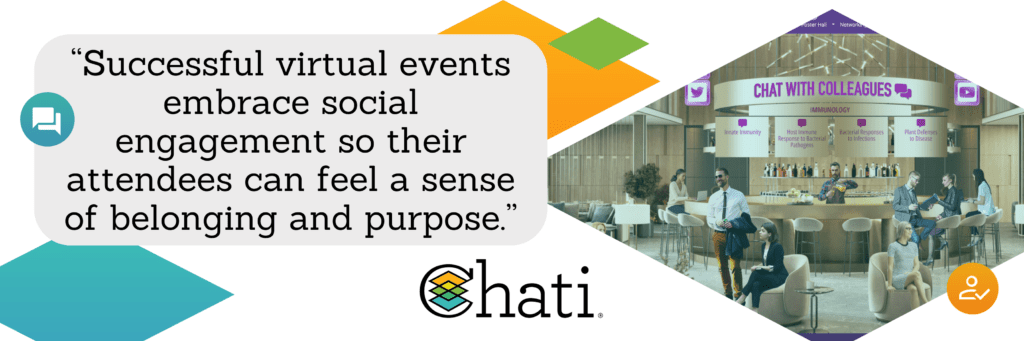
All successful virtual events embrace social engagement so their attendees can feel a sense of belonging and purpose, which only increases inclusivity and participation in future virtual events. One way to accomplish this is through social media integration for event promotion, as you want to get attendees excited for your upcoming virtual event long before it launches. This includes leveraging as many social media platforms as possible to maximize your target audience, creating hashtag campaigns before, during, and after your virtual event, and facilitating virtual networking through online communities. If executed successfully, these practices will not only allow your audience to be more engaged for the current virtual event but also let them get much more excited for future ones.
Individuals attend virtual events primarily for increased networking opportunities, and you can utilize a plethora of tools to make this possible, including innovative virtual speed networking sessions, hosting roundtable discussions and collaborative workshops, and facilitating one-on-one networking with AI matchmaking. With these tools, your attendees maintain engagement throughout your virtual event by interacting with other attendees who might share their common goals and interests, including career opportunities and personal goals.
As virtual events have taken center stage, developing methods to make your virtual event stand out amongst the rest is vital. One method is elevating speaker presentations with storytelling techniques, preventing your attendees from daydreaming while keeping them engaged throughout a talk. Another method is hosting engaging panel discussions and fireside chats that allow attendees to interact with panelists and moderators, which frequently involves minimal prep time and ample time for questions throughout the session. Finally, hosting live entertainment and performances can also benefit your virtual event, increasing engagement and making it much more fun.
Virtual events are only successful if your attendees are engaged and participating in it, and ensuring this success can be accomplished through monitoring attendee interaction and engagement metrics before, during, and after the event. How many sessions are your attendees participating in? Do they frequently leave and return a short time later, or at all? How much do they engage with the organizers or other attendees throughout the virtual event? These are vital questions to ask throughout the entire process, from promoting the virtual event and throughout it.
Much like in-person events, virtual events are successful if organizers appropriately gauge post-event feedback and satisfaction. Through this, they can determine what aspects of the virtual event were successful and the level of engagement from attendees to determine the best decisions to host an even more successful virtual event.
Feedback is essential for success, and this can be accomplished using analytics to refine strategies for future virtual events, including monitoring engagement metrics throughout the virtual event and gauging feedback from attendees.
As virtual events evolve, they will continue to encompass innovation, engagement, and technology leverage to allow for maximum engagement for organizers and attendees. This includes using VR and AR for greater immersive experiences, which not only increases engagement but inclusivity, as well. Other tools include gamification, polls, and Q&A sessions to maintain engagement while monitoring audience behavior throughout the virtual event, so you know you're providing the best experience possible for everyone.
In this post-Covid world, virtual events are becoming vital to networking, building connections, and maintaining lasting relationships. By making your virtual events as engaging as possible for your audience, you're allowing attendees to participate at their maximum potential and increasing inclusivity and openness for both your organizers and attendees alike. By embracing the redefined landscape of virtual audience engagement through technology leverage and interactive experiences, you can open doors for even greater opportunities for growing your brand and connections.
Sources: LinkedIn, LinkedIn (1), Eventx, The Ably Platform, Socio Labs, Endless Fairs, Acquire Digital, The Social Media Hat, Event Smart, b2match, SlideModel, Ami Vora
The Covid pandemic allowed the rise of virtual events to take hold, letting millions of people worldwide connect virtually without needing to travel long distances and potentially expose themselves to the virus. Now that the pandemic is controversially considered to be over, individuals are free to travel to conferences and the like, but what if they still prefer to conduct them virtually? Can there be similar experiences for both in-person and virtually attended events?
This is where hybrid events come in, as they offer opportunities for individuals who want that human connection but also for individuals who wish to remain virtual. The purpose of hybrid events is to allow the same experiences regardless of preference of attendance, which only increases inclusivity and allows for building lasting connections.
As noted, the pandemic has largely subsided, but millions of individuals worldwide are still at high risk for Covid-19. This means they are unable to attend in-person events and are forced to attend virtually but wish to share the same experiences as those attending in-person. This has caused an increase in demand for integrated virtual and in-person events to allow all parties from all backgrounds to share in the experience, which will only build stronger long-term connections.
Hybrid events hold a wide range of benefits for everyone, including greater flexibility, reach, and attendance; decreased travel and environmental costs; increased sponsorship opportunities; and larger audience engagement opportunities, to name a few. All of this can be done while having the same experience as those attending in person.
Achieving maximum audience reach and engagement is one of the benefits of using hybrid events, as you can offer the same experiences as in-person attendees while building your audience and connections.
Blending components of in-person and virtual experiences is accomplished in many ways, including live-streaming key sessions and presentations and offering virtual exhibitor booths, gamification events, and virtual breakout sessions. By offering these services, virtual and in-person attendees are almost guaranteed the same experience, which builds stronger connections.
It is of the utmost importance to design experiences that cater to virtual and in-person audiences, as the goal of conferencing is building lasting connections. This is why hybrid events are essential for growing inclusivity and openness for all parties worldwide.

As noted above, offering several services in hybrid events allows for greater inclusivity and a seamless experience for all participants. Therefore, leveraging the right technology is vital to the success of hybrid events for both the short-term and long-term.
It’s vital to use the most effective hybrid platform to increase the effective hybrid experience, which can be done in many ways. These platforms ensure maximum diversity reach along with increased engagement, as well. Services to look for when searching for the best hybrid platform include networking rooms, ticketing, scalability, and security, just to name a few.
To provide the most seamless and enriching experiences, it is vital to adapt content catering to virtual and in-person participants. This can be accomplished through speaker kick-off calls, preplanned event checklists, ensuring speakers can reach both virtual and in-person audiences, preparing both virtual and in-person audiences on the experiences of hybrid events, and strong moderation, just to name a few.
Accomplishing these steps will not only maximize diversity and inclusion for your hybrid events but also maximize engagement and interaction across all channels and participants. The goal of hybrid events is to allow everyone to attend, regardless of their travel needs, and following key steps will ensure everyone gets the best possible experience overall.
There are many innovative ways hybrid events have changed the landscape of networking, both virtually and in-person. These include matchmaking technology via artificial intelligence, breakout sessions, and networking lounges for virtual and in-person participants.
Hybrid events are only meaningful if participants from both audiences can interact with each other and build lasting connections. This is why it’s vital to offer services for both audiences to interact with each other. These include offering unique engagement tools, maximizing the use of social media, matchmaking your participants, and customizing the exhibit hall so all participants can attend seamlessly.
The goal of hybrid events is to cater to both virtual and in-person attendees but also to cater to a plethora of diverse preferences, including attendees with disabilities or other needs that will make their experience that much more engaging. To learn more about your attendees’ needs, you can use registration forms to impact diversity and inclusion for your hybrid event.
While balancing virtual and in-person attendees can be tricky, hybrid events offer enormous flexibility that ensures your attendees maximize their participation and access to all sessions and talks, increasing engagement for everyone.
To learn how to offer the best hybrid event, it’s important to learn from those who’ve hosted previous events. Endless stories showcase successful hybrid events, including Apple Special Events, INBOUND by HubSpot 2022, Social Media Marketing World 2022, and MAD//Fest London 2022.
These events offered several services to ensure maximum engagement and participation, including physical and digital sessions, mobile event apps, tiered registration systems, and hybrid event technology.

While hybrid events offer many important benefits, like all platforms, they also offer many technical and logistical challenges. The most obvious challenge is creating experiences for both virtual and in-person participants, but offering the correct venue and virtual platform is one step in overcoming this challenge. Other challenges include ticketing strategies for both audiences and providing value for sponsors, as well.
To provide the best overall hybrid event experience, it is vital to balance audience engagement across both virtual and in-person avenues. This is because some services for in-person attendees won’t benefit virtual attendees, and vice versa. Services to consider are registration processes, session availability, and creating appropriate marketing strategies for both audiences and meeting platforms.
When hosting a hybrid event, monitoring how everything flows is vital. Are you achieving maximum engagement with both your virtual and in-person attendees? Can they maximize their experience, regardless of their attendance preference? Monitoring experiences maintains engagement levels with your current hybrid event and ensures that your next hybrid event will be that much better.
Like all events, garnering appropriate feedback ensures you offer the best hybrid event in the future. This can be done through post-event surveys, which allow your attendees to provide appropriate input on their experiences and the experiences of other attendees.
Like virtual and in-person events, hybrid events are here to stay for the long-term, as they offer the best of both worlds to allow for maximum engagement for participants from all backgrounds. While some believe the future of hybrid events will be mostly virtual, this doesn’t change the importance of using hybrid events to allow for a wider range of audiences and backgrounds to build lasting connections and relationships.
Human beings long for connections, and change is inevitable, with the change being that more and more individuals worldwide are embracing hybrid events to build lasting connections and relationships for both personal and professional growth. The future of hybrid events will allow for increased inclusivity, building belonging, boosting your brand, and linking global employees and attendees.
Much like virtual events, hybrid events are here to stay and offer audiences from all over the world opportunities to build lasting connections and relationships regardless of their attendance preference. Hybrid events offer the best opportunity for combining in-person and virtual events, which will only increase diversity and inclusion for all audience members.
Hybrid events offer the opportunity for individuals from all demographic and economic backgrounds to share their experiences and build lasting relationships, which only increases diversity and inclusion. The combination of virtual and in-person integration for your event will not only build your brand but build your overall reach.
Sources: Brella, Sorrentino Media, Event Cube, Biz Batch, Pheed Loop, Talking tree Creative, Socio, Socio 2, Institute for PR, Microsoft, Diversity Q
Team building exercises are an excellent way to boost morale among your team, and in this post-Covid era where more and more employees work remotely, virtual team building exercises can be just as beneficial as in-person team building exercises. Such exercises build camaraderie, collaboration, and leadership skills and can help you learn more about your coworkers and other positions within your company. They can also mitigate Zoom fatigue, enhance productivity and innovation, improve team communication, and break the loneliness cycle that sometimes comes from working remotely.
Virtual team building is the ongoing process of creating connections between remote workers through various communication avenues. Due to the lack of in-person interactions, building transparency and trust amongst each other is even more crucial, and virtual team-building exercises work to achieve this. For example, a company might decide to have a Halloween costume contest on Zoom, and everyone votes on their favorite one!
All events and exercises have pros and cons, and virtual team building is no different. While the pros include boosting team morale and fostering connections, the potential cons include hosting the event around various time zones or other schedules since such exercises might occur outside normal work hours.
Like all endeavors, virtual team building exercises come with key strategies to make them successful, and the most important is establishing clear communication channels between your managers and employees to ensure everyone is onboard and the exercise is available to everyone. This ensures the exercise is successful, both in the short- and long-term.
Virtual team building aims to bring people together, fostering trust and rapport between your managers and employees before, during, and after the exercise. This is done by ensuring everyone is on the same page leading up to the exercise, monitoring engagement during the exercise, and getting appropriate feedback afterward to see what everyone thinks of the exercise.
Leveraging the appropriate technology is vital to ensuring the virtual team-building exercise is successful for both the short- and long-term. This includes using the right communication platforms if your exercise requires additional tasks that might not be used in traditional virtual meetings.
Along with fostering trust and rapport for your team, virtual team building promotes team bonding and social interaction between your managers and employees. It allows people who've never interacted to learn from each other, boosting team morale for long-term success.
There are endless examples of virtual team-building games that can be used to boost your team's morale. These include game shows, online office games, Wordle, Pictionary, scavenger hunts, Scattergories, trivia, and family feud, to name a few.
Along with games, skill-building workshops and webinars are other examples of virtual team-building exercises. Examples include learning the importance of paid ads in a digital space, enhancing student engagement on social media, sales development, and empowering your sales team, to name a few.
Hosting virtual retreats and social events is another example of virtual team building, as these can foster engagement in a non-formal setting while boosting your team morale. The key is hosting a successful retreat or event, which can be done by leveraging digital experiences, planning the retreat or event through crowdsourcing, awards shows, and mixing up the fun to increase inclusivity, especially if team members hail from different time zones.
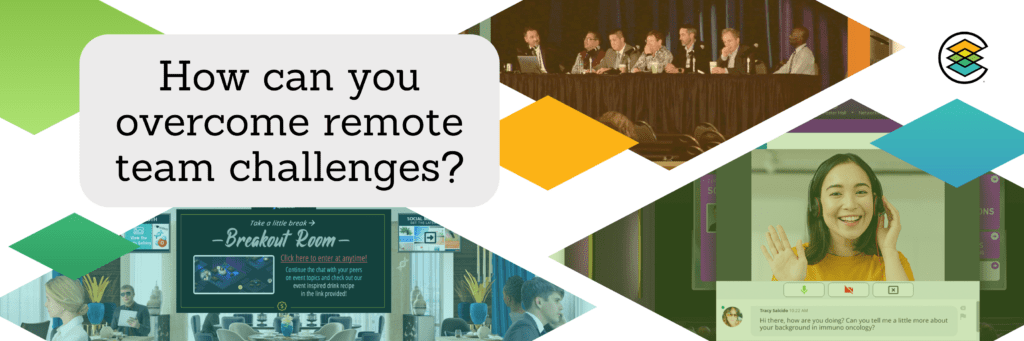
As noted above, inclusivity is increased by catering to team members from different time zones. This can be accomplished by first asking everyone what time works best for them and coming to an agreement before hosting the team-building exercise. Offering more than one virtual exercise that everyone can engage in, and team members can participate in multiple exercises further fostering engagement and rapport between team members.
Like all virtual endeavors, being aware of communication barriers is key to fostering your team's inclusivity. This includes overcoming language barriers, which can be accomplished with translators during the exercise but also with captions through artificial intelligence. Along with overcoming language barriers, offering services for the deaf and hard of hearing is also imperative for increasing inclusivity for your virtual team-building exercise, which can also be done with captions and subtitles so everyone can engage successfully, which only fosters inclusivity and trust throughout your team.
Throughout your virtual team building exercise, it is vital to maintain motivation and engagement, so all participants are assured they are welcome, and their ideas are shared and heard. This can be accomplished by quietly monitoring the exercise and contacting participants during breaks if they enjoy themselves. It can also be done through feedback after the exercise.
Knowing if your employees are enjoying the exercise is crucial to its success. How much are they engaging in the virtual team-building exercise? Is there a genuine sense of engagement, or is everyone pretending to engage to get it over with? These questions should be asked throughout the exercise, so you know what changes to make going forward.
The purpose of virtual team building exercises is to improve team performance and productivity, so it's important to track these metrics before and after the exercise to gauge if it was a success for your company. Did performance and productivity increase or decrease after the exercise, and how much of a difference did the exercise make in this change?
Like all virtual endeavors, collecting feedback is essential for developing a more successful model in the future, and virtual team building is no different. After hosting an exercise, ask the participants to submit a brief report on their experience and see if it's something they'd be interested in doing going forward, along with recommending their exercises. Log all responses and make the appropriate changes so everyone can still be involved in the future.
With virtual teams becoming mainstream during the COVID-19 pandemic, companies had to take steps to ensure their employees stayed connected and productive. One successful example of effective virtual team building exercises is Microsoft Azure. Microsoft Azure conducted a Virtual Clue Murder Mystery and assessed employee engagement throughout the activity. The result? Employees thoroughly enjoyed the activities and the company noticed a significant rise in team morale.

Thanks to technological advancements and innovations, virtual team building has only evolved and will continue to evolve in the coming years and decades. This includes leveraging digital spaces and communication platforms that enable full participation from all your team members.
Like all virtual endeavors, fostering inclusivity and diversity will only make your virtual team building much stronger, as this enables the sharing of ideas from many backgrounds, personally and professionally. As virtual team building continues to evolve, so will the methods employed to increase inclusivity and diversity for all participants and your entire team.
Virtual team building is vital for fostering engagement and inclusivity throughout your entire team. Utilizing such exercises will bring people together and build trust and rapport. This can be accomplished through many methods, including promoting social interaction, leveraging the appropriate technologies and communication platforms, thorough communication before, during, and after the exercise, and overcoming time zone and communication barriers.
The power of virtual team building must be considered, as they can foster engagement and inclusivity and improve your team's morale, both in the short- and long term. The goal of any team is to build trust and rapport, and with the right strategies, virtual team building can do just that. If the entire process is successfully executed, virtual team building can become a cornerstone of your company by building trust and rapport among your team and lasting connections, as well.
Sources: Team Building Hub, TeamBuilding.com, MemberClicks, Hoppier, Endless Events, Outback Team Building
Virtual events have become the mainstream in building connections and fostering professional relationships through their ability to enhance products and services from various fields and disciplines. They present valuable opportunities to meet new people and gain knowledge that lasts a lifetime. But how important is it to use virtual events to reach a global audience for your brand, and what steps can be taken to maximize your virtual event experience while building your brand for the right audience? Here, we examine several methods that can be undertaken to achieve this while enhancing the virtual event experience overall.
Let’s first examine how the power of virtual events can break down geographic barriers. In a nutshell, virtual events help expose the irrelevancy of geographic barriers, with a 2022 study predicting that virtual events hold the potential to not only eradicate both geographical and administrative barriers but also increase diversity, equity, and inclusion (DEI) in a post-Covid world, as well.
The goal of every company is to build its brand by sharing it with as many people as possible and using virtual events to reach audiences at the global level can do just that. This helps determine the right audience for your brand while also learning about various cultures and how to reach audiences you might have initially overlooked.
Navigating is one of the most challenging aspects of the virtual global landscape. Still, if accomplished using virtual events, you can not only reach new client numbers but learn new ideas, as well.
This is accomplished by constructing inclusive events through various methods, including diverse representation, crowdsourcing, establishing meeting norms, and written and verbal communication, to name a few. It is important to note that the same planning style for in-person events should be applied to virtual events to maximize the goal of an inclusive environment.

Utilize the unique features of ChatiConnect one-on-one or group video chat to network on a global scale.
For virtual events to be successful, especially at the global level, it’s essential to make them as seamless as possible for all your clients and attendees. This includes easy access to attend, engage, and leave feedback, if necessary. The easier your clients and attendees can attend, the more likely you are to build your brand.
Virtual events hold the potential to build relationships with individuals of all backgrounds and disciplines, especially at the global level. Building your brand while making positive connections is always a win-win.
When hosting virtual events at the global level, it’s of the utmost importance to remain aware of cultural sensitivity and relevance. This includes potential slang and/or idioms, gender stereotyping, and appropriately adapting words and images to enable inclusivity further.
In addition to incorporating cultural sensitivity, other ways to make your virtual event inclusive include captions for the deaf and hard of hearing and multilingual options since a portion of your audience might only speak one language.
Hosting a virtual event on a global scale means having to remember a portion of your audience will be from different time zones, as there are currently 38 different local time zones in use around the world. This means offering several times for the same talk or session within your virtual event to maximize engagement and inclusivity.
A variety of strategies can be applied to make your event as convenient and inclusive as possible for your attendees. For inclusivity, these strategies include instilling a culture of courage, encouraging a sense of purpose, and empowering a sense of well-being. Strategies for convenience run parallel with how to manage the various time zones, as mentioned above, in that offering multiple talks and sessions at different times will increase your attendance and build a sense of belonging.

Chati facilitates broad customization options to amplify your brand.
As noted earlier, the goal of any virtual event is to maximize your brand as much as possible, and using various virtual event marketing tools to showcase your event will do just that. These include online tradeshows, virtual conferences, and webinars. The goals of these strategies include:
Another important goal is to market your virtual event before, during, and after the event.
As noted above, leveraging digital channels is a strategy to market your virtual event. These include a myriad of social media outlets, like Facebook, X (formerly known as Twitter), LinkedIn, and now Mastodon and Threads, with the latter two gaining traction as a substitute for X. LinkedIn is especially useful for building professional connections, as it is primarily geared towards business and professional purposes.
If your virtual event is going to be on a global scale, your attendees will come from diverse cultures and backgrounds. Therefore, diversifying portions of your event to better engage with a diverse audience will make your virtual event more impactful for everyone.
To increase inclusivity for your virtual event, creating personalized interactions for making broader connections is vital to building your brand. Some strategies for personalizing your virtual event include understanding the preferences of your attendees, producing custom content, on-demand content, and personalized engagement, just to name a few.
With the goal of building your brand in mind, the importance of showcasing your company’s products and services to a global audience can’t be overstated. However, moderation is vital, so too much showcasing can result in the opposite impact you seek.
Gaining clients is one goal of your virtual event, but building partnerships with other companies is another goal. This can be accomplished by expanding your marketing horizons to allow for company-to-company interactions instead of company-to-client interactions.

Chati’s innovative networking system allows your brand to reach new audiences worldwide.
Speed networking is slowly becoming the next great way to build connections and meet great people and including it in your virtual event could provide an excellent avenue to build lasting relationships on a global scale. Another way to accomplish this is through collaborative workshops to foster engagement, which could also be combined with speed networking for a more engaging experience.
Artificial intelligence has become intertwined in our everyday lives, so why not use it to your advantage for your global virtual event? For example, it can be used as a matchmaking tool to identify the right attendees for certain aspects of your virtual event.
Knowing that you’re engaging the correct audience and using various metrics tools to track appropriate participation and engagement numbers is vital to growing your brand. This allows you to re-evaluate strategies and tactics both before, during, and after the event to maximize your engagement, specifically on a global scale.
If you’re going to grow your brand globally, understanding the various audiences you’re reaching is vital. This is accomplished through analyzing geographical data to make more informed decisions about your virtual event content and time management.
Some examples of brands that have successfully grown on a global scale include Chati, Salesforce, Slack, HubSpot, and Notion. These companies have leveraged multiple tools to both grow their brand and build lasting connections, as well.
The Covid pandemic forced both the public and companies to adapt quickly to a world of lockdowns and restrictions, and the use of virtual events on a global scale is only getting stronger.
Virtual events aim to build connections and share ideas without geographic restrictions. In this post-Covid world, embracing the opportunity to use virtual events to continue this fantastic trend is more important than ever.
Virtual events hold the potential to not only build your brand and list of clientele but also build strong and lasting connections at both the local and global scales. Virtual events have been shown to erase borders and geographic barriers, creating a more engaging and inclusive world for everyone.
As noted, the goal of every company is to build its brand, and using virtual events to do that on the global stage will not only accomplish this goal but potentially grow it in new and exciting ways where everyone can engage and connect. Virtual events offer an exciting way to share ideas and build connections that have only grown in a post-COVID world that will only gain traction and foster connectivity without worrying about geographic barriers keeping you from accomplishing your goals.
Sources: Nature Biotechnology, Splash, Toppan Digital Language, Eventscase, Cvent, Virtual Days, Cvent (1), Eventpreneur, Wistia, Nature